




The Stratosphere’s Moisture Problem
High above the weather systems we experience daily lies the stratosphere, an atmospheric layer that is typically very dry. Water vapor, the gaseous form of water, is a potent greenhouse gas, but most of it stays in the lower atmosphere, or troposphere.
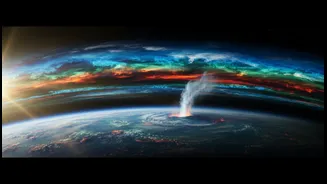
The boundary between these two layers, the tropopause, acts as a cold trap, freezing out most moisture and preventing it from rising higher. This makes the stratosphere an arid, stable region. However, recent scientific findings show that this barrier is not impenetrable. Certain powerful events on Earth’s surface can act like giant pistons, punching through the tropopause and injecting huge quantities of water directly into this dry layer.
Wildfires and Volcanoes: The Unexpected Culprits
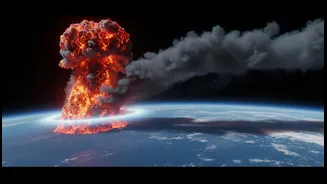
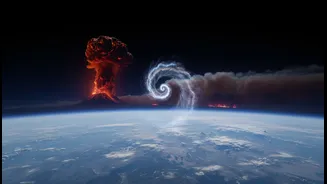
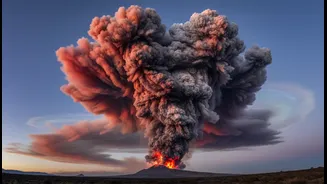
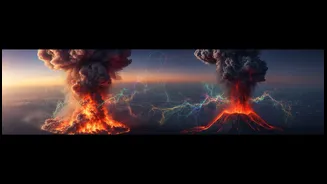
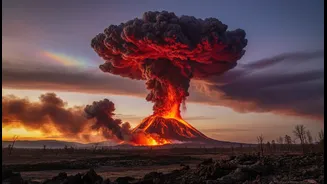
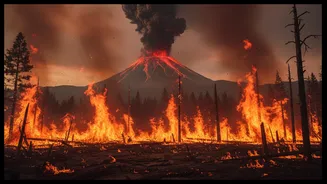
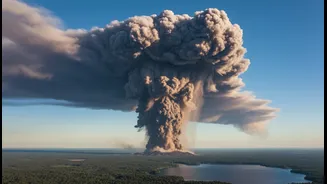
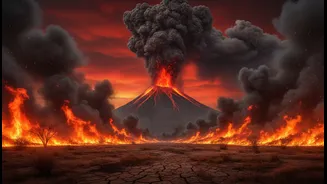
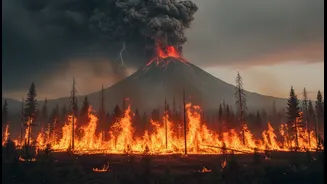
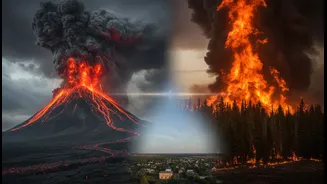
Two of the most powerful natural phenomena—extreme wildfires and volcanic eruptions—are now understood to be significant contributors to stratospheric moisture. Intense wildfires can generate their own towering thunderstorms, called pyrocumulonimbus clouds, that funnel smoke and water vapor miles into the stratosphere. The 2019-2020 Australian bushfires, for instance, injected a mass of smoke and water equivalent to a moderate volcanic eruption. Similarly, the 2022 eruption of the Hunga Tonga-Hunga Ha'apai submarine volcano was unprecedented. It blasted an estimated 146 trillion grams of water vapor—enough to fill over 58,000 Olympic-sized swimming pools—directly into the stratosphere, increasing its total moisture content by about 10% in a single event.
A Warming Feedback Loop
Once in the stratosphere, this excess water vapor gets to work. As a greenhouse gas, it absorbs heat radiating from the Earth and prevents it from escaping into space, leading to a warming effect on the surface. This creates a dangerous positive feedback loop. A warmer planet can lead to drier conditions and more frequent, intense wildfires. These fires, in turn, pump more water vapor into the stratosphere, which causes further warming. Scientists have identified this cycle as a previously overlooked driver of climate variability. This stratospheric water vapor feedback could amplify the warming caused by other greenhouse gases like carbon dioxide, making it a critical factor in future climate projections.
A Complicated Chemical Cocktail
The impact isn't just about warming. Increased water vapor in the stratosphere can also disrupt its delicate chemistry. It can enhance chemical reactions that destroy the ozone layer, our planet’s vital shield against harmful ultraviolet (UV) radiation. Following the Hunga Tonga eruption, scientists observed a rapid loss of ozone in the areas where the water vapor plume spread. The injection also leads to the rapid formation of sulfate aerosol particles, which can have their own complex effects. While volcanic aerosols have historically been associated with a temporary cooling effect by reflecting sunlight, the massive amount of warming water vapor from an event like Hunga Tonga complicates this picture significantly.
Why This is a 'Key Limit'
The headline's term 'key limit' refers to how these events test the boundaries of our climate system's stability. By adding a powerful, self-reinforcing mechanism to the climate equation, the injection of stratospheric water vapor represents a potential tipping point. It shows that the climate system is more interconnected than previously thought, where an event in one part of the globe can have far-reaching consequences. As extreme fires become more common in a warming world, their contribution to stratospheric moisture will grow, accelerating the feedback loop. Understanding this process is crucial for refining our climate models and predicting the future trajectory of global warming with greater accuracy.