







Ever start the day sitting tall and end it in a slump? You’re not imagining it. That gradual slide into a slouch is a predictable response to a static desk environment, driven by real changes in your muscles, joints, and ligaments.
The Morning Ideal: Starting Strong
When you first sit down
at your desk, maintaining good posture feels relatively effortless. Your core muscles are fresh, and your spine is in its natural alignment. At this point, postural muscles like your deep neck flexors, erector spinae, and glutes are actively stabilising your spine. Your body is primed for movement, and holding an upright position requires minimal conscious thought. Your shoulders are back, your chin is tucked, and your back is supported. This is the baseline from which the day's gradual decline begins, not because of laziness, but due to the simple biomechanics of a body forced into stillness.
Muscle Fatigue: The First Domino to Fall
Your postural muscles aren't designed for static, prolonged contraction. They thrive on movement. When you sit for hours, these muscles are forced to hold a constant load without a break. Over time, this leads to muscle fatigue. As the core and back muscles tire, they lose their ability to effectively support the spine. To compensate, your body starts to rely on passive structures—your bones and ligaments—for support. This is when the slump begins. Your shoulders round forward, your head drifts towards the screen, and your lower back loses its natural curve. It's your body's way of finding a path of least resistance as its active support system runs out of energy.
The Slow Slump: Understanding Viscoelastic Creep
Here’s where it gets interesting. The ligaments, joint capsules, and intervertebral discs that make up your spine have a property called 'viscoelastic creep'. Think of a kitchen sponge with a weight on it. If the weight is there for a moment, the sponge bounces back. But if it stays there for hours, the sponge slowly flattens and deforms. Your spinal tissues do the same. Under the sustained load of a slumped sitting posture, these soft tissues slowly stretch and deform. The ligaments that support the back of the spine elongate, reducing their ability to provide stability, while the discs compress and lose fluid. This 'creep' is why you might feel stiff and compressed by the afternoon; your tissues have literally changed shape.
Joints in Lockdown: The Mobility Problem
Your joints need movement to stay healthy. Motion helps circulate synovial fluid, which lubricates the joint and delivers nutrients to the cartilage. When you remain in a static seated position for hours, this process slows down dramatically. The hip flexors become short and tight, while the glutes weaken from inactivity. The joints in your spine, hips, and shoulders stiffen up because they aren't moving through their full range of motion. This lack of movement is a primary driver of the stiffness and reduced mobility many desk workers feel at the end of the day. Your body essentially 'forgets' how to move freely because it hasn't been asked to.
How to Fight Back: Movement is the Answer
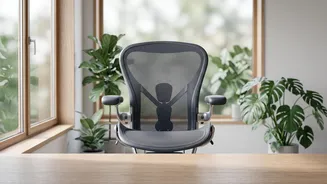
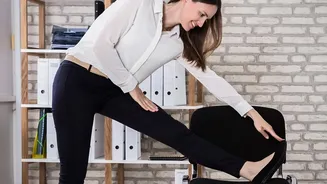
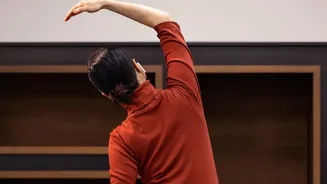
The good news is that you can counteract these effects. The key isn't to force a single 'perfect' posture all day, but to incorporate regular movement. Research suggests that tissues begin to deform after about 20–30 minutes of static loading, so moving before that threshold is crucial. Set a timer to stand up, stretch, or walk around for a few minutes every half hour. Simple exercises like shoulder rolls, chin tucks, and glute bridges can reactivate sleeping muscles. An ergonomic setup, with your monitor at eye level and your feet flat on the floor, reduces the initial strain on your body, making it easier to maintain a supported posture for longer.