






The Original Cottonopolis
To understand Coimbatore's nickname, one must first look to Manchester, England. During the 18th and 19th centuries, Manchester became the world's first industrial city, the heart of the global cotton industry. Nicknamed 'Cottonopolis', it was a city transformed
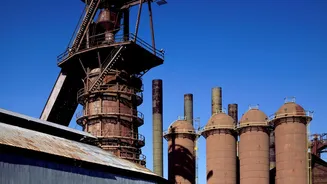
by the Industrial Revolution, with hundreds of mills powered by steam engines processing raw cotton imported from across the British Empire. Manchester's landscape was defined by its tall factory chimneys and sprawling warehouses, becoming the undisputed commercial and financial hub for the entire textile trade. It set the global benchmark for what a city built on textiles could achieve.
Coimbatore's Textile Genesis
Coimbatore's own textile story has ancient roots, with the region known for its quality cotton for centuries, even trading fabrics with ancient Rome. However, its modern industrial journey began in the late 19th century. The first mechanised spinning and weaving mill, the Coimbatore Spinning and Weaving Mills (also known as Stanes Mill), was established in 1888 by pioneer Sir Robert Stanes. This was followed by a few other mills in the early 1900s, like Kaleeswarar Mills in 1906 and Lakshmi Mills in 1911, laying the foundation for an industrial boom.
The Perfect Conditions for a Boom
The 1920s and 1930s saw a massive textile boom in Coimbatore, fuelled by a perfect storm of factors. The region was surrounded by vast tracts of fertile black soil, ideal for cultivating high-quality cotton. A key catalyst was the commissioning of the Pykara hydroelectric project in 1932. This project provided an abundance of cheap and reliable electricity, a critical advantage that spurred rapid industrialisation. This, combined with the innate entrepreneurial spirit of the local community and a decline in Bombay's textile industry, created the ideal environment for mills to flourish. Local industrialists seized the opportunity, importing machinery at low prices during the Great Depression to set up numerous new textile units.
From Yarn to a Legendary Nickname
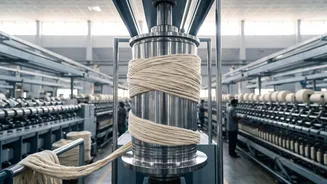
As the number of mills multiplied, Coimbatore's economy became synonymous with textiles, much like Manchester's. The city became a powerhouse for spinning yarn, producing textiles, and manufacturing textile machinery. With its thousands of small, medium, and large-scale textile units, it mirrored the industrial concentration that had defined its English predecessor. This striking parallel in industrial identity, centred entirely around cotton and textiles, led to the city being affectionately and accurately dubbed the 'Manchester of South India'.
A Legacy That Continues to Evolve
While the textile industry remains the crown jewel of Coimbatore's economy, the city's industrial base has diversified significantly over the decades. The engineering expertise developed to service textile machinery paved the way for new industries. Today, Coimbatore is also known as the 'Pump City', supplying over half of India's requirements for motors and pumps, and is a major hub for foundries, auto parts, and wet grinders. Despite this evolution, the textile sector continues to be a dominant force, with institutions like the Southern India Mills' Association (SIMA) and the South Indian Textiles Research Association (SITRA) driving innovation. The city accounts for a significant portion of India's spinning capacity and remains a global leader in producing high-quality yarn and fabrics.