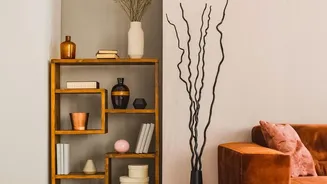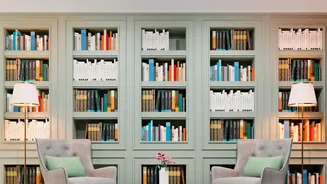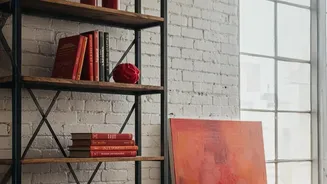


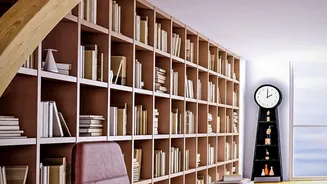
Bookshelves often become cluttered catch-alls or monotonous rows of spines. But a simple designer trick can transform them into a curated feature: leaning framed art against the back of the shelf to create layers, depth, and personality.
The Principle of Visual Depth
A flat, one-dimensional
bookshelf can make a room feel static. The goal of styling is to create visual interest that encourages the eye to move and explore. Layering is a fundamental design principle that achieves this, and bookshelves are the perfect place to apply it. By placing a framed piece of art against the back panel, you immediately establish a background, a middle ground (where books and objects sit), and a foreground. This simple act tricks the eye into perceiving more depth than is physically there, making the entire unit feel more dynamic and intentionally designed. The artwork acts as an anchor, providing a backdrop that makes the items in front of it pop. This technique breaks up the visual noise of many book spines and introduces a sophisticated, collected look.
Choosing the Right Artwork and Frame
The success of this look depends on selecting the right art and frame. For the artwork, consider pieces that complement your room's overall color palette and theme. Abstract art, simple line drawings, or even personal photographs can work beautifully. The key is to choose something that doesn’t overwhelm the space. A simple piece with a generous mat can provide a welcome visual break. The frame is just as important. A frame with a thick, chunky profile will be able to stand upright on its own. Alternatively, you can lean thinner frames against the back. Don't feel obligated to match the frame to other wood tones in the room; instead, choose a frame color or material that makes the art itself stand out. If you're concerned about stability, especially in a home with children or pets, you can use removable adhesive strips to subtly secure the frame to the shelf back.
Arranging Your Layered Look
Once you have your anchor artwork, the fun of arranging begins. Place the framed piece toward the back of the shelf. From there, you can start layering. Arrange some books vertically, using bookends for support, and stack others horizontally. A horizontal stack of books can even serve as a pedestal for a smaller decorative object. When placing objects in front of the art, be mindful not to obscure the piece entirely. Use shorter items like small bowls, sculptural objects, or plants to maintain a clear view of the background art while creating a lush, multi-dimensional scene. Varying the height and shape of the objects you use is crucial for creating a balanced and engaging display. Grouping items in odd numbers, such as three or five, often feels more natural and less rigid.
Beyond Artwork: Other Backdrop Ideas
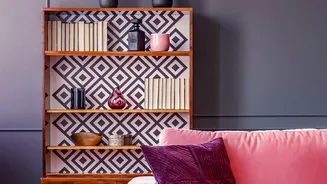
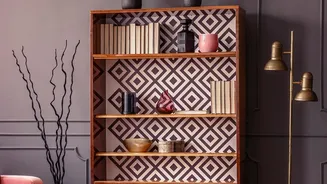
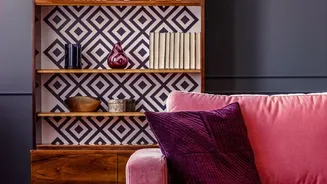
While framed art is a fantastic way to add depth, the core principle is about creating an interesting backdrop. You can achieve a similar effect with other materials. Applying removable wallpaper or fabric to the back panel of a bookcase is a high-impact, designer-approved trick. This is especially effective if you’ve fallen for a pricey wallpaper, as you only need a small amount. Other ideas include painting the back of the shelf a contrasting color, applying beadboard for texture, or even using stencils to create a custom pattern. Some designers even hang mirrors, which have the added benefit of bouncing light around the room and creating an even greater sense of depth. Each of these options serves the same purpose: to turn the back of the shelf into a deliberate design element rather than a forgotten surface.