






The Case for Seasonal Eating
Our grandparents didn't need a special diet plan to eat healthy; they simply ate what was available. This age-old wisdom is more relevant than ever. When fruits and vegetables are consumed during their natural harvest time, they are at their nutritional
peak, bursting with flavour and nutrients. Produce that is transported long distances or grown in artificial conditions simply can't compare. Seasonal eating also has other significant benefits. It is more cost-effective because abundant local produce is cheaper. It supports local farmers and reduces the environmental impact associated with long-distance food transportation. Moreover, rotating your diet with the seasons naturally introduces a wider variety of foods, which is beneficial for gut health.
Summer's Cooling Bounty (March - June)
As temperatures rise, our bodies crave light, hydrating foods. Indian summers bring an abundance of produce perfectly designed to help us beat the heat. Water-rich fruits like watermelon, muskmelon, and the king of fruits, mango, are iconic summer delights. These fruits are not just delicious; they are packed with vitamins and help replenish fluids lost through perspiration. On the vegetable front, a variety of gourds such as bottle gourd (lauki), ridge gourd (tori), and bitter gourd (karela) are staples. Cooling cucumber is another essential, perfect for salads and raitas. These summer vegetables are generally lighter and easier to digest, aligning perfectly with the body's needs during the hot months.
Monsoon Harvest (July - September)
The arrival of the monsoon brings relief from the heat and a different array of produce to our markets. This is the season for corn (bhutta), a beloved rainy-day snack. It's also the time for fruits like jamun, peaches, and plums. Jamun, with its unique sweet and tart flavour, is particularly associated with the Indian monsoon and is known to aid digestion. The vegetable basket includes gourds like pointed gourd (parwal) and ivy gourd (tindora), along with okra (bhindi) and eggplant (baingan). Traditional wisdom suggests eating freshly cooked, easy-to-digest meals during this season to support immunity when infections are more common.
Winter's Hearty Greens (October - February)
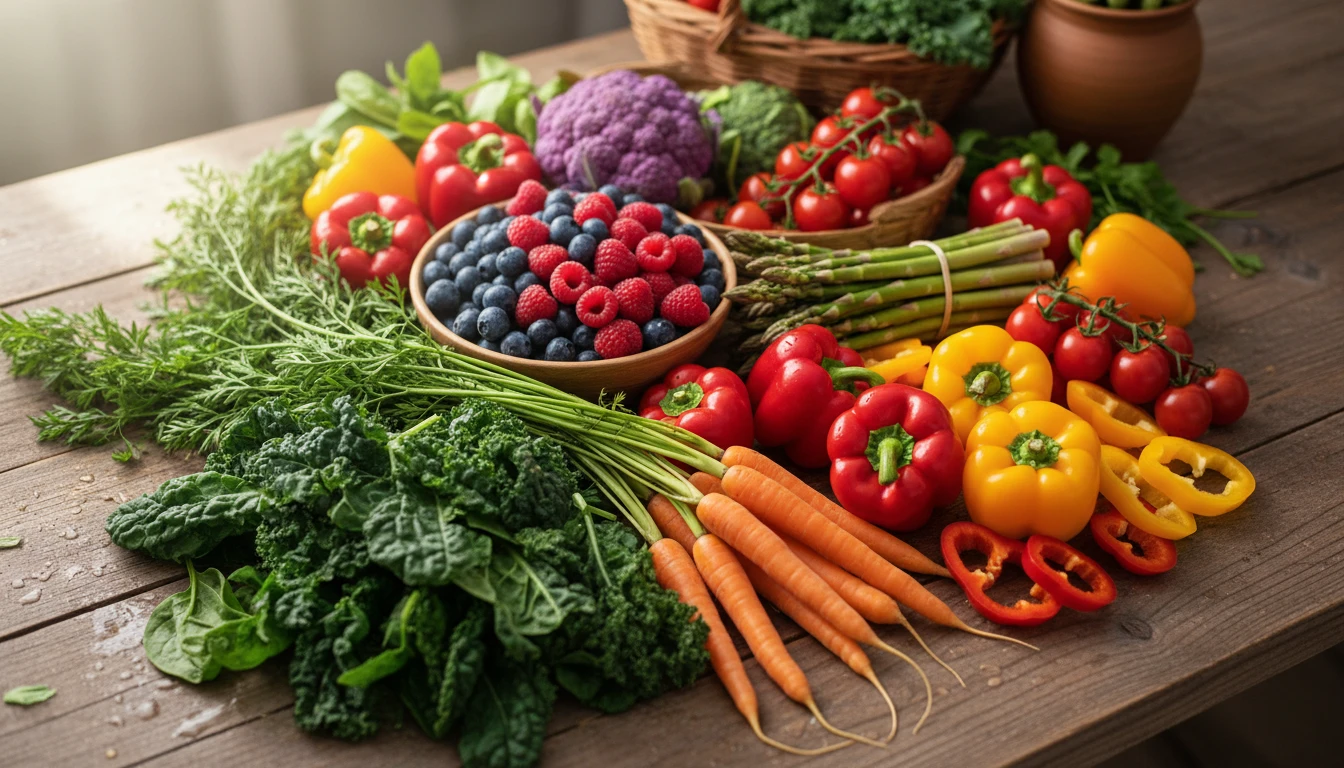
Winter is arguably the most abundant season for vegetables in India. The markets are flooded with a vibrant variety of leafy greens like spinach (palak), fenugreek (methi), and mustard greens (sarson), which are rich in iron and other essential minerals. This is the season for hearty root vegetables like carrots, beetroot, and radish, perfect for warming soups, stews, and pickles. Other winter stars include cauliflower, green peas, and fresh turmeric. The fruit selection is equally impressive, with citrus fruits like oranges and sweet lime (mosambi) at their peak. These Vitamin C-rich fruits are crucial for boosting immunity during the colder months. Guava and pomegranate also feature prominently, adding colour and nutrients to the winter diet.