





The New Weekend Travel Map
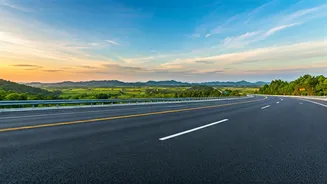
India's ambitious infrastructure push, particularly under the Bharatmala Pariyojana, is creating a network of world-class, access-controlled expressways. These aren't just incremental road improvements; they are greenfield corridors designed for speeds
up to 120 km/h, effectively redrawing the travel map for millions. Journeys that once consumed the better part of a day are now being completed in a single afternoon. For city dwellers in Delhi, Mumbai, and Bengaluru, this means destinations previously considered too far for a two-day trip are suddenly viable. The impact is a behavioural shift, making spontaneous road trips a reality rather than a logistical challenge.
From Delhi: The Hills and Heritage are Closer
For residents of the National Capital Region, the change is dramatic. The recently opened Delhi-Dehradun Expressway has slashed travel time from over six hours to a mere 2.5 hours, making a weekend in the foothills of Uttarakhand an easy Friday evening drive. This brings destinations like Dehradun, Mussoorie, and Rishikesh into the 'quick escape' category. Similarly, the operational Sohna-Dausa stretch of the Delhi-Mumbai Expressway has significantly shortened the drive to Jaipur, with travel times now hovering around 3.5 hours. This makes the heritage and culture of Rajasthan's Pink City, along with wildlife destinations like Sariska Tiger Reserve, more accessible than ever for a refreshing break.
From Mumbai: The Konkan Coast and Wine Country Beckon
Mumbaikars also have new reasons to pack their weekend bags. The Mumbai-Nagpur Samruddhi Mahamarg has dramatically cut travel times to the state's interior. A drive to the vineyards of Nashik, which used to take four to five hours, can now be done in under three. This opens up Nashik, Igatpuri, and the spiritual town of Trimbakeshwar for relaxed two-day trips. Meanwhile, progress on the Mumbai-Goa highway (NH-66) is steadily reducing the grueling 12-13 hour journey. With bypasses and widened sections becoming operational, the drive time is shrinking, and the eventual goal is a six-hour trip, which will be a game-changer for accessing the Konkan coast. Furthermore, the Mumbai-Vadodara section of the Delhi-Mumbai Expressway is expected to be operational by August 2026, halving the travel time to Vadodara to just four hours.
From Bengaluru: Southern Corridors Expand
In the south, the Bengaluru-Chennai Expressway is set to be another transformative project. Though full completion is expected in early 2027, the operational Karnataka section already hints at the future. Once fully open, it will reduce the travel time between the two southern metropolises from around six hours to just three. The existing Bengaluru-Mysuru Expressway has already proven the concept, cutting a 3.5-hour journey to about 1.5 hours and making the 'City of Palaces' a popular day-trip destination. These corridors are crucial for both tourism and economic activity, linking industrial hubs and making inter-state travel far more efficient.
Tips for Your Expressway Trip
While these new roads are built for speed and safety, a smooth journey requires some planning. Ensure your vehicle has a functional FASTag, as all tolls are collected electronically. It's also wise to plan your fuel and rest stops in advance. While many new expressways feature modern amenities like food courts and trauma centres, they can be spaced far apart. Be mindful of 'highway hypnosis'—the drowsy state that can occur when driving on long, monotonous roads. Take regular breaks every couple of hours to stay alert. Finally, check your vehicle's tyre pressure and overall condition before starting, as the high speeds can put extra strain on your car.