







What is a PUC Certificate?
A PUC certificate is a mandatory document that certifies your vehicle's emissions are within the limits prescribed by law. It is a crucial part of India's effort to combat air pollution. All vehicles powered by internal combustion engines—including petrol,
diesel, CNG, and LPG—are required to have a valid PUC certificate at all times. Only fully electric vehicles are exempt. This document must be produced upon demand by traffic authorities. Driving without one can lead to significant penalties.
Updated Validity Rules for All Vehicles
The Ministry of Road Transport and Highways has recently updated the validity periods for PUC certificates, creating different rules based on a vehicle's emission standard (BS stage) and age. For brand-new vehicles, the first PUC certificate is typically valid for one year from the date of registration. After that, the renewal frequency changes. For vehicles compliant with BS-I, BS-II, and BS-III norms, the certificate is only valid for three months. For BS-IV vehicles, the validity is six months.
New Rules for BS-VI Vehicles
The most significant changes apply to BS-VI vehicles, where validity now depends on age and category (private or commercial). For private (non-transport) BS-VI vehicles, the rules are tiered. If the vehicle is up to six years old, the PUC certificate is valid for three years. For vehicles between six and ten years old, the validity is one year. Once a private BS-VI vehicle is over ten years old, it requires a new PUC every six months. Commercial (transport) BS-VI vehicles follow a slightly stricter schedule: a two-year validity for vehicles up to six years old, one year for those between six and ten years old, and every six months for vehicles older than ten years.
Penalties for Non-Compliance
The consequences for not having a valid PUC certificate are severe. Under Section 190(2) of the Motor Vehicles Act, vehicle owners can face a fine of up to ₹10,000. In addition to the fine, penalties can include imprisonment for up to three months for a first offence and up to six months for subsequent violations. In some cities like Delhi, authorities have implemented a 'No PUC, No Fuel' rule, where petrol pumps can refuse to serve vehicles without a valid certificate. With increasing digital enforcement, automated systems are also being used to flag non-compliant vehicles, making it harder to avoid penalties.
How to Get and Check Your PUC
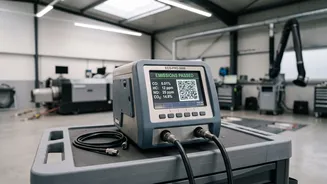
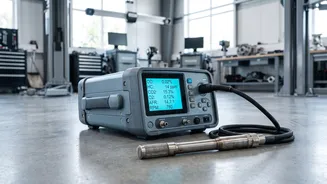
Getting your vehicle tested is a straightforward process. You must visit a government-authorised emission testing centre. The operator will use a probe to measure your vehicle's exhaust emissions, such as carbon monoxide and hydrocarbons. If the readings are within the permissible limits, a new certificate is issued and the data is uploaded to the central Parivahan database. You can easily check your PUC status online through the official Parivahan portal (puc.parivahan.gov.in) or the mParivahan app. You will need your vehicle’s registration number and the last five digits of its chassis number to view and download the certificate.