








The Scent of the Season
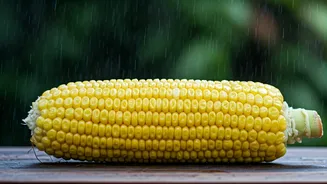
There is a specific magic to the Indian monsoon that awakens the senses. It’s more than just a break from the oppressive summer heat; it’s a full-body experience. The air grows thick and cool, the scent of damp earth rises, and the rhythmic drumming of rain
against rooftops becomes the season's soundtrack. With this atmospheric shift comes an undeniable change in our culinary desires. The crisp salads and cooling drinks of summer are forgotten, replaced by a deep-seated need for something hot, something fried, or something roasted over an open flame. It is a primal call for comfort, a nostalgic echo of monsoons past.
Enter the Humble Bhutta
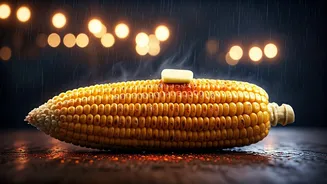
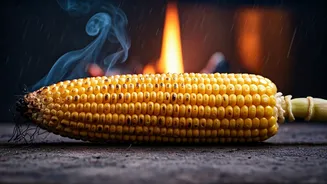
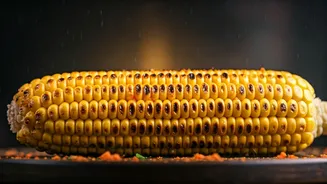
And what answers that call most faithfully? For millions across the country, it is the humble bhutta. Roasted corn on the cob. Walk down any street as the drizzle begins, and you will eventually find him: the bhutta-wallah, fanning embers in his portable sigri. The sight is iconic. A mountain of fresh corn, husks still green, sits beside a small tin of spices and a pile of halved lemons. The air around his cart is a smoky, tantalising perfume of charring corn. This isn't a dish you plan for; it's one you happen upon, a spontaneous, joyful punctuation to a rainy day walk or a traffic-jammed commute.
An Anatomy of Perfection
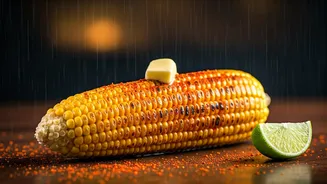
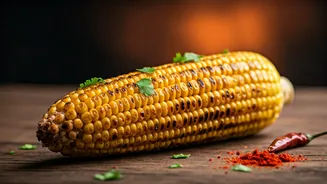
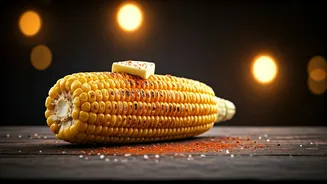
The beauty of the bhutta lies in its profound simplicity. There are no complex sauces, no secret family recipes passed down through generations. There is only the corn, the fire, and the finishing touch. The vendor picks a plump cob, strips back its husk, and places it directly onto the hot coals. He turns it patiently, the kernels popping and blackening in spots, releasing a nutty, sweet aroma. Once roasted to perfection, it’s pulled from the heat. Then comes the ritual: a slice of lemon is dipped into a mixture of salt and red chilli powder and rubbed vigorously all over the hot corn. The sizzle as the sour juice hits the hot kernels is part of the appeal. That's it. No butter, no cheese, no extraneous flavourings. Just fire, corn, salt, spice, and citrus.
A Bite of Pure Nostalgia
To eat a street-side bhutta is to taste nostalgia. It’s the memory of childhood, holding the warm cob with a piece of husk to protect your fingers, trying not to get the black soot on your clothes. It’s the shared experience of huddling under a shop awning with friends or family, each person lost in their own smoky, spicy, and sour moment. It’s a democratic snack, enjoyed by everyone from schoolchildren to office-goers. The more modern, boiled ‘American corn’ cup, slathered in butter, may have its place in air-conditioned food courts, but it can never replace the rugged charm and earthy flavour of a desi bhutta roasted over coals. One is a snack; the other is an experience.
Why Simplicity Wins
The enduring appeal of the bhutta speaks to a larger truth: during the monsoon, we crave things that are elemental and true. The rain washes the world clean, and in turn, we seek food that is straightforward and honest. Pakoras, samosas, and chai all share this quality, but the bhutta is perhaps the most elemental of them all. It is a single ingredient, minimally processed, transformed by the most ancient of cooking methods—fire. It requires you to eat it with your hands, to get a little messy, to engage with your food in a direct and tactile way. It connects us to the season, the street, and a shared cultural memory.