


A Sweet Discovery in a Cosmic Cloud
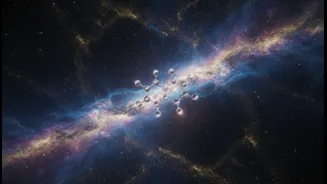
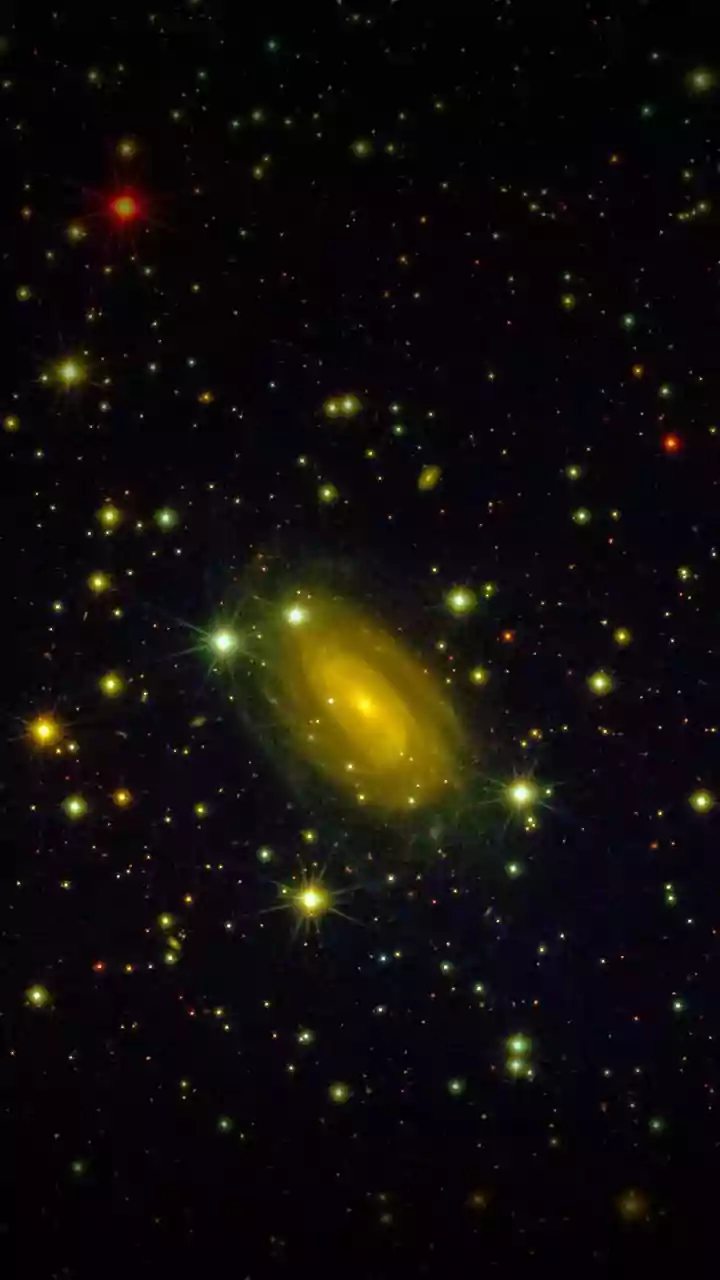
Scientists have detected a sugar molecule called erythrulose for the first time in the interstellar medium, the vast clouds of gas and dust that exist between stars. Using radio telescopes in Spain, an international team of researchers located the sugar in a molecular
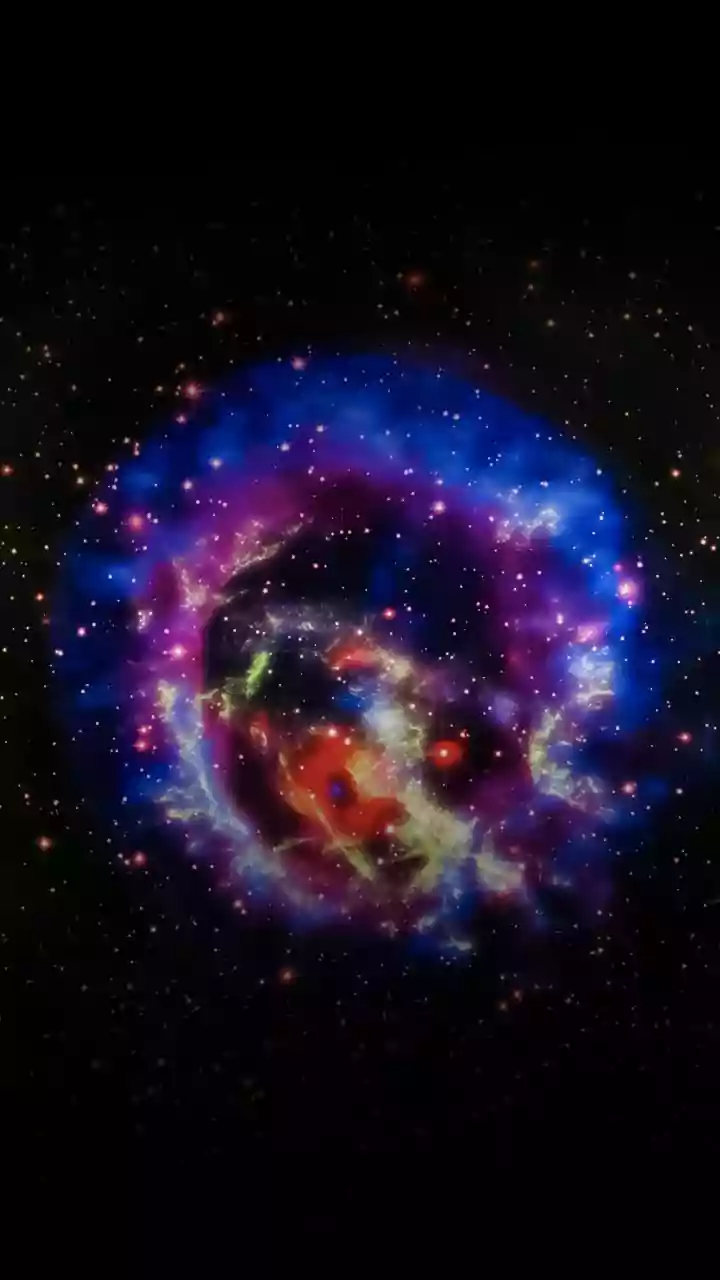
cloud known as G+0.693−0.027, which lies near the supermassive black hole at the centre of the Milky Way, roughly 26,700 light-years from Earth. These molecular clouds are often called 'stellar nurseries' because they are the birthplaces of stars and planets, making them cosmic laboratories for prebiotic chemistry. Finding a complex molecule like erythrulose here provides strong evidence that the raw materials for life can form long before planets even exist.
What Exactly is Erythrulose?
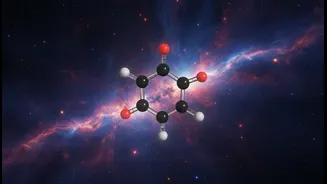
Erythrulose is a four-carbon sugar, a type of simple carbohydrate. On Earth, it’s found in small amounts in fruits like raspberries and is also used in cosmetics, particularly sunless tanning lotions where it reacts with skin cells to create a brown colour. While it's not the exact sugar found in our DNA, its discovery is a landmark moment. Previously, scientists had found simpler two-carbon molecules like glycolaldehyde, which is not technically a true sugar. Erythrulose, with its four carbons, is the first true sugar and the largest non-cyclic molecule ever identified in interstellar space, demonstrating a higher level of chemical complexity than previously confirmed.
From Stardust to Solar Systems
This discovery adds a crucial piece to the puzzle of how life might begin. One major question is how Earth obtained the necessary chemical ingredients. Lab experiments simulating early Earth conditions have struggled to produce sugars in the required amounts. This finding supports a 'delivery' hypothesis: these essential molecules could have formed in space, become embedded in the dust and ice of comets and asteroids, and then been delivered to young planets like Earth during a period of heavy bombardment billions of years ago. Researchers estimate that millions of tonnes of erythrulose could have arrived on early Earth this way, providing a ready-made stockpile of prebiotic materials.
A Stepping Stone to RNA
The true excitement lies in what this discovery implies. Sugars are the backbone of the nucleic acids RNA and DNA. While erythrulose is not directly part of RNA, it belongs to the same chemical family. Its structure is closely related to other sugars that are believed to be evolutionary predecessors to ribose, the five-carbon sugar that forms the backbone of RNA. Many scientists believe RNA was the first genetic material on Earth, preceding DNA. Finding a four-carbon sugar like erythrulose makes it far more plausible that more complex, five-carbon sugars like ribose could also form under similar conditions. It shows that the universe is capable of assembling these intricate structures on its own.
Rewriting the Chemical Cookbook
Interestingly, the detection of erythrulose challenges some existing theories. Scientists had long assumed that complex molecules in space form sequentially, by adding one carbon atom at a time. If this were the case, they would expect to find simpler three-carbon sugars in much higher abundance. However, the search for three-carbon sugars in the same cloud came up empty, while erythrulose was present. This suggests that erythrulose might form through a different pathway, perhaps by the combination of two simpler two-carbon molecules on the frozen surfaces of interstellar dust grains. This unexpected abundance reshapes our understanding of how chemistry operates in the extreme cold and vacuum of space.