



The Problem with Numbers
We are drowning in data, but starved for meaning. Climate science communication often relies on enormous figures: gigatons of ice, square kilometers of lost area, millimeters of sea-level rise. These metrics are scientifically precise but emotionally
barren. They fail to connect because they are not on a human scale. Experts in science communication argue that storytelling is a powerful tool to make data relatable. Instead of just stating abstract numbers, the focus should be on what they mean for people's lives and local environments. Presenting raw data without context can make audiences disengage, but framing it around local impacts makes the issue immediate and personal. Effective communication avoids jargon and excessive statistics, instead using visuals and stories to explain what a changing climate will actually mean for a specific community or coastline.
What Is Happening in Antarctica?
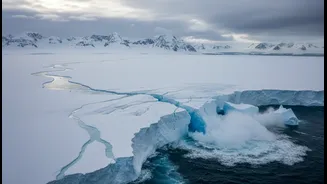
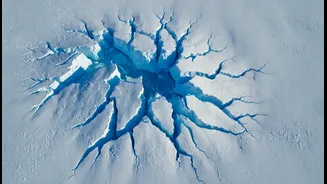
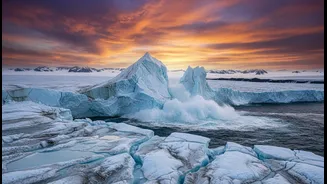
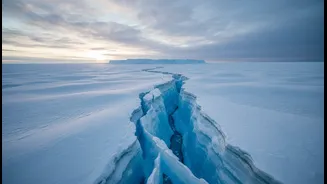
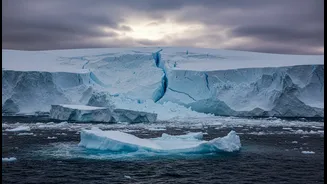
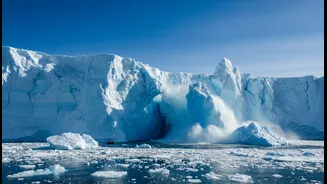
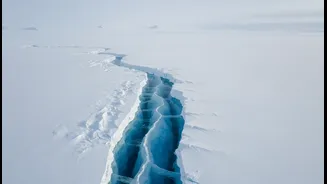
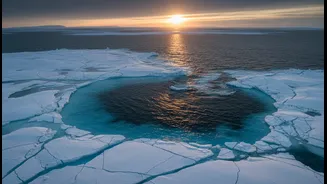
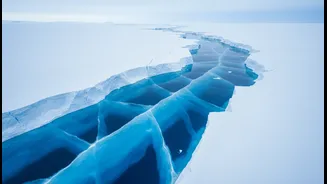
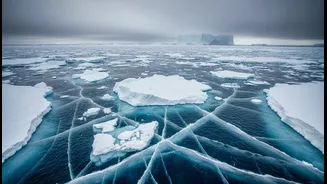
The picture in Antarctica is increasingly alarming. The continent is losing ice mass at a significant rate. Recent data shows an average loss of about 135 gigatons per year between 2002 and 2025. This isn't happening uniformly. While parts of East Antarctica have seen some modest mass gain from snowfall, this is vastly overshadowed by the dramatic losses in West Antarctica. A major area of concern is the Thwaites Glacier, often called the 'Doomsday Glacier'. It acts as a crucial brake, holding back a vast quantity of ice. Recent studies show its last remaining ice shelf is fracturing and could disintegrate very soon, potentially within months or a few years. The loss of this shelf won't cause the entire glacier to collapse overnight, but it will significantly accelerate its flow into the ocean, locking in future sea-level rise. The full collapse of Thwaites alone could raise global sea levels by about 65 centimeters.
From the South Pole to India's Shores
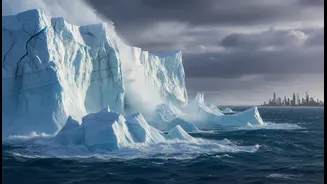
The melting of a distant ice sheet is not an abstract problem for India; it is a direct threat to its 7,500-kilometer coastline. A July 2025 study by the Indian National Centre for Ocean Information Services (INCOIS) projected that sea levels around India could rise by up to one meter by 2100. This isn't a uniform threat. Cities like Mumbai, Kolkata, and Chennai are at high risk of extreme flooding events. Projections show Mumbai and Kolkata face the highest flood risks, especially under high-emission scenarios. Some estimates suggest that by 2050, large parts of Mumbai could be at risk of being wiped out by coastal floods, with the historic downtown core being particularly vulnerable. This isn't just about losing land; it's about the 350 million people who live near India's coastlines and the critical infrastructure—ports, power plants, and homes—that supports them.
A New Language for a Warming Planet
To bridge the gap between scientific fact and public action, we need a new way of talking about climate change. Communication experts suggest focusing on locally relevant impacts. Instead of just a global average, talk about what 65 centimeters of sea-level rise means for Marine Drive in Mumbai or the Sundarbans delta. It means translating abstract data into lived experience. Research shows that using stories, visuals, and trusted local messengers is far more effective than bombarding people with statistics. Framing climate change as a public health issue, for example, can make it more immediate. The goal is to move from awareness to action. By making the consequences of Antarctic ice loss clear and personal, we can build the public understanding and political will needed to address the crisis. It's not about simplifying the science, but about making it resonate.