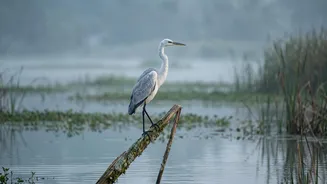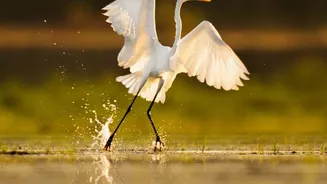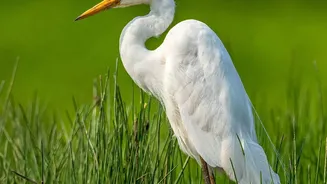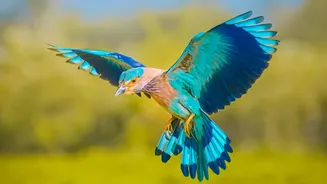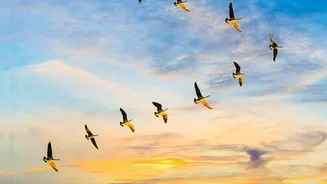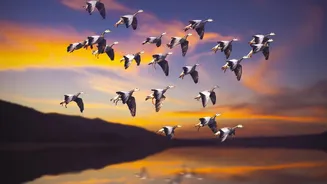





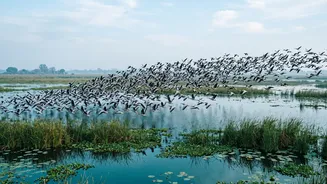
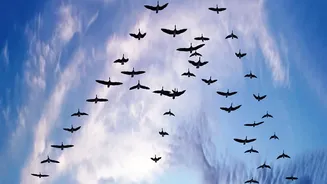
A timeless spectacle has begun to unfold across India's skies and wetlands. As the harsh winter descends upon Central Asia, flocks of migratory birds have started their epic journey south, seeking food and refuge in our warmer climes.
The First Arrivals Signal a Changing Season
The annual arrival
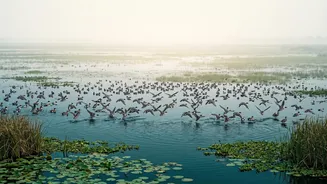
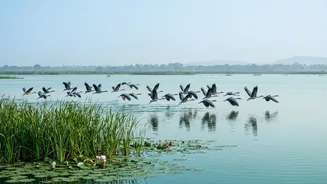
of winged visitors is a cherished natural event, and this year, the first flocks have already been spotted in various parts of the country. In late October, birdwatchers in Jalpaiguri, West Bengal, noted the early appearance of species like the Ruddy Shelduck and Tufted Duck along the Teesta River. Similarly, in Jammu and Kashmir, the Gharana Wetland Conservation Reserve near the International Border is buzzing with the arrival of its first guests, including a flock of around 300 Bar-headed Geese. This initial wave marks the beginning of a larger migratory movement that will see millions of birds populate India's water bodies over the next few months.
An Epic Journey Across Continents
These birds are undertaking one of nature's most arduous journeys. To escape the freezing temperatures and scarce food in their breeding grounds in Siberia, Russia, Mongolia, and other parts of Central Asia, they travel thousands of kilometres. Their primary route is the Central Asian Flyway (CAF), a vast migratory corridor that stretches from the Arctic Ocean to the Indian Ocean, covering 30 countries. India plays a crucial role in this flyway, providing critical wintering habitats and stopover sites for over 90% of the bird species that use the route. The journey is perilous, requiring the birds to navigate formidable obstacles like the Himalayas. Species such as the Bar-headed Goose are famous for being among the world's highest-flying birds, capable of soaring over the towering Himalayan peaks where oxygen levels are incredibly low.
India’s Most Welcoming Wetlands
India is dotted with vital wetlands that serve as winter homes for these avian travellers. These sites, many of which are designated as Ramsar Sites of International Importance, become bustling avian hubs. Chilika Lake in Odisha, Asia’s largest brackish water lagoon, is one of the most significant, hosting over a million birds each winter. The mid-winter census in January 2026 recorded over 1.1 million migratory birds at Chilika. Another famed destination is Keoladeo National Park in Bharatpur, Rajasthan, a UNESCO World Heritage Site that hosts thousands of birds. Other important sites include the Magadikere Conservation Reserve in Karnataka, known for its large congregations of Bar-headed Geese, and newly designated Ramsar sites like Sukhna Wetland in Chandigarh, which serves as a vital staging post.
Star Species to Watch For
Among the hundreds of species that arrive, some are particularly iconic. The Bar-headed Goose is a crowd favourite, celebrated for its incredible high-altitude migration. These birds travel from their breeding grounds in places like Mongolia to winter in wetlands across India, from Jammu and Kashmir down to Karnataka. Other notable arrivals include the Northern Pintail, Eurasian Wigeon, and Gadwall, which often arrive in huge numbers, as recorded at Chilika. Birdwatchers also eagerly await waders like sandpipers and plovers, raptors like the Steppe Eagle, and various species of ducks and cranes that make India their temporary home. The arrival of these diverse species transforms local ecosystems into vibrant displays of biodiversity.
More Than Just a Spectacle
The migration is not just a beautiful phenomenon; it is ecologically vital. These birds provide a range of ecosystem services, including pest control, seed dispersal, and nutrient cycling. Their arrival is also a key indicator of the health of our wetlands. A consistent and diverse influx of birds suggests that the habitat is thriving, as seen in places like Chilika Lake, where conservation efforts to remove illegal encroachments have led to a steady rise in bird populations. Furthermore, this annual event boosts local economies through ecotourism, as birdwatchers and photographers flock to these sites to witness the spectacle. However, this delicate cycle faces threats from habitat loss, pollution, and the broader impacts of climate change, which can alter migration timings and affect food availability.