








Why Your Wardrobe is a Mould Magnet
Mould thrives in dark, damp places with poor air circulation, making closets a perfect breeding ground. In a humid climate like India's, this problem is amplified. Wardrobes, often packed with clothes and kept closed, trap moisture from the air and from garments
that may not be 100% dry. This creates the ideal trifecta for mould spores to flourish: darkness, moisture, and an organic food source like cotton clothes or wooden shelves. The monsoon season, with its persistent high humidity, makes wardrobes particularly vulnerable.
Detecting the Unseen: Signs of Hidden Mould
Often, the first sign of mould isn't what you see, but what you smell. A persistent musty, earthy odour is a major red flag that mould is growing somewhere nearby. Don't just look for the obvious fuzzy black or green spots. Hidden mould can manifest in subtle ways. Check for peeling paint or wallpaper inside the cupboard, warped wooden shelves, or slight discoloration on walls, especially in back corners. Carefully inspect items that have been stored for a long time without being moved. If the smell is present but you see nothing, the mould could be growing behind shelves or in wall cavities, indicating a larger moisture issue.
Step 1: The Renter-Friendly Clean-Up
Before you can prevent mould, you must safely remove what's already there. For renters, harsh chemicals are often not an option. A simple and effective solution is white distilled vinegar. Its acidic properties can kill over 80% of mould species. Empty the wardrobe completely. Mix equal parts white vinegar and water in a spray bottle and apply it to the mouldy surfaces. Let it sit for at least an hour to penetrate and kill the spores before scrubbing gently with a soft brush. Wipe the area clean with a damp cloth and, most importantly, allow it to dry completely. Opening a window and using a fan can speed this up. Remember to wear gloves and a mask to protect yourself from inhaling spores during cleaning.
Step 2: Deploying Moisture-Absorbing Packs
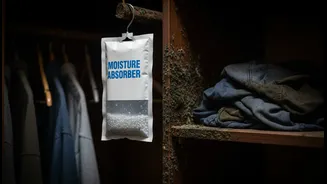
Moisture-absorbing hanging packs are your key preventative tool. These products typically contain calcium chloride, a salt that is highly effective at pulling excess moisture from the air and trapping it as water in a collection pouch. It's crucial to understand that these packs do not kill existing mould; they prevent new mould from growing by creating a less humid environment. For best results, hang one or two packs inside your wardrobe, ensuring they have space around them to allow for air circulation. They are most effective in enclosed spaces like cupboards. You will see the collected water in the bag increase over time. Once the crystals have fully dissolved and the bag is full of water, simply discard it and replace it with a new one.
Step 3: Reinforce Your Defences
Hanging packs are powerful, but they work best as part of a broader strategy. To keep your wardrobe consistently mould-free, adopt a few simple habits. First, improve airflow. Avoid overstuffing your wardrobe, as tightly packed clothes trap moisture. Periodically leave the wardrobe doors ajar to allow air to circulate. Make absolutely sure all clothes are completely dry before you put them away. Lining shelves with newspaper can also help absorb excess moisture and is easy to replace. For a more traditional Indian approach, placing dried neem leaves or camphor in the corners of your wardrobe can also help deter mould and repel insects.
When You Need to Call Your Landlord
These solutions are highly effective for managing mould caused by atmospheric humidity. However, if you find that mould returns quickly after cleaning or that the walls feel damp to the touch, it may signal a more serious structural issue. Problems like leaky pipes, cracks in the external wall, or poor building-wide ventilation are beyond a renter's ability to fix. In these cases, document the problem with photos and inform your landlord in writing. Persistent, widespread mould can be a health hazard, and addressing the root cause is essential for a permanent solution.