
From 'Complete' to 'Qualified'
When engineers say a spacecraft is 'complete', they mean all its components—computers, thrusters, scientific instruments, and solar panels—have been bolted together. It looks like the finished article, a marvel of modern engineering. But in the world
of space exploration, 'complete' is just the starting line for a grueling marathon of tests. Before a multi-million-dollar spacecraft is strapped to a rocket, it must prove it can survive the harshest environments known to science. This qualification process is a series of brutal trials designed to simulate everything from the violence of launch to the silent, extreme conditions of deep space. There are no repair shops millions of kilometres from Earth, so every potential weakness must be found and fixed before it leaves the ground.
The Ultimate Stress Exam
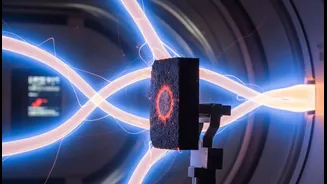
The final testing phase, known as the environmental test campaign, pushes a spacecraft to its absolute limits. First comes the 'shake'. The spacecraft is mounted on a giant vibration table and shaken violently to simulate the intense forces of a rocket launch. Following this, it faces the 'roar' in an acoustic chamber, where powerful horns blast it with noise exceeding 154 decibels—louder than a jet engine at close range—to mimic the acoustic shockwaves of liftoff. Then comes the 'bake and freeze' inside a thermal vacuum chamber. Here, the air is pumped out to create a space-like vacuum, while powerful lamps and super-cooled walls expose the craft to the extreme temperature swings it will face, from scorching solar radiation to the freezing cold of shadow. Finally, electromagnetic compatibility tests ensure that the spacecraft's own electronic systems don't interfere with each other, a crucial step for a machine that must operate flawlessly on its own.
Meet Hera: Earth's Asteroid Investigator
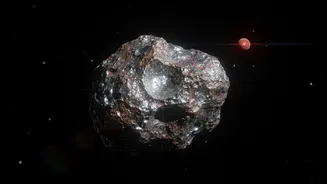
A prime example of a mission undergoing this rigorous process is ESA’s Hera spacecraft. Hera is a planetary defense mission with a vital goal: to study the aftermath of NASA's DART mission, which successfully impacted the small asteroid Dimorphos in 2022. That impact was humanity's first test of the 'kinetic impactor' technique for deflecting a potentially hazardous asteroid. Now, Hera's job is to fly to the Didymos-Dimorphos asteroid system, arriving in late 2026, and perform a detailed post-crash investigation. It will measure Dimorphos's mass, study the crater left by DART, and analyse its composition. This data is essential for turning asteroid deflection from a one-time experiment into a reliable, repeatable planetary defense strategy.
Why Failure Is Not an Option
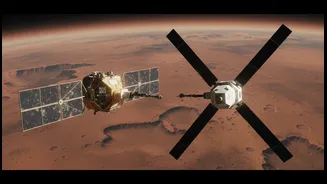
The stakes for the Hera mission are immense. After launching in October 2024, it embarked on a two-year journey that includes a gravity-assist flyby of Mars in 2025. By the time it arrives at its target, it will have travelled hundreds of millions of kilometres. The meticulous testing on Earth is what gives mission controllers the confidence that its systems will work perfectly upon arrival. Hera will use advanced autonomous navigation, akin to a self-driving car, to manoeuvre in the ultra-low gravity of the asteroid system. It will also deploy two smaller CubeSats, Milani and Juventas, which will fly even closer to the asteroids to conduct their own scientific investigations. Every system must perform perfectly, from the main communications antenna to the smallest sensor on its CubeSats, justifying the years of work and investment from multiple nations.