







Why 15 Minutes Is All You Need
You don't need to spend hours in the gym to see results. Short, intense bursts of exercise, often called 'exercise snacks' or mini-workouts, can be just as effective as longer sessions. The principle is simple: high-intensity circuit training (HICT) raises
your heart rate and engages multiple muscle groups quickly. Studies show that even 10-minute sessions can improve mood, boost metabolism, and contribute to weight loss and muscle strength. The key is consistency. A daily 15-minute workout is far more beneficial than one long workout per week, as it builds a sustainable habit and keeps your body active. This approach makes it easier to stick to your fitness goals during a hectic time.
The Essential 3-Minute Warm-Up
Never skip a warm-up, no matter how short your workout is. A proper warm-up prepares your muscles for exercise, increases blood flow, and helps prevent injuries. It signals to your body that it's time to work. Spend about three minutes on dynamic movements that gently raise your heart rate and loosen your joints. Start with 30 seconds of light jogging in place, followed by 30 seconds of jumping jacks. Then, perform arm circles (30 seconds forward, 30 seconds backward) to warm up your shoulders. Finish with 30 seconds of leg swings on each side to open up your hips.
Your 15-Minute Daily Circuit Plan
This workout is structured as a circuit. You'll perform each exercise for 45 seconds, followed by 15 seconds of rest before moving to the next. This work-to-rest ratio keeps the intensity high. Complete all exercises in one circuit, rest for one minute, and then repeat the entire circuit one more time. To keep things interesting, you can alternate between the two different circuits provided below on different days. All you need is a little space and a timer. No equipment is necessary.
Circuit 1: The Full-Body Burn
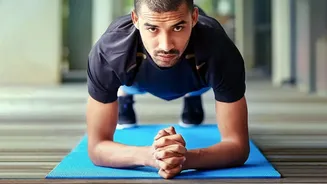
This circuit targets all your major muscle groups for a comprehensive and efficient workout. Remember to focus on your form. 1. Bodyweight Squats: Stand with feet shoulder-width apart, keep your chest up, and lower your hips as if sitting in a chair. Push through your heels to return to the start. This works your legs and glutes. 2. Push-ups: Place your hands slightly wider than your shoulders. Lower your body until your chest nearly touches the floor, keeping your back straight. If needed, perform them on your knees. 3. High Knees: Run in place, bringing your knees up towards your chest as high as you can. This is a great cardio move that also engages your core. 4. Plank: Hold a push-up position, resting on your forearms or hands. Keep your body in a straight line from your head to your heels, engaging your core and glutes.
Circuit 2: Cardio and Core Focus
This circuit places extra emphasis on cardiovascular endurance and strengthening your abdominal muscles. 1. Jumping Jacks: A classic cardio exercise to get your heart rate up. Jump your feet apart while bringing your arms overhead. 2. Alternating Lunges: Step forward with one leg and lower your hips until both knees are bent at a 90-degree angle. Push back to the starting position and switch legs. This targets your quads, hamstrings, and glutes. 3. Mountain Climbers: Start in a plank position. Quickly bring one knee towards your chest, then alternate legs in a running motion. This is fantastic for your core and cardio health. 4. Glute Bridges: Lie on your back with your knees bent and feet flat on the floor. Lift your hips off the floor until your body forms a straight line from your shoulders to your knees. Squeeze your glutes at the top before lowering back down.
The Crucial 2-Minute Cool-Down
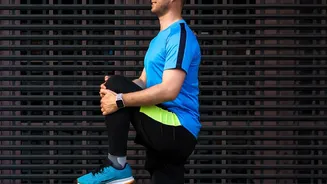
Just as a warm-up is essential, so is a cool-down. It allows your heart rate to return to normal gradually and helps reduce muscle stiffness and soreness. After your final circuit, walk around for a minute to let your breathing settle. Then, perform a few static stretches, holding each for about 30 seconds. Good options include a standing quad stretch, a hamstring stretch (forward fold), and a chest opener to stretch your shoulders and upper back. Don't forget a gentle spinal twist while seated or lying down to release tension.