





The 100-Gram Showdown
On paper, a direct comparison of a 100-gram serving seems to give papaya a clear edge for those watching their intake. Papaya contains fewer calories (around 43 compared to mango's 60) and significantly less sugar (about 8 grams versus 14 grams in a mango).
Furthermore, papaya delivers a more potent dose of Vitamin C, providing roughly 61 mg, which is about 68% of the daily recommended value. Mango, while still a good source, offers around 36 mg of Vitamin C in the same amount. However, mango pulls ahead in other areas. It is richer in Vitamin A, Vitamin E, and folate. This initial look suggests a trade-off: papaya is lighter and a Vitamin C powerhouse, while mango offers a broader mix of other essential vitamins.
Why Portion Size Changes Everything
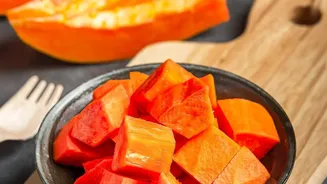
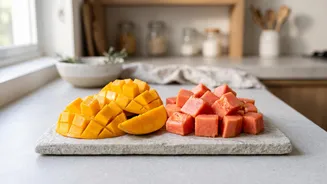
The 100-gram comparison is useful, but it doesn't reflect how people actually eat these fruits. A 'serving' is rarely weighed out on a scale. More often, it’s a bowl of cubed fruit or half a fruit. A standard one-cup serving of cubed papaya (about 145g) contains around 62 calories and 11 grams of sugar. A cup of cubed mango (about 165g) has nearly 99 calories and 22.6 grams of sugar. Suddenly, the gap widens considerably. By simply eating a 'cup' of each, you consume about 37 more calories and double the sugar with mango. This is the central lesson: comparing fruits without considering realistic portion sizes can be misleading. Your actual nutritional intake is defined by what’s in your bowl, not what's on a lab sheet.
The Mango: A Vitamin A and Energy Champion
When you enjoy a cup of mango, you're getting a significant nutritional return for its higher calorie and sugar count. Its most notable benefit is its high Vitamin A content, primarily from beta-carotene, which is crucial for vision, immune function, and skin health. A single cup can provide around 10% of your daily Vitamin A needs. Mango is also an excellent source of folate and copper. While it has more sugar, its glycemic index (GI), which measures how quickly a food raises blood sugar, is surprisingly lower than papaya's, typically around 51. This means it may cause a gentler rise in blood sugar, making it a steadier source of energy.
The Papaya: Lighter, with a Digestive Secret
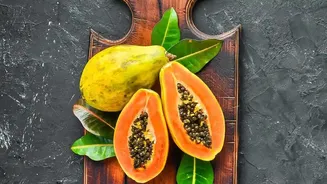
Papaya’s main claim to fame is its impressive Vitamin C content. A one-cup serving delivers about 88 mg, which can be nearly 100% of your recommended daily intake. It’s a fantastic choice for immune support. But its unique advantage lies in an enzyme called papain. Papain is a proteolytic enzyme, meaning it helps break down proteins, which can aid digestion, particularly after a proteinheavy meal. This makes papaya more than just a source of vitamins; it's a digestive aid. While its glycemic index is slightly higher than mango's, often cited between 56 and 60, its lower overall sugar and calorie load per cup makes it a favourable choice for weight management.
Making the Right Choice for You
So, which fruit should you choose? The answer depends entirely on your personal health goals. If you are focused on weight loss or managing your sugar intake, papaya is the lighter option with fewer calories and less sugar per cup. Its high Vitamin C content is also a major plus for immune health. If you're seeking to boost your Vitamin A intake for eye and skin health, or want a more sustained energy release, mango is the superior choice, despite its higher sugar content. For those looking to aid their digestion naturally, the papain in papaya offers a unique benefit that mango can't match. Both fruits are rich in fiber, which is essential for gut health and feeling full.