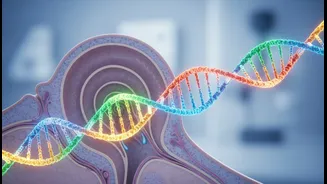









The Challenge of Genetic Deafness
Hereditary factors are responsible for a majority of hearing loss cases present at birth. While there are many genes involved, a particular type of profound deafness is caused by mutations in a single gene: OTOF. This gene provides the instructions for making
a protein called otoferlin, which acts as a crucial messenger, helping transmit sound signals from the sensory hair cells in the inner ear to the brain. When both copies of the OTOF gene are faulty, this communication breaks down. The ear's structures may be perfectly intact, but without otoferlin, the brain receives no auditory information, resulting in a condition known as auditory neuropathy. Until now, the only options for managing this have been hearing aids or cochlear implants, devices that help process sound but do not restore natural biological hearing.
A New Approach: How Gene Therapy Works
Gene therapy offers a revolutionary alternative. Instead of bypassing the problem, it aims to fix it. The concept is to deliver a healthy, functional copy of the OTOF gene directly to the cells that need it in the inner ear's cochlea. To do this, scientists use a delivery vehicle, typically a harmless, modified adeno-associated virus (AAV). This virus is engineered to carry the genetic payload without causing illness. The therapy is administered as a one-time injection into the inner ear during a surgical procedure similar to that for a cochlear implant. Once inside, the new gene instructs the cells to begin producing the correct otoferlin protein, effectively restoring the broken link in the chain of hearing.
Remarkable Results from Clinical Trials
Recent clinical trials have produced astonishing results. Pharmaceutical companies like Regeneron and Eli Lilly (through its subsidiary Akouos) have led studies showing that this therapy can work. In one pivotal trial for Regeneron's therapy, now approved by the US FDA and named Otarmeni, 80% of participants experienced significant hearing improvement. Some children who were completely deaf began responding to sounds within weeks of treatment. Follow-up studies have shown these hearing gains are not temporary, lasting for years in some cases. Multiple trials have reported patients going from profound deafness to being able to hear whispers and hold conversations without needing to lip-read. The safety profile has also been encouraging, with most side effects being mild and temporary.
Who Can Benefit from This Therapy?
It is crucial to understand that this is not a universal cure for all deafness. The current therapies are highly specific. They are designed exclusively for individuals with hearing loss caused by mutations in both copies of the OTOF gene. This accounts for an estimated 2% to 8% of all cases of congenital genetic hearing loss. Eligibility for clinical trials often requires patients to have been confirmed through genetic testing to have this specific mutation and to have preserved inner ear structures. People who already have cochlear implants are typically not eligible for treatment in the same ear. Therefore, while the breakthrough is immense, its immediate application is for a very select group of patients.
The Path Forward in India and Beyond
The success with OTOF-based therapy has created a wave of optimism and investment in the field. Researchers are already working on adapting these techniques to target other, more common genes responsible for hereditary deafness. For India, which has a significant population with hearing impairment, these developments hold immense promise. While these therapies are currently advancing through approvals in places like the US, the global success of these trials paves the way for future availability in other countries. The key next steps involve navigating regulatory approvals, scaling up manufacturing, and addressing the inevitable questions of cost and accessibility. This first approved gene therapy for hearing loss marks the dawn of a new era, turning what was once science fiction into a life-changing reality for the first of what will hopefully be many patients.