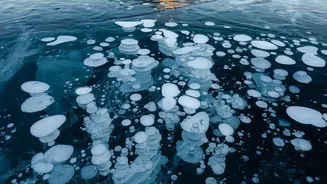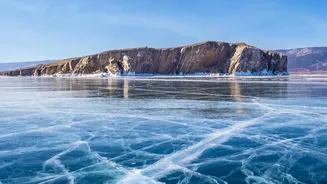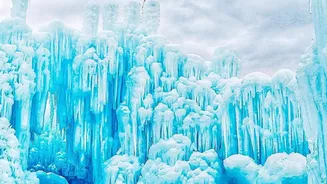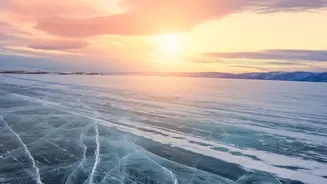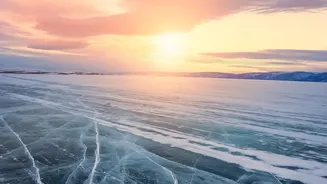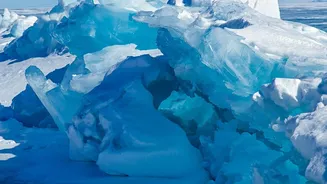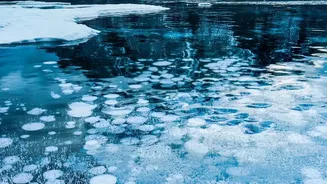




Deep beneath the frozen surface of a lake in the Canadian Rockies, a breathtaking natural spectacle unfolds each winter. Stacks of luminous white discs appear suspended in the crystal-clear ice, creating a scene that is truly magical.
A Frozen Spectacle
Located in Alberta,
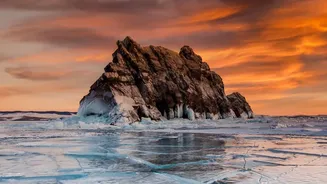
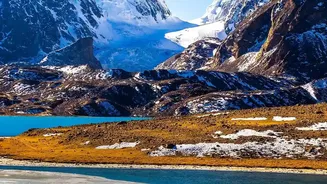
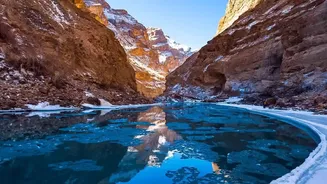
Canada, Abraham Lake has become famous for a stunning winter phenomenon: trapped methane bubbles. As the lake freezes over, these bubbles, rising from the lakebed, are caught in layers of ice. The result is a surreal underwater world of stacked and suspended orbs that look like frozen jewels or strings of pearls. This visual marvel, set against the backdrop of the Rocky Mountains, has made Abraham Lake a must-visit destination for photographers and nature lovers from across the globe. The bubbles are not just on the surface; they are trapped at various depths, creating a unique three-dimensional effect that changes with the light and viewing angle.
The Science Beneath the Ice
These captivating formations are not air pockets but bubbles of methane gas. Abraham Lake is an artificial reservoir created in 1972 by the construction of the Bighorn Dam. When the area was flooded, vast amounts of organic matter—plants, trees, and soil—were submerged. Bacteria on the lake floor feast on this decaying material, releasing methane gas as a byproduct. In warmer months, this gas simply bubbles up and escapes into the atmosphere. But in winter, as the lake's surface freezes, the rising methane gets trapped. As the ice thickens layer by layer, it captures more bubbles, creating the distinctive stacked columns that make the lake famous. Methane is a potent greenhouse gas, and while this is a natural process, it serves as a stunning visual representation of phenomena occurring in northern lakes worldwide.
Why Abraham Lake is Unique
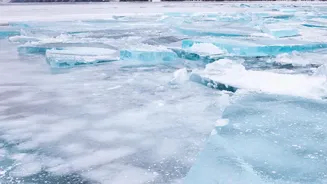
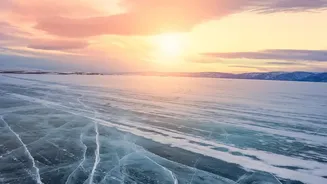
While other northern lakes produce methane bubbles, Abraham Lake is one of the best places in the world to see them. This is due to a combination of perfect conditions. The man-made nature of the lake means there is an abundance of submerged vegetation to fuel methane production. More importantly, the lake is situated in a region known for powerful, persistent winds. These winds act like a natural Zamboni, constantly sweeping snow off the surface of the ice. This prevents a thick blanket of snow from obscuring the view, leaving behind a polished, glass-like surface that offers window-like clarity to the bubble formations below.
Planning Your Visit
The prime season for viewing the ice bubbles is typically from mid-January to early February. By this time, the ice is usually thick and stable enough for walking, and the bubbles are at their most visible. The lake is located along the scenic David Thompson Highway (Highway 11), with popular viewing spots including Preacher's Point, the Belly of Abraham, and Hoodoo Creek. Visitors should be prepared for frigid temperatures and strong winds, so dressing in warm, windproof layers is essential. Because services are extremely limited in the area during winter, it's wise to arrive with a full tank of gas and plenty of snacks and hot drinks.
A Beautiful but Risky Adventure
While the experience is unforgettable, visiting Abraham Lake in winter comes with inherent risks. Ice conditions can be unpredictable and vary greatly across the lake's surface. It is crucial to be cautious, as fluctuating water levels in the reservoir can create air gaps or weak spots, particularly near the shore or where rivers flow in. For safety, experts recommend a minimum ice thickness of 15 cm for walking. Visitors should always wear ice cleats or traction aids for grip on the slick surface. Due to the potential dangers and limited cell service, many people opt to hire a local guide who is experienced in assessing daily ice conditions and knows the safest and most spectacular spots to explore.