


The Rise of the Over-Styled Shelf
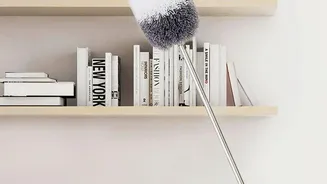
You know the look: shelves crammed with aesthetically pleasing objects, books turned spine-inward to maintain a neutral palette, and every item artfully placed to scream 'effortlessly chic.' This was the era of the 'shelfie,' an offshoot of the selfie
where the goal was to present a meticulously styled slice of one's life. Driven by the visual nature of Instagram and Pinterest, entire shelves became less about storage and more about performance. They were backdrops for a certain kind of online identity, filled with curated collections that often felt impersonal. This trend toward maximalist, layered displays became so popular that it created a sense of pressure to accumulate and arrange objects not for personal joy, but for public consumption. The result was often visual noise—a space so full that the eye has nowhere to rest.
A Shift Away from Performative Decor
Lately, however, a fatigue has set in. The constant pressure to curate, style, and perform has led many to question the purpose of their decor. Does a home need to be a showroom? The backlash is a move toward more personal, less cluttered environments. The trend reversal is not necessarily a full swing into stark minimalism, but a pivot towards intentionality. Homeowners are increasingly seeking comfort and individuality over rigid design rules. The desire is for a space that feels good to live in, not just one that looks good in a photograph. This means letting go of the idea that every surface needs to be filled and every object must fit into a pre-approved color story. It’s a rejection of conspicuous consumption in favor of a more mindful approach to what we bring into our homes and how we display it.
Finding Comfort in Visual Balance
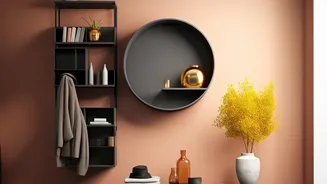
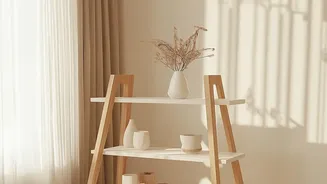
In place of over-styling, the focus has shifted to a core design principle: visual balance. This isn't about rigid symmetry, where everything is perfectly mirrored. Instead, it's about creating a sense of equilibrium by distributing the 'visual weight' of objects in a way that feels stable and harmonious. An unbalanced room can feel chaotic or unfinished, while a balanced one feels calm and inviting. Achieving this might mean balancing a large, heavy object on one side of a shelf with a collection of smaller, lighter items on the other. This asymmetrical approach often feels more dynamic and natural. It’s about creating a composition where each element has a purpose and there’s enough 'negative space,' or breathing room, to allow the eye to rest and appreciate the individual pieces.
How to Create Balanced Shelves
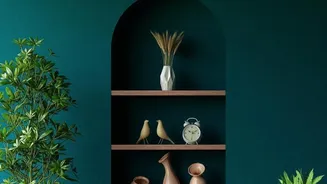
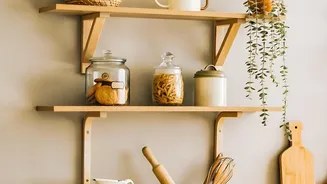
Embracing visual balance doesn't require a design degree, just a more intuitive approach. Start by removing everything and only putting back what you truly love. One of the biggest mistakes is simply having too many items on a single shelf. Instead of filling every inch, think in terms of creating small vignettes or clusters. An easy rule of thumb is to group items in odd numbers, like threes or fives, as it tends to feel more organic to the eye. Vary the height and scale of your objects to create movement and interest. Mix vertical stacks of books with horizontal ones, and lean a piece of art against the back. Don't be afraid to mix materials like wood, ceramic, and glass to add texture. Most importantly, step back and edit. The goal isn't perfection, but a personal arrangement that brings a sense of calm and order to your space.