





The Constant Balancing Act
At the heart of India's pulse policy is a difficult balancing act. On one side, there are hundreds of millions of consumers for whom dal is a primary source of protein; keeping prices affordable is a political and social necessity. On the other side are the farmers
who grow these crops. If market prices fall too low, they lose money and are discouraged from planting pulses in the future. The government, therefore, finds itself in a perpetual tug-of-war, trying to keep both households and farmers satisfied. Imports are one of the main levers it pulls to manage this delicate equilibrium, used as a tool to cool down prices when they rise too quickly.
Imports as a Quick Fix for Inflation
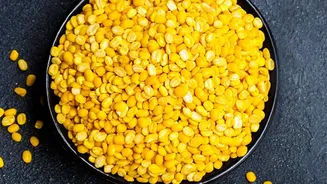
When domestic production is hit by factors like a patchy monsoon or when festive season demand spikes, pulse prices can shoot up. In such scenarios, the government can lower or remove import duties to make it cheaper for traders to bring in pulses from other countries like Canada, Australia, Myanmar, and Russia. Currently, for instance, imports of tur (pigeon peas) and urad (black gram) are allowed duty-free until March 2027 to boost domestic supply. The logic is straightforward: increasing the supply of pulses in the market should, in theory, bring down wholesale prices and eventually provide relief to consumers at the retail level. This is often seen as a faster solution than waiting for the next domestic harvest cycle.
The Unintended Consequences for Farmers
While imports can help consumers in the short term, they can be detrimental to farmers. If a large volume of cheaper imported pulses floods the market, especially around harvest time, it can cause domestic prices to crash. This often pushes the market price below the Minimum Support Price (MSP) set by the government, leaving farmers with lower-than-expected incomes. A history of unpredictable import policies can create uncertainty, making farmers hesitant to invest in pulse cultivation. This can lead to a vicious cycle: lower domestic production in the following season prompts more imports, further suppressing local prices and discouraging cultivation.
Will Your Dal Actually Get Cheaper?
Even when the government allows cheaper imports, the benefits don't always fully trickle down to the end consumer. Wholesale prices may fall, but retail prices can remain stubbornly high due to multiple factors. These include supply chain inefficiencies, hoarding by traders hoping to profit from future price rises, and fixed costs for milling, transport, and packaging. The timing and quantity of imports are crucial. If they arrive too late or in insufficient amounts, they may fail to curb festive season price spikes, as seen with recent increases in chana and tur prices ahead of Diwali. Conversely, excessive imports can hurt farmers without providing proportional relief to household budgets.
The Long Road to Self-Sufficiency
Recognizing the limitations and risks of import dependency, the Indian government has declared a long-term goal of achieving 'Aatmanirbharta' or self-sufficiency in pulses. A dedicated mission launched in 2025 aims to boost domestic production to 350 lakh tonnes by 2030-31 by distributing better seeds, expanding cultivation areas, and guaranteeing procurement at MSP. This strategy aims to create a stable ecosystem that ensures fair returns for farmers and predictable prices for consumers. However, this is an ambitious target. Imports currently still account for a significant portion of consumption, especially for pulses like tur and masoor, meaning that for the foreseeable future, import policy will remain a critical, albeit contentious, tool for managing India's food economy.