




A Sanctuary Against Light Pollution
For much of human history, the Milky Way was a nightly spectacle. Today, it’s a distant memory for many, obscured by the artificial glow of urbanisation. To combat this, the concept of a Dark Sky Reserve was born—a designated area where light pollution
is actively managed to preserve the natural darkness of the night sky. In late 2022, India established its very first such sanctuary in Hanle, Ladakh. This initiative, a collaboration between the Indian Institute of Astrophysics (IIA), the UT Ladakh administration, and local councils, protects a 22-kilometre radius within the Changthang Wildlife Sanctuary, ensuring its skies remain among the darkest on Earth. This designation is not just a label; it involves strict protocols on outdoor lighting and even vehicle headlights to maintain the area's pristine conditions.
The Unique Advantages of Hanle
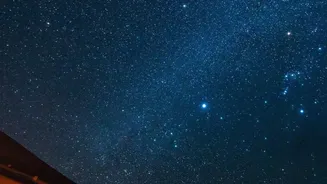
The choice of Hanle was no accident. Perched at an altitude of 4,500 metres (nearly 15,000 feet), this high-altitude cold desert offers conditions that are a dream for astronomers. The thin, dry air and over 255 clear nights a year provide exceptional visibility, which is why the IIA has operated the Indian Astronomical Observatory (IAO) here since 2001. The site’s remoteness means it has a Bortle-1 sky rating, the highest possible classification, indicating a complete absence of artificial light pollution. This allows for naked-eye viewing of celestial objects that are invisible from most other parts of the world, including the Andromeda Galaxy and the ethereal Zodiacal Light.
A Network of Science and Community
The Hanle initiative is more than just a protected zone; it's a living network that intertwines cutting-edge science with community empowerment. The core idea is to promote astro-tourism as a sustainable livelihood for the local Changpa community, who have traditionally relied on pastoralism. To achieve this, the IIA and its partners have trained dozens of local residents, many of them women, to become 'Astronomy Ambassadors'. These ambassadors are equipped with telescopes and the knowledge to guide visitors through the cosmos, explaining the science behind the stars and constellations. This model has spurred the growth of homestays, providing a new income stream that celebrates and protects the region’s unique natural heritage.
What Visitors Can See and Do
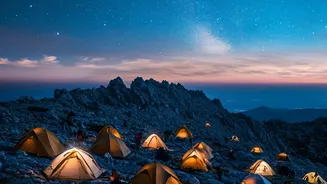
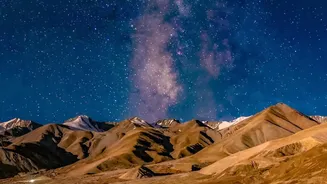
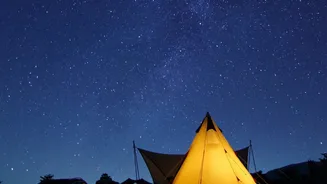
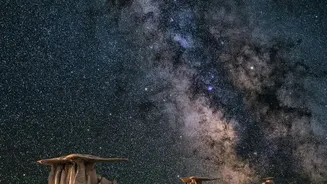
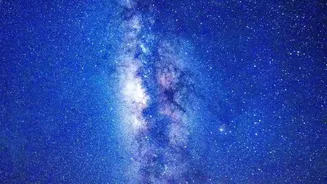
A trip to Hanle is a journey into the heart of the universe. On a clear, moonless night, the Milky Way stretches across the horizon not as a faint smudge, but as a brilliant river of stars. Visitors can join guided stargazing sessions led by the local ambassadors, peering through telescopes to see the rings of Saturn, distant nebulae, and sparkling star clusters. Beyond the night sky, the region offers its own stark beauty, with the historic 17th-century Hanle Monastery providing a cultural anchor. The journey itself, a multi-hour drive from Leh through the dramatic Changthang plateau, is an adventure that requires careful acclimatisation to the high altitude. Visitors need an Inner Line Permit (ILP) to access this remote area, and the best time to visit for clear skies is between May and October.