






India’s Next Frontier: The Bharatiya Antariksha Station
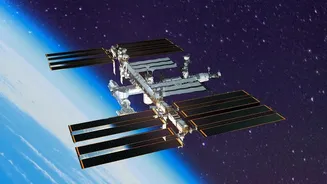
Building on the successes of its lunar and Mars missions, the Indian Space Research Organisation (ISRO) is embarking on its most ambitious project yet: constructing an indigenous space station. Officially named the Bharatiya Antariksha Station (BAS),
this orbital outpost is slated to become India's first permanent laboratory and residence in space. The plan involves assembling the station in a modular fashion, with the first component, known as BAS-01, targeted for launch in 2028. The entire five-module station, expected to weigh around 52 tonnes, is scheduled for completion by 2035. It will orbit the Earth at an altitude of approximately 400-450 kilometres, providing a sustained microgravity environment for Indian astronauts, or 'vyomanauts', to live and work.
A Stepping Stone Called Gaganyaan
The path to the Bharatiya Antariksha Station is paved by the Gaganyaan programme, India's inaugural human spaceflight mission. Gaganyaan is the crucial testbed for all the vital technologies required for long-duration human missions. This includes developing human-rated launch vehicles, sophisticated life support systems, crew escape protocols, and the complex procedures for rendezvous and docking in space. The programme aims to send a crew of three into orbit for a three-day mission, demonstrating India's capability to safely transport humans to space and back. Lessons learned and technologies perfected during the Gaganyaan missions, from astronaut training to life support, will directly feed into the development and operation of the space station, making it the foundational pillar of India's long-term human spaceflight goals.
A New Era for Astronauts and Science
For Indian astronauts, the space station represents a monumental shift from short-duration flights to extended stays in orbit, lasting from three to six months. This opens up a new universe of scientific research that is impossible to conduct on Earth. Astronauts will carry out long-term experiments in fields like biotechnology, pharmaceutical development, materials science, and human physiology. Studying the effects of microgravity on the human body is critical for planning future deep-space missions and can also lead to medical breakthroughs for diseases on Earth. The station will be a national laboratory in the sky, enabling cutting-edge research and innovation, and giving Indian scientists a unique platform to contribute to global scientific knowledge.
Strategic Significance and Future Ambitions
Beyond the scientific experiments, the Bharatiya Antariksha Station holds immense strategic value. It will place India in an elite club of nations with the capability to maintain a continuous human presence in space, enhancing its geopolitical standing and strategic autonomy. This ambitious project is set to drive technological innovation and boost India's domestic space economy by involving private sector industries in its construction and operation. Furthermore, the station is not seen as an end goal but as a crucial staging post for even grander ambitions. The experience and technology gained from operating the BAS are considered essential for achieving India's long-term goals, which include sending an Indian astronaut to the Moon by 2040 and undertaking future deep-space missions.