


An Invisible Threat Above
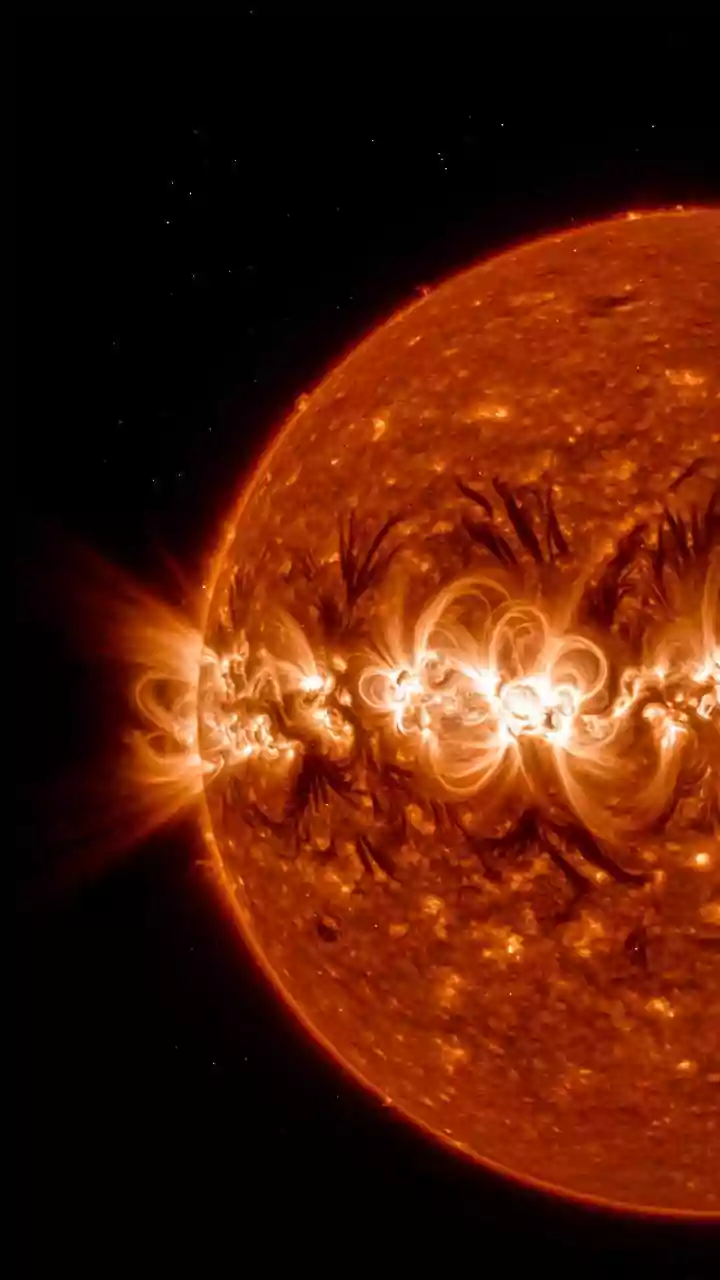
Space is not empty; it's filled with radiation. This includes energetic particles from the sun, cosmic rays from deep space, and particles trapped in Earth’s own magnetic field, known as the Van Allen belts. While Earth's atmosphere shields us on the ground,
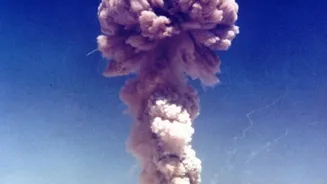
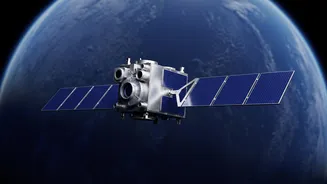
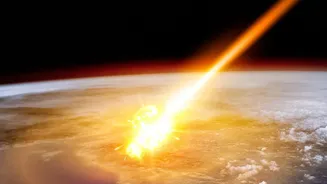
satellites are constantly bombarded. A hypothetical nuclear detonation in space would dramatically worsen this environment. Beyond the initial blast, a study published in early November 2026 highlights a more persistent danger: radioactive fission products can release electrons that become trapped by Earth's magnetic field, creating an artificial, intense radiation belt that can last for months or even years.
How Radiation Cripples a Satellite
High-energy particles act like microscopic bullets, wreaking havoc on a satellite's sensitive electronics. This damage occurs in two main ways. The first is cumulative degradation, where constant exposure gradually wears down components, a process measured as Total Ionizing Dose (TID). This can degrade solar panels, reducing their ability to generate power, or cause circuits to fail over time. The second type is a Single Event Effect (SEE), where one high-energy particle can cause immediate problems. It might flip a bit in a satellite's memory, corrupting data or commands, or trigger a runaway short circuit that burns out a component entirely.
Simulating an Orbital Catastrophe
To understand the scale of such a threat, researchers use complex computer models. The recent hypothetical scenario simulated a 1-megaton nuclear detonation at an altitude of 500 kilometres. The results were staggering. The initial burst of X-rays would immediately disable a small percentage of satellites in low-Earth orbit (LEO). However, the real devastation comes from the lingering artificial radiation belt. As the 13,000+ satellites in LEO repeatedly pass through this belt, the damage accumulates rapidly. The model showed that after just one week, approximately 98% of the LEO satellite constellation would be disabled.
The Domino Effect on Global Business
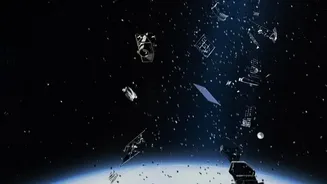
Losing such a vast number of satellites would be catastrophic for the global economy. Modern life is built on satellite services. GPS and navigation systems like India's NavIC would fail, paralysing logistics, shipping, and ride-hailing services. Financial markets, which rely on satellites for precise timing of transactions, would face chaos. Communications networks would be severely disrupted, impacting everything from international business calls to internet access in remote areas. Furthermore, the disabled satellites wouldn't just vanish; they would become uncontrolled space junk, dramatically increasing the risk of collisions that could destroy remaining functional satellites and make replacing the lost ones incredibly difficult.
Building a More Resilient Sky
Protecting against this threat is a major engineering challenge. The primary strategy is 'radiation hardening', which involves designing electronics to be inherently resistant to radiation. This can be done by using specialised materials like silicon-on-insulator or by implementing design techniques like triple-modular redundancy, where a system has three identical components to perform a task, with a voting system to weed out any single component that gives an erroneous result. However, these 'rad-hard' components are significantly more expensive and often less powerful than their commercial counterparts. Other strategies include physical shielding with materials like aluminum or tantalum and developing software that can detect and correct for radiation-induced errors.