



Want stronger, more defined thighs? Two fundamental exercises stand out: the squat and the lunge. While both are crucial for lower body strength, understanding the specific role of the squat is key to unlocking powerful legs.
Why Strong Thighs Are Essential
Developing strong thigh muscles
isn't just about appearance; it's about building a powerful foundation for overall fitness and daily life. The major muscles in your thighs—the quadriceps at the front and the hamstrings at the back—work with your glutes to power nearly every move you make, from climbing stairs to lifting heavy objects. Strong legs provide stability, improve balance, and can significantly reduce your risk of injury by supporting your knees and hips. Furthermore, since these are some of the largest muscle groups in the body, working them effectively is a great way to burn calories and boost your metabolism.
In Focus: The Squat
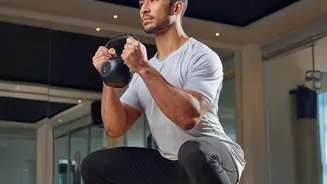
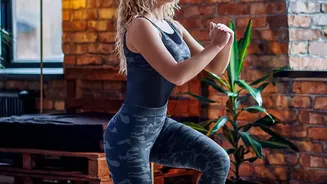
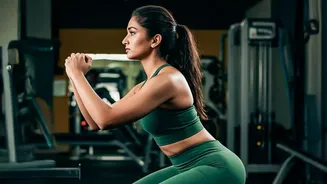
The squat is often called the 'king of leg exercises' for good reason. It is a compound movement, meaning it engages multiple muscle groups simultaneously, including the quadriceps, hamstrings, glutes, and core. This comprehensive muscle activation makes squats incredibly efficient for building overall lower body strength and muscle mass. The movement mimics fundamental human actions like sitting and standing, which makes it a highly functional exercise that can make real-life activities feel easier. By mastering the squat, you are building the raw power and strength that serves as the base for all other athletic movements.
How to Perform a Basic Squat
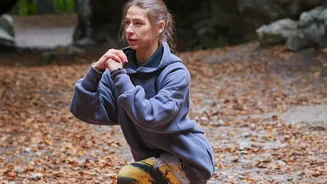
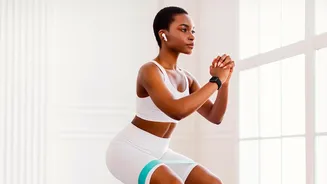
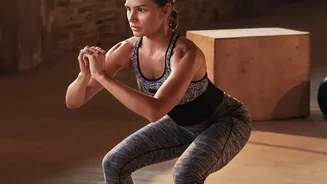
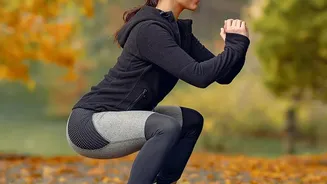
Proper form is crucial to get the benefits of squats and avoid injury. Stand with your feet shoulder-width apart, with your toes pointing slightly outward. Keep your chest up and your back straight. Begin the movement by hinging at your hips and pushing your buttocks back, as if you’re about to sit in a chair. Lower yourself until your thighs are at least parallel to the floor, ensuring your knees track in line with your toes and don't cave inward. Drive through your heels to push yourself back up to the starting position.
The Lunge: A Perfect Partner
While squats are fantastic for building a strong base, lunges offer a different but equally important advantage. Lunges are a unilateral exercise, meaning they work each leg independently. This is excellent for improving balance, coordination, and stability. By forcing each leg to support your body weight on its own, lunges help identify and correct muscle imbalances between your left and right side. They also engage stabilizer muscles in your hips and core to a greater degree to keep you upright. Lunges primarily target the quads and glutes, but also heavily involve the hamstrings and calves, making them a complete lower-body shaper.
Mastering the Forward Lunge
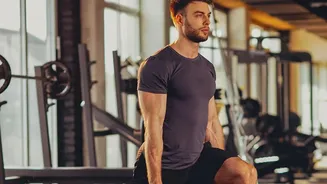
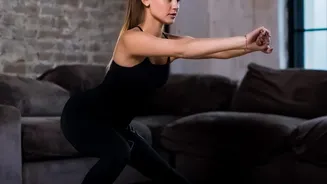
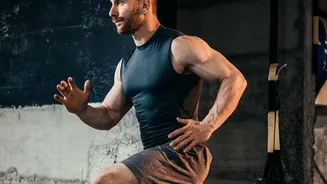
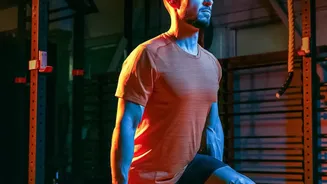
To perform a forward lunge, stand tall with your feet hip-width apart. Step forward with one leg, taking a large but comfortable step. Lower your hips until both knees are bent at approximately a 90 degree angle. Your front knee should be directly above your ankle, not pushed out over your toes, and your back knee should hover just above the ground. Keep your torso upright and your core engaged. Push off your front foot to return to the starting position, and then repeat on the other side.
Squats and Lunges: Better Together
So, which exercise is better? The answer is neither. Squats and lunges are not competitors; they are partners in building strong, functional, and well defined legs. Squats are superior for building maximum strength and muscle mass due to the heavier loads you can typically use. Lunges excel at improving balance, correcting imbalances, and enhancing functional, single leg stability that is crucial for activities like running and climbing. A balanced workout plan should include both. For example, you might focus on heavy squats one day to build power and incorporate lunges on another day to work on stability and endurance.