
The Greek Classic: Horiatiki
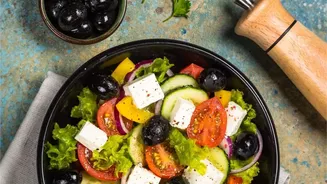
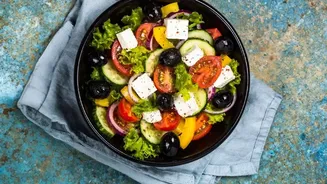
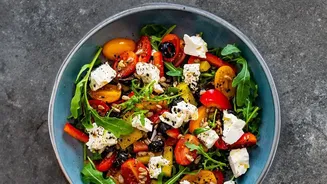
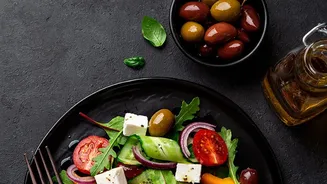
Often called a 'village salad', the authentic Greek Horiatiki is a celebration of simplicity and peak-season produce. Unlike many Western versions, it contains no lettuce. The magic lies in using the freshest ingredients: juicy, ripe tomatoes, crisp cucumber,
sharp red onion, and green bell pepper. The key is to cut the vegetables into large, rustic chunks. The salad is topped with a generous slab of quality feta cheese, not crumbles, and a handful of Kalamata olives. The dressing is wonderfully straightforward: a drizzle of high-quality extra virgin olive oil, a splash of red wine vinegar, and a sprinkle of dried oregano. It’s a dish that tastes like a Greek summer, best enjoyed with crusty bread to soak up the delicious juices left at the bottom of the bowl.
The Italian Bread Salad: Panzanella
Panzanella is a classic Tuscan salad born from a desire to not waste stale bread. This hearty dish transforms day-old, crusty bread into a flavour-soaked star. The bread is typically torn into chunks, briefly rehydrated, and then tossed with ripe tomatoes, cucumber, and thinly sliced red onion. The 'dressing' is created naturally as the bread soaks up the juices from the tomatoes, enhanced with a simple vinaigrette of extra virgin olive oil and red wine vinegar. Fresh basil is a crucial component, torn by hand to release its full aroma. Many variations exist, with some toasting the bread for a crunchier texture, but the authentic approach celebrates the soft, flavour-infused result. For the best flavour, let the Panzanella rest for at least 20-30 minutes before serving to allow the ingredients to meld.
The Lebanese Herb Garden: Tabbouleh
Authentic Lebanese Tabbouleh is not a grain salad; it's a parsley salad. This vibrant, refreshing dish is overwhelmingly composed of finely chopped flat-leaf parsley and fresh mint. These herbs are complemented by finely diced tomatoes and onion, with just a small amount of fine bulgur wheat, which softens by soaking in the dressing rather than being cooked. The dressing itself is a zesty mix of fresh lemon juice and extra virgin olive oil. Some recipes also include a hint of spices like allspice or pomegranate molasses for added complexity. The secret to a perfect Tabbouleh is chopping the herbs and vegetables very finely and ensuring they are dry to avoid a soggy salad. It's typically served as part of a mezze spread and often scooped up with crisp lettuce leaves.
The Turkish Shepherd's Salad: Çoban Salatas
Çoban Salatas, or Shepherd's Salad, is a staple in Turkish cuisine, known for its refreshing simplicity. It’s similar to a Greek salad in its base ingredients but differs in preparation. The key is to finely chop the tomatoes, cucumbers, green peppers, and onions into small, uniform pieces. This ensures that you get a mix of every flavour and texture in each bite. The dressing is a light and tangy combination of good olive oil, fresh lemon juice, and sometimes a sprinkle of sumac for a citrusy tang. Unlike its Greek counterpart, traditional Çoban Salatas does not include feta cheese or olives. It’s meant to be a light, crisp accompaniment that cuts through richer dishes like kebabs and grilled meats. For the best result, season and dress the salad just before serving to keep the vegetables from becoming watery.
The Spanish Summer Staple: Pipirrana
From the Andalusia region of Spain, Pipirrana is a cooling summer salad perfect for hot days. Its foundation consists of finely diced tomatoes, green peppers, onion, and cucumber. What makes it unique are the common additions and the dressing. Often, it includes hard-boiled eggs and good-quality canned tuna, which transforms it into a more substantial meal. The dressing can be a simple mix of sherry vinegar and olive oil, but some regional variations create a paste by mashing garlic with cumin and salt in a mortar before whisking in the oil and vinegar. In some versions from Jaén, the yolk of the hard-boiled egg is mashed with olive oil to create a creamy, emulsified dressing that coats all the ingredients. It’s a versatile dish served chilled, sometimes as a salad and other times as a tapa.
The Moroccan Cooked Salad: Khizzou Mchermel
Not all Mediterranean salads are raw. This Moroccan carrot salad, Khizzou Mchermel, is cooked and served warm or cold, making it a versatile side dish. The carrots are peeled, sliced, and then boiled or steamed until tender but still with a slight bite. The magic is in the 'chermoula', a classic Moroccan marinade. While the carrots are still warm, they are tossed in a vibrant dressing of olive oil, lemon juice, fresh parsley and cilantro, minced garlic, and spices like cumin, paprika, and sometimes a pinch of cayenne for heat. Letting the salad rest allows the warm carrots to fully absorb the dressing, deepening the flavours. This salad perfectly illustrates the North African side of Mediterranean cuisine, showcasing how spices can transform a simple vegetable into something truly memorable.