



A National Mission for Cleaner Journeys
The latest push for improved hygiene is part of the broader 'Swachh Rail, Swachh Bharat' mission, a nationwide campaign to elevate cleanliness standards across the railway network. This isn't just about making things look good; it's a systematic overhaul
aimed at enhancing the entire travel experience. For years, passenger complaints have highlighted issues with dirty toilets, overflowing bins, and general lack of cleanliness. In response, the railways are moving from a station-based cleaning model to a system of continuous onboard maintenance. In February 2026, the Railway Ministry announced a major reform to deploy professional, tech-enabled teams on long-distance trains, ensuring that even general class coaches receive regular cleaning at hourly intervals. This marks a significant policy shift, promising a more uniform standard of hygiene for all passengers.
A Clearer View: Upgraded Window Care
One of the specific, and often frustrating, issues for passengers in AC coaches has been the state of the windows. Many older coaches suffer from hazy, dirty double-paned windows where dirt gets trapped between the glass layers, obscuring the view. While the headline mentions 'AC Window Care', recent innovations have been more dramatic. In response to the removal of curtains during the COVID-19 pandemic, which led to complaints about external light and heat, Eastern Railway piloted 'smart switchable windows' in a Rajdhani Express. This technology allows passengers to turn the transparent glass opaque with the flip of a switch, offering privacy and blocking UV radiation. While this is an innovative solution for new or retrofitted coaches, the core issue of cleaning existing windows remains a priority for the On-Board Housekeeping Services (OBHS) teams responsible for coach interiors.
Rethinking the Washroom Experience
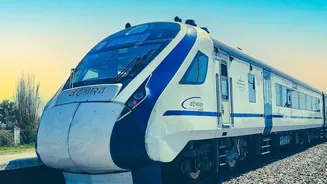
Toilets have long been the biggest pain point for train travellers. To combat this, Indian Railways is adopting a multi-pronged approach. A major technological shift has been the widespread installation of bio-toilets, which use anaerobic bacteria to decompose human waste, preventing its direct discharge onto tracks. More recently, premium trains like the Vande Bharat Express are being fitted with advanced, fire-resistant vacuum toilet systems, similar to those in airplanes. These systems use significantly less water and reduce odour. Beyond hardware, the cleaning process itself is being revolutionized. The ministry aims to have quick-wash teams clean each toilet in under a minute at stops every three to four stations. Furthermore, there is a push to use IoT sensors to detect foul smells and monitor cleanliness in real-time, ensuring that hygiene issues are addressed proactively rather than reactively.
Smarter Waste Disposal Onboard
Overflowing dustbins are a common sight on long-distance journeys. The standard 15-20 litre bins in coaches are often insufficient, leading to waste piling up in aisles and on floors. To solve this, the Wagon Repair Workshop in Jhansi has developed a prototype for a high-capacity, under-gear garbage collection system. This new design connects the regular in-coach dustbin to a large 367-litre collector mounted beneath the carriage. Using gravity, waste is channelled into this larger container, which only needs to be emptied during maintenance stops. This system drastically increases storage capacity, reduces the need for manual handling of garbage during the journey, and helps keep both the coach and the railway tracks cleaner. This practical solution is seen as an economical and sustainable way to manage waste more effectively on trains.
The Teams Behind the Clean
The success of these initiatives hinges on the people doing the work. The On-Board Housekeeping Services (OBHS) are active on over 1,200 pairs of important trains. To improve service quality, the Railway Board has mandated that all OBHS staff be professionally trained and must introduce themselves to passengers at the start of a journey to build trust and ensure travellers know who to approach for assistance. Recently, in October 2026, the Northeast Frontier Railway rolled out a technology-driven cleaning service on five major trains, including two Vande Bharat services. This initiative uses AI-based assessments and digital tracking to monitor housekeeping staff, with a target of resolving passenger complaints within two hours. Passengers can also provide real-time feedback and star ratings, helping officials quickly identify and address any lapses in service.