


The Traditional Creative Grind
Until recently, the ideation phase of a design project was a lengthy, manual process. Designers and marketers would spend hours, sometimes days, scrolling through stock image sites, competitor websites, and platforms like Pinterest to gather inspiration.
This involved creating mood boards by hand, painstakingly testing color combinations, and slowly building a visual direction from scratch. While inspiring, this method is a significant time drain, often creating a bottleneck before the actual design work even begins. The pressure to deliver fresh ideas quickly often runs counter to the slow, methodical pace of manual research and concept development.
How AI Rewrites the Rules
Generative AI isn't just a faster search engine; it's a creative partner. Unlike traditional tools that find existing content, generative AI creates entirely new and original content based on simple text prompts. By leveraging massive datasets and complex algorithms, these tools can produce unique images, color schemes, and even initial design mockups from a short description. For example, a designer can type a prompt like, "a color palette for a fintech app that feels trustworthy and modern," and an AI can generate multiple unique palettes almost instantly. This ability to generate, rather than just find, is what fundamentally changes the creative workflow.
Instant Palettes and Mood Boards
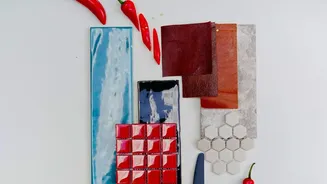
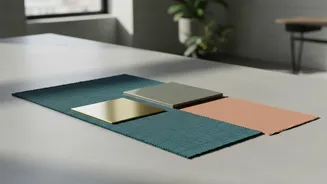
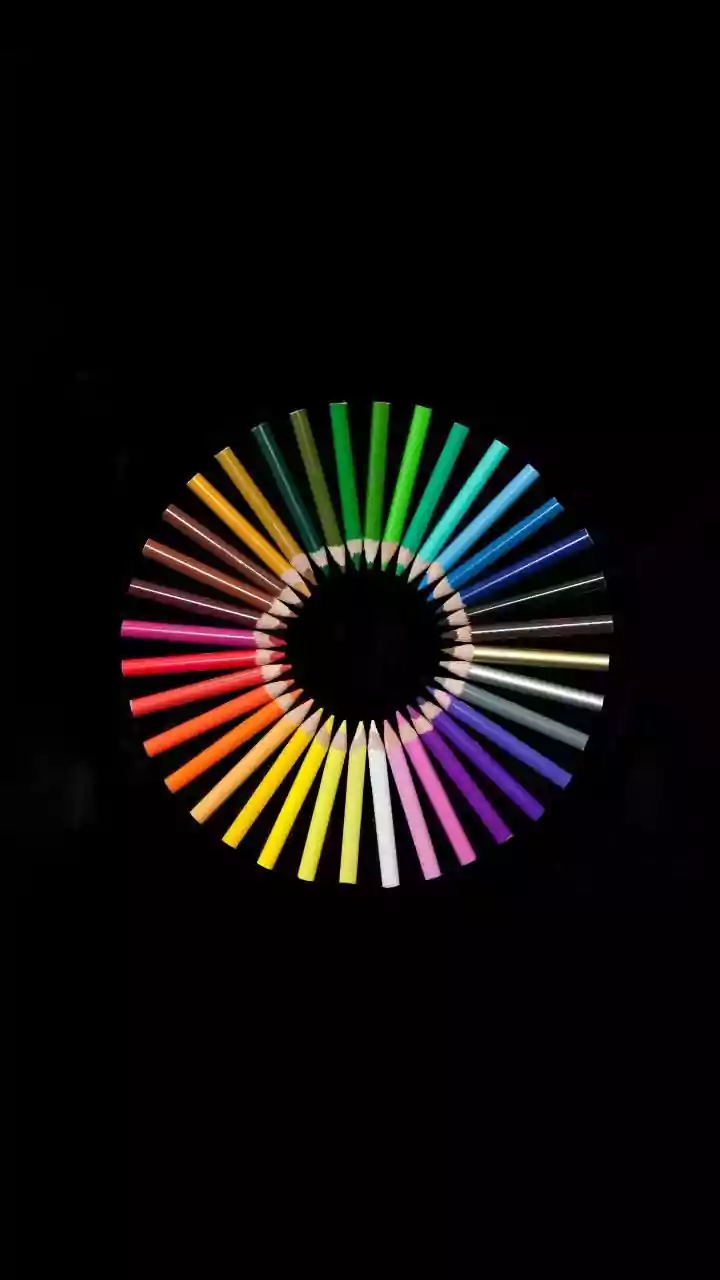
One of the most immediate applications of this technology is in color and concept generation. Tools like Adobe Firefly, Canva's Magic Design, and ColorMagic allow users to generate cohesive color palettes from a simple phrase or an uploaded image. The AI analyzes the request and suggests harmonious, contrasting, or analogous color schemes based on established color theory. Beyond just colors, AI can now produce entire mood boards. By inputting a description such as "a minimalist, pastel-toned mood board for a meditation app inspired by Japanese Zen aesthetics," a tool can assemble a complete visual story with textures, imagery, and typography suggestions in seconds. This compresses what used to be a day's work into a coffee break.
Accelerating the Entire Design Process
The impact extends far beyond the initial brainstorming. By using AI to generate multiple concepts quickly, teams can iterate and refine ideas at a much faster pace. A graphic designer could produce ten variations of a logo concept in the time it used to take to sketch one. This speed allows for broader exploration of creative possibilities early in the project, reducing the risk of design fixation, where creatives default to familiar or repetitive solutions. It also enhances collaboration, as designers, writers, and marketers can work from a unified AI brief to ensure visual and tonal consistency across different assets, from a website to a social media campaign.
The Designer's New Role: From Searcher to Curator
While the headline claim is that manual searching is eliminated, the reality is more nuanced. Generative AI doesn't replace the designer; it elevates their role. The creative process is shifting from one of tedious execution to one of strategic direction. The most valuable skill is no longer the ability to spend hours hunting for the right reference image, but the ability to write effective prompts that guide the AI toward a desired outcome. Designers are becoming creative directors for their AI tools, curating the best of what the technology generates and then applying their expertise to refine, customize, and implement those ideas. The AI provides the raw material, but the human touch remains essential for strategic thinking and final polish.