



The Challenge of the Long Night
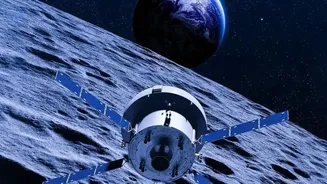
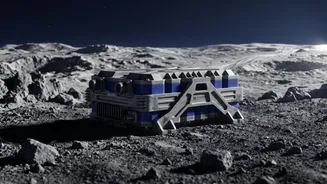
Establishing a sustainable base on the Moon, a cornerstone of NASA's Artemis program, faces one immense hurdle: the two-week-long lunar night. Without an atmosphere to retain heat, temperatures at the lunar South Pole can plummet to a staggering minus
200 degrees Celsius (minus 328 degrees Fahrenheit). For conventional technology, this is a death sentence. Standard lithium-ion batteries, like those in phones and cars, rely on liquid electrolytes that freeze solid in such extreme cold, causing permanent damage and rendering them useless. This has historically limited lunar surface missions to short stays during the comparatively mild lunar day, forcing landers and rovers to power down and hope they can restart when the sun returns.
A Solid Solution to a Splashy Problem
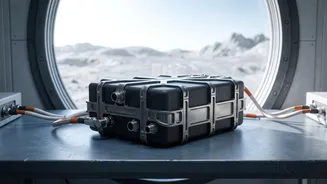
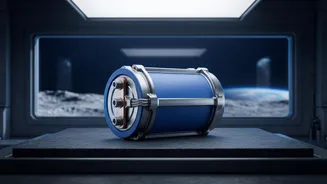
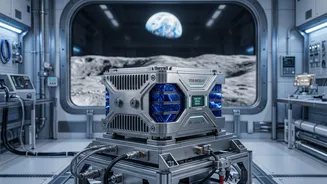
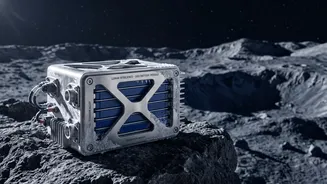
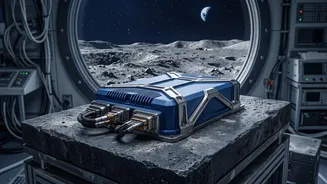
Enter the SPEARS project, short for Solid Power for Extreme Environment Adaptability and Resilience in Space. Led by NASA's Glenn Research Center, this initiative is developing a new class of solid-state batteries to solve the deep-freeze dilemma. The key innovation is replacing the volatile liquid electrolyte with a solid, ceramic- or polymer-based material. This design prevents the internal components from freezing, cracking, or evaporating in the vacuum of space. While the batteries do not generate power at their absolute coldest limits, the solid-state design prevents them from being destroyed. This means small, efficient heaters can quickly bring them back to operating temperature when needed, a huge improvement over the massive, power-draining heating systems required to keep liquid-based batteries from freezing.
Putting the Tech to the Test
Recent tests have shown significant promise for the SPEARS technology. Researchers at NASA's Langley Research Center subjected prototype coin-cell batteries to a punishing thermal vacuum chamber. The results were impressive: the batteries successfully operated in temperatures as low as minus 80 degrees Celsius (minus 112 Fahrenheit). More importantly, they survived exposure to a full lunar temperature swing, from 100 degrees Celsius (212 F) down to minus 170 Celsius (minus 274 F), without sustaining any structural damage. This proves the core concept is resilient. The project, which began in 2026, is a collaboration between several NASA centers, with Ames Research Center working on flight hardware to prepare the technology for future space-based testing.
Unlocking the Artemis Generation
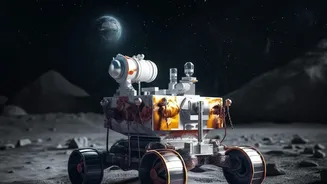
A reliable power source that can endure the lunar night is more than an engineering milestone; it is a critical enabler for the entire Artemis program's vision of a sustained human presence on the Moon. Continuous power allows for permanent habitats, long-duration scientific experiments in permanently shadowed craters, and the operation of rovers and industrial equipment, such as that needed for mining water ice. By solving this power problem, SPEARS could provide the energy backbone for everything from an astronaut's emergency kit to heavy-duty rovers. This capability reduces the overall mass and complexity of lunar hardware, making missions more efficient and ambitious. The technology also has broad potential for Earth-based applications, including better batteries for electric vehicles, drones, and communications devices operating in extreme climates.