






A Bollywood Classic Roars in London
The atmosphere at Wembley was electric, with over 90,000 fans gathered for the largest-ever UK show by a Punjabi artist. As part of his blockbuster 'Aura' world tour, Diljit Dosanjh delivered a performance filled with his biggest hits, from 'G.O.A.T.'
to 'Lover'. But it was his rendition of a timeless classic that took the night from a concert to a cultural event. In a surprise moment, Dosanjh launched into a medley featuring his interpretation of 'Chaiya Chaiya'. The iconic track, originally composed by A.R. Rahman for the 1998 film 'Dil Se..', was reborn. The roar from the multi-generational crowd was instantaneous, a mix of nostalgic recognition from older fans and fresh appreciation from younger ones, proving that a great song knows no age.
More Than Just a Song
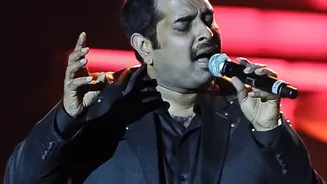
'Chaiya Chaiya' is not just another Bollywood number; it is a cultural touchstone. Famous for its energetic picturisation atop a moving train and Sukhwinder Singh's powerhouse vocals, the song has remained a staple of South Asian celebrations for over two decades. Dosanjh’s decision to perform this track, alongside a soulful qawwali originally made famous by Nusrat Fateh Ali Khan, was a deliberate act of homage. It was a nod to the musical giants who paved the way, connecting the dots between the pioneers of the past and the global Punjabi wave he now leads. This wasn't a simple cover; it was a re-contextualization, introducing a piece of Indian cinema's soul to a new, global audience who might only know Dosanjh for his modern trap-infused Punjabi hits.
The Dosanjh Phenomenon
To understand the weight of this moment, one must understand Diljit Dosanjh's journey. He has moved from being a regional superstar in Punjab to a global force, all without compromising his identity. He became the first Punjabi artist to perform at Coachella in 2023 and has sold out arenas worldwide. His Wembley show was historic, making him the first Punjabi artist to headline the legendary 90,000-capacity stadium. When he greeted the crowd with his signature declaration, “Punjabi Aa Gaye Wembley Oye!” (The Punjabis have arrived at Wembley!), it was a triumphant statement of arrival. Dosanjh’s success lies in his unique ability to blend authentic Punjabi folk and musical traditions with contemporary global sounds, creating a brand of music that resonates from villages in Punjab to packed stadiums in London.
A Unifying Cultural Anthem
Performing a Hindi classic from a mainstream Bollywood film was a masterful stroke. While Dosanjh's core is proudly Punjabi, this choice broadened the embrace of his performance, welcoming the wider South Asian diaspora. It was a moment of unity, where language and regional differences melted away in favour of a shared cultural memory. For many in the audience, it was a full-circle experience: seeing an artist who represents the future of South Asian music paying tribute to its iconic past on one of the world's most prestigious stages. It powerfully demonstrated that Indian music, in all its forms, has a place at the global high table. Artists like Dosanjh are no longer just visiting; they are headlining.