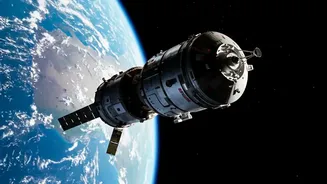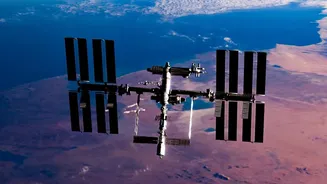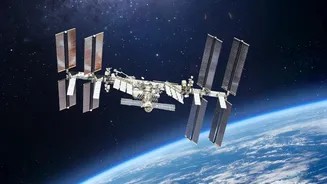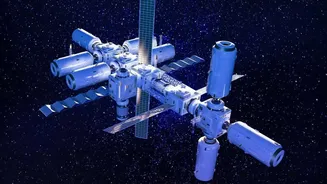

A New Era for Low-Earth Orbit
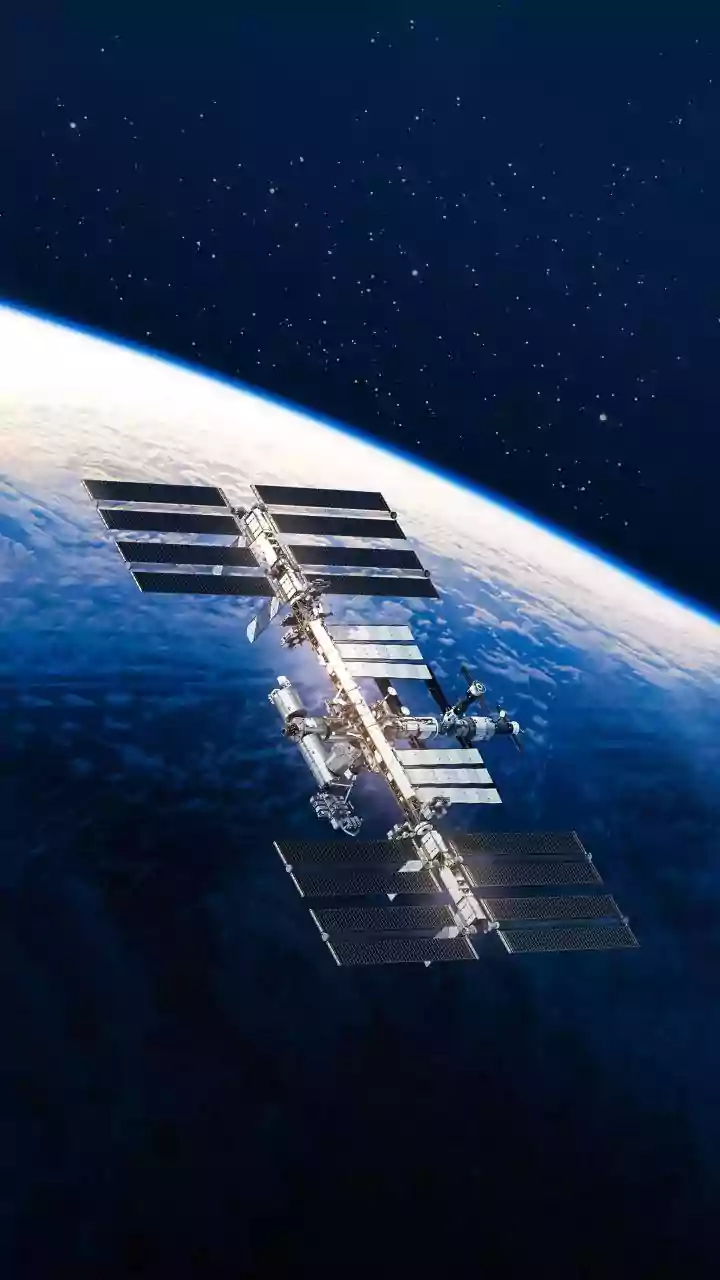
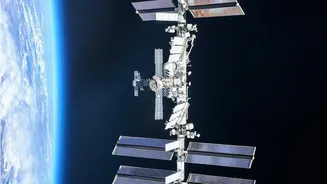
For over two decades, the ISS has been the sole human outpost in low-Earth orbit, a remarkable feat of international cooperation. But its primary structure is aging, and NASA is transitioning from being an owner-operator to a customer. This shift has ignited
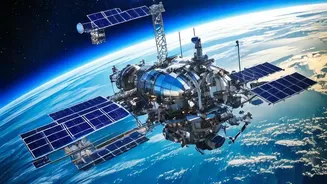
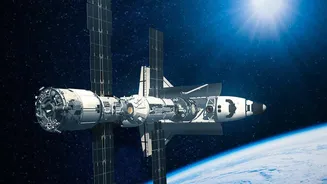
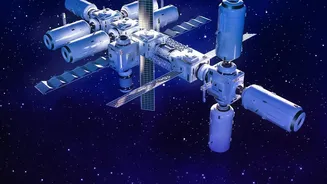
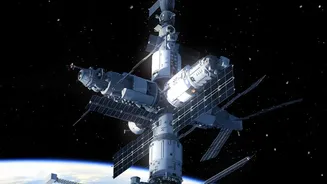
a commercial gold rush, with companies like Axiom Space, Blue Origin, and Sierra Space developing privately owned and operated space stations. These ventures, sometimes called commercial LEO destinations (CLDs), aren't just science labs; they're envisioned as mixed-use business parks in space, catering to tourism, research, and in-space manufacturing. The business model relies on creating destinations that are more flexible, cost-effective, and responsive to market demands than their government-run predecessors. Axiom Space is taking a phased approach, first attaching its modules to the ISS before separating to become a free-flying station. Others, like the Blue Origin and Sierra Space partnership on Orbital Reef, are designing their stations to be independent from day one.
Beyond Aluminum: The Materials Revolution
A space station is fundamentally a pressure vessel that must protect its inhabitants from the vacuum, extreme temperature swings, radiation, and the constant threat of micrometeoroids. While the ISS relies on traditional rigid aluminum structures, the new commercial modules are embracing advanced materials to reduce launch mass and increase usable volume. A leading innovation is inflatable habitats, such as Sierra Space's LIFE module. These structures are launched in a compressed state and expand to their full size in orbit, offering significantly more space for the same weight. The outer layer is made of materials like Vectran, a liquid-crystal polymer fiber that is five times stronger than steel, to withstand the internal pressure and protect against impacts. An inner bladder remains airtight, while intermediate layers provide further protection. Beyond inflatables, companies are exploring advanced composites, self-healing polymers that can seal small cracks, and even ceramic composites that offer superior radiation shielding compared to aluminum.
Surviving the Void: Life Support and Power
Keeping humans alive for years on end requires incredibly reliable life support and power systems. A major goal for long-duration commercial stations is creating closed-loop environmental control and life support systems (ECLSS). These systems aim to recycle nearly all air and water, including processing urine and condensation back into potable water, drastically reducing the need for costly resupply missions from Earth. Onboard gardens, like the Astro Garden system designed for the LIFE habitat, could supplement astronaut diets with fresh produce, further enhancing sustainability. Powering these sprawling complexes will be massive solar arrays. Axiom Station's power and thermal module, for instance, is designed to provide energy capacity equivalent to the entire ISS, enabling it to operate independently. This focus on self-sufficiency is crucial for a viable business model, as it minimizes long-term operational costs.
Built on Earth, Proven in a Lab
Long before any hardware reaches the launchpad, it undergoes an exhaustive campaign of testing and validation on the ground. Companies cannot afford for a multi-billion dollar module to fail in orbit. Engineers use massive thermal vacuum chambers to subject components to the wild temperature swings and airless environment of space. They blast test articles with radiation to ensure electronics will survive and perform. To simulate the risk of orbital debris, some facilities even fire high-speed projectiles at shielding samples. These tests are critical for validating the complex computer models that predict how a structure will behave. Recently, Sierra Space conducted a full-scale burst test of its LIFE habitat, pressurizing it until it failed to prove it could withstand forces well beyond its operational requirements, a key milestone supported by NASA. This 'test-as-you-fly' philosophy ensures that by the time the modules are assembled, every component has been pushed to its limits.