



What Exactly Is a Planetary Alignment?
First, let's clear up what a planetary lineup, or 'alignment', really means. It's not that the planets are forming a perfectly straight line in space—an event that is practically impossible. Instead, it’s an amazing line-of-sight phenomenon from our vantage
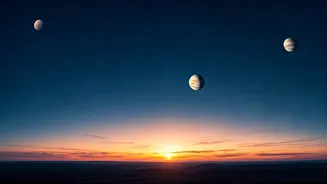
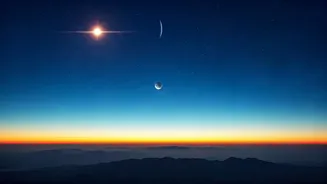
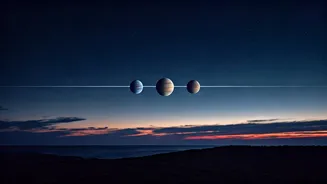
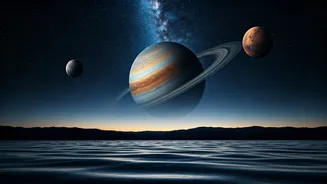
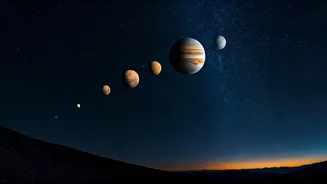
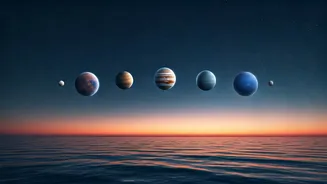
point here on Earth. As the planets orbit the Sun at different speeds and on different paths, they sometimes appear to gather in the same small patch of our sky. This gives us the beautiful illusion of a cosmic parade. Tonight's event is a 'low lineup', meaning the planets will be gathered near the horizon, making for a particularly dramatic and accessible viewing experience just as the day's light fades.
Meet Tonight’s Celestial Trio
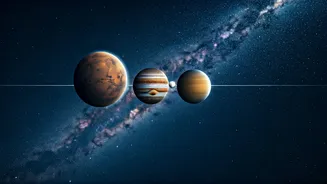
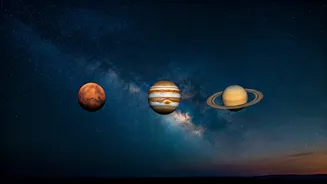
The three planets taking centre stage are some of the most famous members of our solar system. You'll be able to spot Jupiter, Mars, and Saturn. **Jupiter:** As the largest planet in our solar system, Jupiter will be the easiest to find. It will shine as the brightest point of light in the lineup, a brilliant, steady beacon that doesn't twinkle like a star. **Mars:** Look for the distinctive reddish-orange hue of the Red Planet. Its colour comes from iron oxide—rust, essentially—on its surface. It won't be as bright as Jupiter but its unique colour makes it stand out. **Saturn:** The famous ringed planet will appear as a steady, yellowish-white point of light. While it’s the dimmest of the three, its presence completes this stunning celestial trio. You won't see its rings with the naked eye, but just knowing they're there adds to the magic.
Your Step-by-Step Viewing Guide
Catching this event is simpler than you might think. You don't need a remote dark-sky park, though that always helps. Most people can see it right from their balcony, backyard, or a nearby park with a clear view of the horizon. **When to Look:** The best time is in the window between 30 and 75 minutes after sunset. This is the 'blue hour' of twilight, when the sky is dark enough for the planets to pop, but there's still a faint glow on the horizon. **Where to Look:** Face the direction where the sun just set—the west or southwest. The three planets will be in a relatively straight line, angled up from the horizon. Jupiter will likely be the highest and brightest, with Saturn and Mars nearby. **What to Look For:** Scan the sky for three bright 'stars' that aren't twinkling. Planets reflect sunlight and appear as steady points of light, while distant stars twinkle because their light is distorted by Earth's atmosphere.
Do I Need a Telescope?
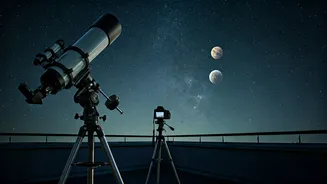
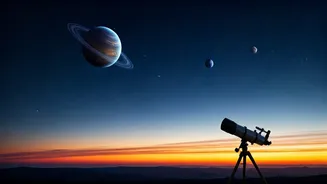
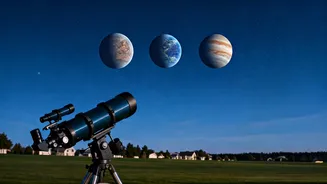
Absolutely not! One of the best things about this particular celestial event is that all three planets are bright enough to be seen easily with the naked eye. The headline's promise of seeing it 'instantly' speaks to this accessibility—once you know where to look, they will be immediately obvious. However, if you have a pair of binoculars, bring them along. Even standard binoculars will enhance the view significantly. You’ll see the colours more vividly, especially the ochre of Mars. With a very steady hand or a tripod, you might even be able to spot Jupiter's four largest moons (the Galilean moons) as tiny pinpricks of light flanking the giant planet. A small telescope, of course, would elevate the experience even further, potentially revealing the glorious rings of Saturn.
Why This Low Lineup Is Special
While alignments of two planets are fairly common, seeing a trio of bright, major planets like this is a less frequent treat. What makes tonight's event particularly special is its position low on the horizon. This placement creates a beautiful composition, setting the planets against the fading colours of sunset. It feels more intimate and dramatic than when they are high overhead in a dark sky. This event isn't a world-altering astronomical moment, but it’s a powerful reminder of our place in the cosmos. It’s a chance to see the clockwork of the solar system in motion with your own eyes. These are not just static points of light; they are other worlds, each on its own vast journey around the Sun. Taking a few moments to watch them is a simple, profound way to connect with the universe.