





Why Inflatable Is the Next Big Thing
For decades, space stations have been built from rigid, metallic modules, constrained by the size of the rocket fairing that carries them. Inflatable habitats flip that script. The concept, which NASA first explored in the 1990s with its TransHab program,
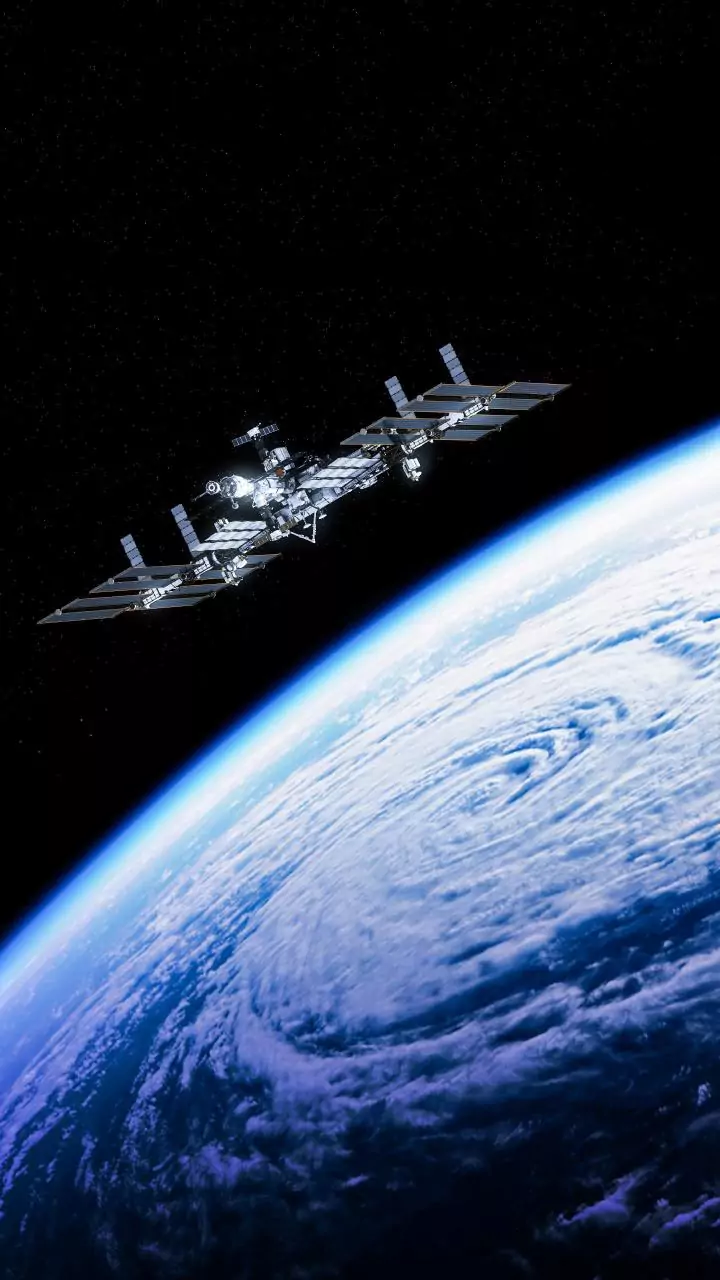
involves launching a tightly packed module made of advanced, flexible materials like Kevlar. Once in orbit, the module is inflated, expanding to offer a far greater volume of living and working space for the same launch mass. This “more space for less mass” equation is the holy grail for space logistics, dramatically lowering the cost of building large structures in orbit. The result is the potential for habitats the size of a three-story apartment building, launched on a single rocket. This efficiency is crucial for the private sector, which is racing to build successors to the International Space Station (ISS) and create a thriving commercial economy in low Earth orbit.
The Companies Inflating Our Future in Orbit
Several key players are leading the charge. Sierra Space has been making headlines with its LIFE (Large Integrated Flexible Environment) habitat. In a series of ground tests supported by NASA, the company has repeatedly inflated full-scale versions of its modules to the bursting point to prove their strength and safety. These tests have consistently exceeded NASA's rigorous safety requirements, demonstrating that the multi-layer fabric is robust enough to withstand the harsh environment of space. The LIFE habitat is a core component of the Orbital Reef space station, a joint project with Blue Origin. Other companies like Vast are also developing commercial stations, such as Haven-1, which is scheduled to launch as early as 2027 and will be the first-ever commercial space station. While its initial modules are rigid, the broader trend toward larger, more efficient structures is clear. Even NASA has real-world experience with this tech, having attached the experimental Bigelow Expandable Activity Module (BEAM) to the ISS back in 2016, where it remains in use today.
A New Frontier for Research and Commerce
So, what do you do with all that extra space? The primary goal is to unlock a new wave of research and in-space manufacturing that is difficult or impossible to conduct on Earth. The microgravity environment offers unique advantages for industries like pharmaceuticals, materials science, and biotechnology. For example, growing protein crystals in space can lead to a better understanding of diseases and the development of new drugs. Manufacturing specialized fiber optics or semiconductor chips in microgravity can result in products with a level of perfection unattainable on the ground. These large inflatable stations will serve as orbital laboratories and factories, allowing companies to conduct research and development on a commercial scale. This shift is vital as the ISS nears its planned retirement, ensuring there is no gap in humanity's ability to live and work in low Earth orbit.
Beyond the Burst Test: Overcoming the Hurdles
Despite successful ground tests, significant challenges remain. An inflatable habitat must do more than just hold air; it must protect its inhabitants from the extreme temperatures, radiation, and threat of micrometeoroids and orbital debris (MMOD) found in space. The solution lies in a layered approach. The habitat's skin is a composite of multiple materials, each serving a purpose. An inner bladder holds the air, a high-strength restraint layer provides the structural integrity, and outer layers of durable fabrics and shielding materials offer protection from impacts and radiation. Companies perform rigorous testing not just for pressure, but for every component, from the window shields to the life support systems, to ensure the safety and reliability needed for human crews. The success of these tests is building confidence that these soft-goods structures can be as safe, or even safer, than their traditional aluminum counterparts.