





A New Definition of 'Sustainable' in Space
When we think of sustainability, environmental friendliness often comes to mind. In the context of space stations, however, the term has a broader meaning, focusing on economic and operational longevity. For decades, space exploration has been the domain
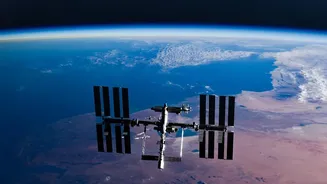
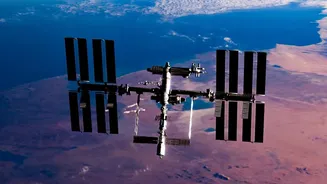
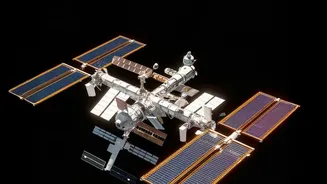
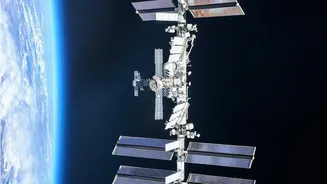
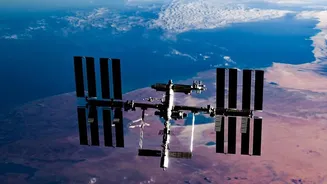
of national governments, with staggering costs subsidized by taxpayers. The ISS, a marvel of international cooperation, is a prime example of this model. The shift to commercial platforms redefines sustainability as the ability to operate and thrive independently through a viable business model. This means creating a bustling economy in LEO where government agencies like NASA are just one of many customers. This economic self-sufficiency is the bedrock of a long-term human presence in orbit.
The 'Landlord in LEO' Business Model
The core innovation of these next-generation stations is the business model itself. Instead of building, owning, and operating its own hardware, NASA is transitioning to a customer role through its Commercial LEO Destinations (CLD) program. Companies like Axiom Space, Blue Origin's partnership on Orbital Reef, and the Starlab venture from Voyager Space and Airbus will own and operate their stations, selling services to a diverse clientele. This clientele is expected to include not just NASA astronauts conducting research, but also foreign space agencies, private companies pursuing in-space manufacturing of everything from pharmaceuticals to semiconductors, and even space tourists. This diversified revenue stream is crucial for long-term financial viability, reducing reliance on any single source of funding and fostering a competitive marketplace 400 kilometers above Earth.
Designed for Efficiency and Evolution
Today's commercial stations are being designed from the ground up for efficiency and adaptability. Unlike the ISS, which required dozens of launches to assemble, new stations like Starlab are designed to be deployed in a single launch. Many of these platforms feature modular designs, allowing them to be expanded or reconfigured over time to meet changing market demands. Axiom Space, for instance, is first attaching its modules to the ISS before they detach to become a free-flying station. This modularity extends to maintenance; components can be upgraded or replaced more easily, extending the station's operational life and reducing long-term costs. Inflatable habitat technology, like that being developed by Sierra Space for Orbital Reef, offers the potential for large living and working volumes with a comparatively small launch footprint.
Closing the Loop on Life Support
A key element of operational sustainability is reducing the dependence on costly resupply missions from Earth. This is where advanced life support systems come in. The goal is to create a 'closed-loop' environment where air and water are almost completely recycled. Commercial providers are developing and testing next-generation systems that can reclaim potable water from sources like astronaut breath, sweat, and even urine with incredible efficiency, sometimes nearing 98%. Similarly, advanced air revitalization systems can scrub carbon dioxide from the air and generate fresh oxygen. These regenerative technologies are crucial for making long-duration stays in orbit more affordable and self-sufficient, a critical step for sustainable housing in space.
A Multifaceted Marketplace in Orbit
The vision for these commercial stations extends far beyond simply housing astronauts. They are envisioned as versatile 'mixed-use business parks' in orbit. The planned Axiom Station will feature facilities for research and manufacturing, including a glass-walled Earth observatory. Orbital Reef is being designed to support a wide range of activities, from scientific payloads to commercial ventures, with a structure built to accommodate up to ten people. Starlab is being developed as a global joint venture to serve space agencies and private companies alike, with the capacity to conduct hundreds of experiments per year. This focus on creating a diverse and dynamic on-orbit ecosystem is what truly differentiates these commercial platforms, promising a sustainable and expanding human footprint in space.