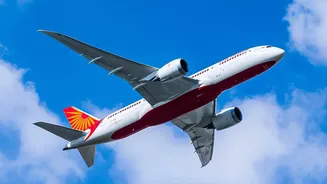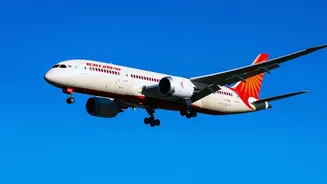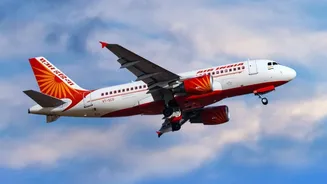






Air India has posted an estimated loss of around ₹10,500 crore for the first half of fiscal year 2027. While the figure is substantial, it points to a complex story of massive investment and strategic transformation under the Tata Group's ownership.
The Numbers in Context
For
the six-month period ending September 30, 2026, Air India is estimated to have incurred a loss of approximately ₹10,500 crore. This figure is derived from financial disclosures made by Singapore Airlines (SIA), which holds a 25.1% stake in the Indian carrier. While a loss of this magnitude naturally raises concerns, it represents a 16% improvement from the roughly ₹12,500 crore loss recorded in the same period last year. This reduction suggests that some of the initial efforts in cost management and operational restructuring are beginning to take hold, even as the airline navigates a challenging environment marked by high jet fuel prices. SIA, a key partner in the turnaround, noted that the lower share of losses from Air India positively contributed to its own financial performance.
Investing for a Turnaround
The headline loss does not tell the full story. It is a direct consequence of the aggressive, multi-billion-dollar transformation plan initiated by the Tata Group. Both Tata Sons and Singapore Airlines have acknowledged that a turnaround of this scale will take time. The expenses are immense and front-loaded, covering everything from the purchase of a historic 470 new aircraft to the complete refurbishment of existing wide-body cabins. Furthermore, the airline is undertaking a massive overhaul of its technology infrastructure and deepening operational synergies between Air India and Air India Express to streamline its cost structure. These are not minor tweaks but foundational investments designed to build a profitable, world-class airline for the long term. As such, profitability in the short term was never the primary goal; establishing a competitive product and service was.
The Cost of Integration and Growth
Adding to the planned investment costs are the significant expenses related to the integration of Vistara into Air India. The merger, a cornerstone of creating a unified full-service carrier, involves harmonizing complex systems, retraining thousands of employees, and rationalizing flight networks. These activities, while crucial for future synergies, incur substantial one-off costs that weigh on current financial statements. At the same time, the operating environment has become more expensive. Average jet fuel prices surged by over 80% year-on-year, significantly increasing operational expenditure for all airlines, including Air India. The airline is also reportedly seeking fresh capital and loans to fund its ambitious expansion plans, highlighting the immense financial undertaking of rebuilding a carrier that suffered from years of underinvestment.
A New Focus on Financial Discipline
While investment is the priority, financial discipline is becoming a renewed focus. The airline's new CEO and Managing Director, Tewolde Gebremariam, who took the helm in September 2026, has signalled a strong emphasis on cost rationalisation. A multi-functional cost-savings team has been established to scrutinise all expenditures, and the leadership has called for a culture of 'frugality and accountability' across the organisation. This indicates a strategic pivot towards balancing the high costs of transformation with a rigorous approach to efficiency. The goal is to ensure that as the airline grows and improves its product, its underlying cost base becomes more sustainable, paving a clearer path toward eventual profitability.