



The Foundation: A Banana Leaf
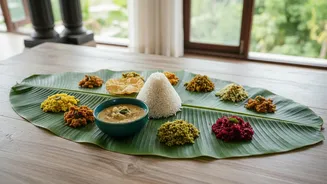
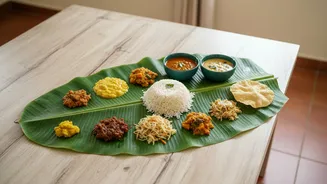
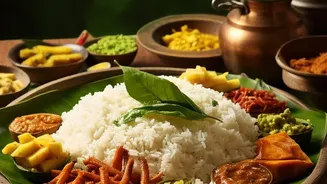
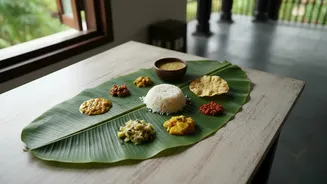
Before the first morsel is even served, the stage must be set. The Onam Sadhya is traditionally served on a fresh plantain leaf, laid with the narrow end pointing to the left of the diner. This isn't just for aesthetics; the leaf is considered pure and
imparts a subtle, earthy aroma to the warm food placed upon it. The upper half of the leaf is reserved for all the side dishes and accompaniments, while the lower, wider half is for the rice and the main liquid curries that will be poured over it. It’s a meticulously planned canvas for the feast to come.
The Centerpiece: Kerala Matta Rice
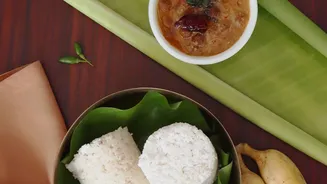
At the heart of the Sadhya is the rice, or 'choru'. This is typically Kerala Matta rice, a distinctive variety known for its plump, reddish grains and nutty flavour. Served in the bottom-center of the leaf, it is the foundation upon which the entire meal is built. Unlike a platter where you sample everything at once, the Sadhya is eaten in courses, with fresh servings of rice acting as the base for different curries. The first course begins by mixing rice with 'parippu', a simple lentil curry, and a generous spoonful of ghee.
The Orchestra of Curries
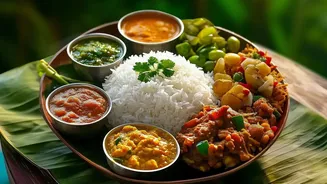
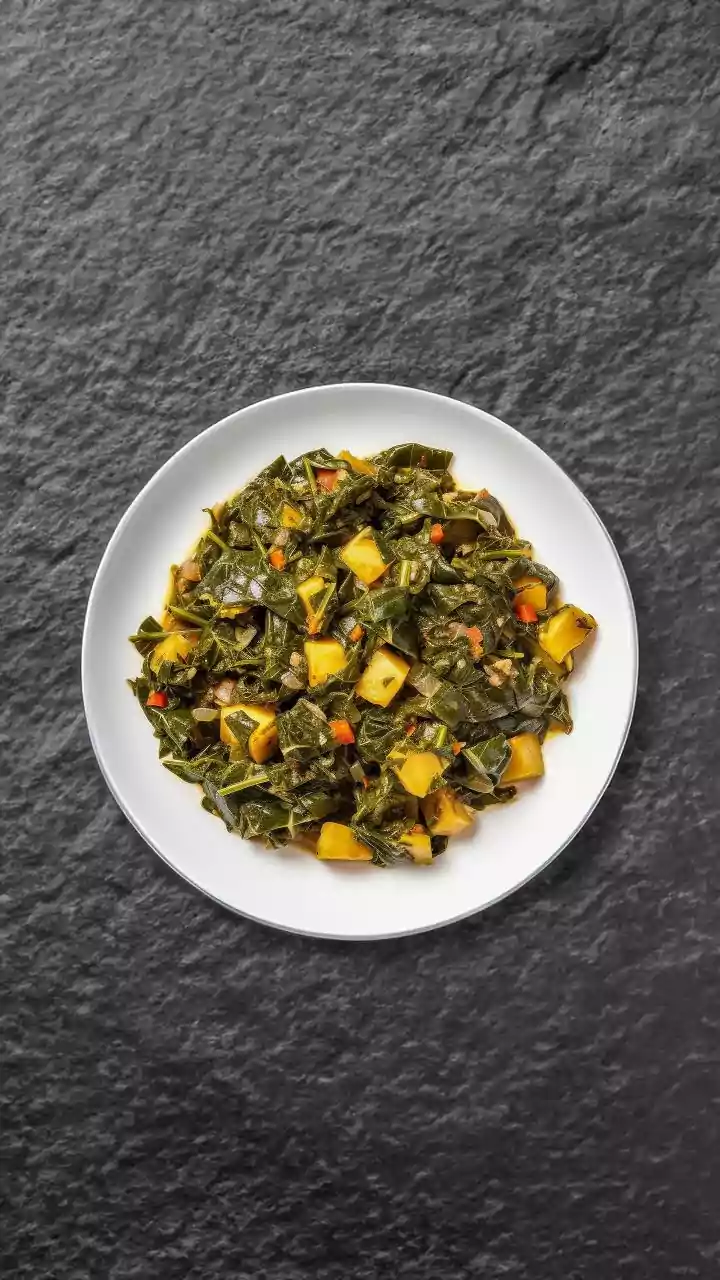
The curries provide the Sadhya with its incredible diversity of taste and texture. After the initial Parippu course, rice is served again to be paired with Sambar, a robust lentil and vegetable stew with a tamarind base. Following that, a new serving of rice might be mixed with a tangy Rasam, a peppery, soupy liquid that aids in digestion. Alongside these main 'ozhichu curries' (pouring curries) are a host of iconic side dishes. 'Avial' is a thick mixture of various vegetables cooked in a coconut and yoghurt gravy, a true symbol of unity in a dish. You'll also find 'Thoran' (finely chopped vegetables stir-fried with grated coconut), 'Kalan' (a yogurt-based dish), and 'Olan' (ash gourd in a delicate coconut milk gravy).
The Counterpoints: Pickles and Sides
To balance the rich curries, the Sadhya employs a range of sharp, tangy, and sweet accompaniments. These are placed on the upper portion of the leaf. A variety of pickles ('achar'), such as mango and lime, provide a pungent kick. A standout is 'Inji Puli', a sweet and sour chutney made from ginger, tamarind, and jaggery that zings on the palate. 'Pachadi' and 'Kichadi' are yogurt-based sides, often made with pineapple or cucumber, that offer a cooling, sweet-and-sour contrast. And no Sadhya is complete without crispy 'pappadam' and crunchy banana chips ('upperi'), which add another textural dimension to the meal.
The Sweet Finale: Payasam
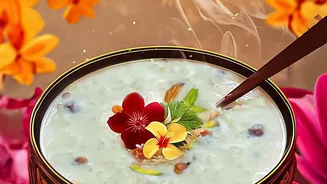
Just when you think you can't have another bite, it's time for dessert. The Payasam, a sweet pudding, signals the end of the savoury courses. There are usually at least two or three types served. Common varieties include 'Ada Pradhaman', made with rice flakes, jaggery, and coconut milk, and 'Paal Payasam', a simpler milk-based pudding. Traditionally, the payasam is poured directly onto the banana leaf and is often eaten mixed with a mashed small banana served with the meal. This sweet course is a decadent and satisfying conclusion to the feast.