






Groundnut Oil: The Versatile Fryer
Once a staple across western and southern India, cold-pressed groundnut oil, or peanut oil, is prized for its versatility. It has a high smoke point of around 230°C, making it an excellent choice for high-heat cooking methods like deep-frying and stir-frying.
Nutritionally, it is rich in monounsaturated fats (MUFA), particularly oleic acid, which is considered beneficial for heart health. It also contains a good amount of Vitamin E, a natural antioxidant. The flavour profile of groundnut oil is generally neutral and mild with a slightly nutty aroma, which allows the authentic taste of spices and main ingredients to shine without being overpowered. This makes it suitable for a wide range of dishes, from crisping up bhajis and samosas to everyday sabzis.
Sesame Oil: The Aromatic Finisher
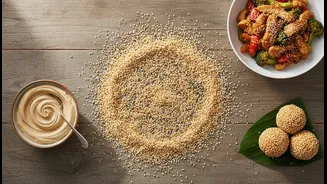
Known as 'til ka tel', sesame oil holds a special place in South Indian and some Asian cuisines. It's characterised by a balanced profile of monounsaturated and polyunsaturated fats, including essential omega-6 fatty acids. Some research suggests these healthy fats can help in managing cholesterol levels. There are two main types: light sesame oil, which is suitable for cooking, and toasted sesame oil, which is darker and has a much stronger, nuttier flavour. The untoasted variety is great for sautéing, but the true magic lies in using the toasted version as a finishing oil. A few drops drizzled over stir-fries, noodles, or into marinades and chutneys adds a deep, aromatic, and unmistakable nutty flavour that elevates the entire dish.
Rice Bran Oil: The Modern All-Rounder
A relatively new entrant in the Indian market, rice bran oil is extracted from the outer brown layer of rice. It has gained popularity for its impressive high smoke point, around 232°C, which makes it ideal for high-temperature cooking like frying and sautéing. Its flavour is notably neutral and mild, ensuring it doesn’t interfere with the spices in curries, pakoras, or stir-fries. From a health perspective, it offers a balanced fatty acid profile and is a source of antioxidants like Vitamin E and a unique compound called oryzanol, which has been studied for its cholesterol-lowering potential. Its light texture and non-greasy feel make it a versatile choice for everything from deep-frying snacks to baking.
Safflower Oil: The Neutral Base
Safflower oil, from the seeds of the safflower plant, comes in two main varieties: high-linoleic and high-oleic. High-linoleic oil is rich in polyunsaturated fats and is best for unheated applications like salad dressings. High-oleic safflower oil, which is more common, is rich in monounsaturated fats, making it more stable for high-heat cooking like frying. It has a very high smoke point (around 232°C) and a neutral, almost flavourless taste, making it an excellent all-purpose oil when you don't want the fat to impart any flavour. This neutrality is useful in baking, dressings, and light sautés where the ingredients themselves are the stars.
Coconut Oil: The Tropical Staple
While a cornerstone of cooking in coastal regions like Kerala and Goa, coconut oil is less frequently used in many other parts of India. It has a distinct and pleasant aroma and flavour that defines many South Indian dishes. It is very high in saturated fat, but a significant portion of this is in the form of medium-chain triglycerides (MCTs), which are metabolised differently than long-chain fatty acids. Some studies suggest it can raise both 'good' HDL and 'bad' LDL cholesterol levels, so moderation is key. Its best use is in regional dishes that call for its specific flavour profile—think avial, thoran, or fish curries—where it adds an authentic, slightly sweet, and aromatic dimension that other oils cannot replicate. It is also great for low-to-medium heat sautéing.