

More Than Just a Stroll
At first glance, Nordic walking looks like simply walking with a pair of poles. But it's far more sophisticated. Originating in Finland as an off-season workout for cross-country skiers, this activity is designed to turn a simple walk into a full-body
exercise. While regular walking primarily engages muscles below the waist, adding poles activates the muscles in your arms, shoulders, chest, and back. Studies show that this technique engages 80% to 90% of your body's muscles, compared to just 50% with normal walking. This increased engagement leads to a significant boost in calorie burn — estimated to be anywhere from 20% to 46% higher than walking at the same pace without poles.
The Power Is in the Push
The secret to Nordic walking's effectiveness isn't just carrying the poles; it's using them to propel yourself forward. With each step, you plant a pole and actively push off the ground. This pushing motion is what engages your upper body and core, transforming the activity into a comprehensive workout that builds strength, improves posture, and increases cardiovascular endurance. Furthermore, the poles provide additional support and stability, which can reduce the strain on your knees, hips, and ankles. This makes it an excellent low-impact option for people of all fitness levels, including older adults or those with joint concerns who want an effective workout without the high impact of running.
A Guide to Your First Steps
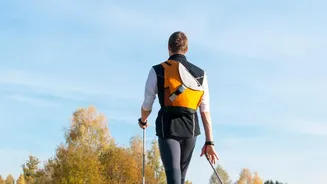
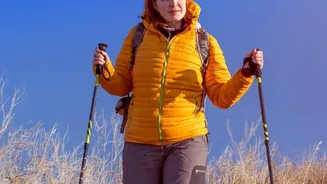
Getting the technique right is essential to reap the full benefits. Start by ensuring your poles are the correct height; when you stand straight with the pole tip by your toe, your elbow should be at roughly a 90-degree angle. The core movement involves coordinating your opposite arm and leg, just like in natural walking. As your right foot steps forward, your left arm swings forward to plant the pole. The pole should be planted between your front and back foot. As you move past the pole, push it backwards, extending your arm fully behind you. The power comes from this push-off, not from planting the pole in front of you. Maintain a relaxed grip, pushing through the strap, and keep your body leaning slightly forward from the ankles.
Common Mistakes to Avoid
Many beginners make a few common errors that limit the workout's effectiveness and can even cause strain. The most frequent mistake is planting the poles too far in front of the body, which acts as a brake rather than a propulsion tool and can strain your joints. Another issue is using only the arms with bent elbows instead of engaging the larger muscles of the back and shoulders by swinging from the shoulder. A stiff, clenched grip is also incorrect; the hand should open slightly at the end of the push-off to allow for a full arm swing. Finally, avoid using poles that are too long or too short, as this can lead to poor posture and an inefficient stride. The correct formula is generally your height in centimetres multiplied by 0.68.
Choosing the Right Equipment
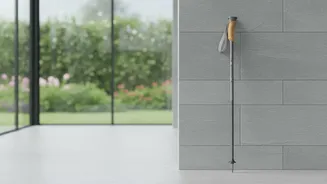
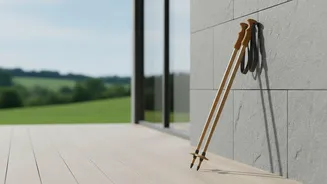
While technique is paramount, the right gear helps. Nordic walking poles are different from hiking or trekking poles. They are lighter and have a specific glove-like strap system that allows you to push off without gripping the handle tightly. When choosing poles, look for ones made with carbon, as they are better at absorbing vibrations from the pavement compared to rigid aluminium poles, which can be hard on your wrists and elbows. Adjustable-length poles offer versatility, allowing you to fine-tune the height to your body and the terrain. The tips of the poles usually feature a metal spike for soft ground and a removable rubber 'paw' for walking on pavement, ensuring you have the right grip for any surface.