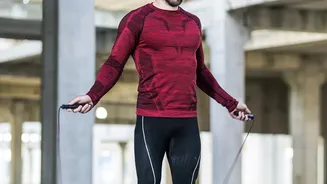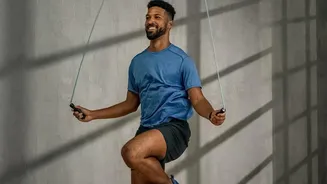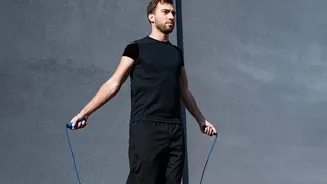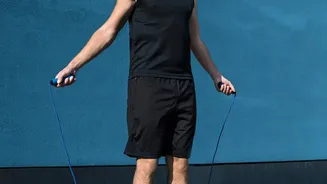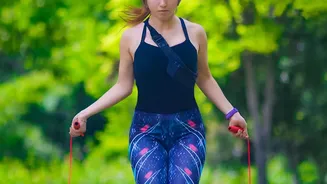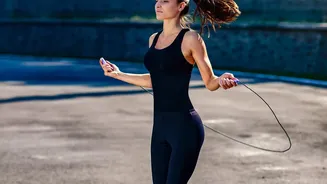




Why Your Setup Matters
Enthusiasm is great, but jumping straight into a workout without the right setup can lead to trouble. Jumping rope is a high-impact activity, meaning your joints, especially in your ankles and knees, absorb significant force with every landing. Without
proper shock absorption from your footwear and surface, you risk common injuries like shin splints, stress fractures, and joint pain. An improper setup not only increases injury risk but can also hinder your progress. A cramped space or a snagging surface can disrupt your rhythm, making it harder to master the basics and advance your skills.
Finding the Right Amount of Space
You don't need a full-sized gym, but you do need enough clear space to swing the rope freely. As a general rule, look for a spot that offers about 10 feet of clear space from front to back and 5 feet side to side. The most critical dimension is ceiling height. You should have at least a foot of clearance above your head when you jump, though more is always better. To test your vertical space, you can do a simple check: hold both rope handles in one hand and swing the rope to your side. If the rope touches the ceiling, you need more height. A garage, a spacious living room with furniture pushed aside, or a wide hallway can all work well for an indoor session.
The Best (and Worst) Surfaces
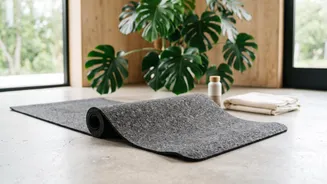
The ground beneath your feet plays a huge role in both performance and safety. The ideal surface has a little bit of give, which helps absorb impact and protect your joints. Sprung wooden floors, like those in a basketball court or dance studio, are considered the gold standard. Other excellent options include rubber gym flooring, running tracks, or a dedicated jump rope mat. A mat is a fantastic investment as it protects your joints, dampens noise, and prevents your rope from wearing out quickly. The surfaces to avoid are the extremely hard or overly soft ones. Concrete and asphalt offer zero shock absorption and are tough on your joints and your rope. On the other end, thick carpeting or plush grass can be too soft, stealing your energy and causing the rope to snag, which throws off your timing.
Choosing the Right Footwear
The right shoes act as your first line of defense, providing crucial support and cushioning. Look for cross-training or basketball shoes, which are designed for the types of multi-directional, high-impact movements involved in jumping rope. Key features to seek out include ample cushioning in the forefoot (the ball of your foot), good ankle support to prevent twists, and a relatively flat, stable sole. The shoe should be flexible enough to allow natural foot movement but firm enough to provide a solid base for pushing off. Breathable uppers are also a plus, helping to keep your feet comfortable during intense sessions. Some experts recommend specific models like the Nike Free Metcon or other cross-trainers that balance flexibility with a stable platform.
Shoes to Leave on the Rack
Not all athletic shoes are created equal for jumping rope. Running shoes, for example, are often a poor choice. While they have plenty of cushioning, it's typically concentrated in the heel, and the soles can be too soft and unstable for the repetitive forefoot landings of jumping. Jumping barefoot is another practice to approach with caution. While it can help strengthen the muscles in your feet, it offers no protection from impact or from the sting of a rope whipping your toes. For beginners, or for anyone jumping on a hard surface, shoes are highly recommended to prevent injury.