






The New Stress Test for Forests
Forest resilience refers to an ecosystem's ability to withstand and recover from disturbances like droughts, fires, or floods. For centuries, India's forests have evolved with the predictable rhythm of the monsoons. However, the climate is changing that
rhythm. The challenge today isn't just about the total amount of rain, but its pattern. Scientists are observing more erratic monsoons, longer dry spells between rains, and more frequent extreme events like intense downpours and severe droughts. These shifts create a new kind of stress. Trees that are adapted to seasonal dryness might not be prepared for prolonged droughts, while forests used to consistent moisture can be overwhelmed by sudden, intense rainfall leading to soil erosion and landslides.
A Tale of Two Forests
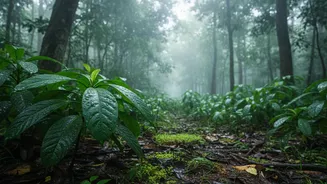
Not all forests respond to these changes in the same way. Research shows a fascinating divergence between India's wet and dry forests. The lush, evergreen forests of the Western Ghats, which thrive on high rainfall, are surprisingly vulnerable. Even short-term droughts can impact their phenology—the timing of life cycle events like flowering and fruiting—which affects the forest's overall productivity and ability to act as a carbon sink. In contrast, dry deciduous forests, like those in Central India, are naturally adapted to water stress. Species like sal and teak have evolved to shed leaves during dry seasons to conserve water. However, their resilience has its limits. Studies in areas like the Panchmarhi Biosphere Reserve show that rising temperatures and shifting rainfall have led to significant canopy loss in dry teak forests and increased the risk of forest fires.
Ripples Beyond the Trees
The impact of changing rainfall extends far beyond the trees themselves. When forests are stressed, it triggers a cascade of effects. Altered flowering and fruiting times disrupt the lives of pollinators and fruit-eating birds and animals, affecting biodiversity. Reduced canopy cover and increased soil dryness can harm the delicate web of life in the undergrowth and impact the ability of the forest floor to retain moisture. This, in turn, affects the recharge of groundwater and the flow of water into rivers that millions depend on. Furthermore, these changes threaten the livelihoods of countless communities that rely on forests for food, fuel, and other resources. A stressed forest is also less effective at sequestering carbon, a critical function for mitigating climate change.
Decoding the Past to Protect the Future
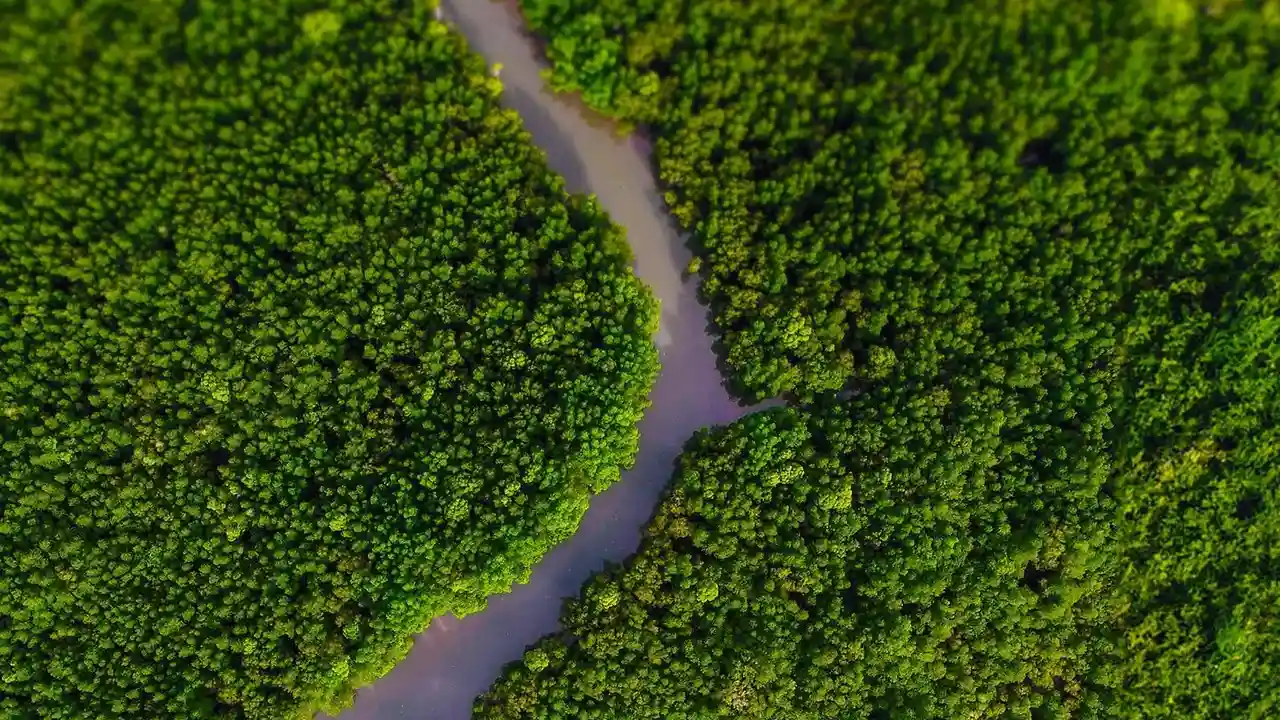
To understand these complex dynamics, scientists are using a combination of high-tech tools and traditional methods. Satellite data allows researchers to monitor changes in forest greenness (an indicator of health) over vast areas and correlate it with rainfall data over decades. This has revealed large-scale trends, such as an overall greening trend in over 80% of Central India's forests, even amidst years of severe drought. This indicates a strong, inherent resilience in many areas. At the same time, ground-level studies that analyse tree rings (dendrochronology) provide a historical record of how individual trees have responded to past climate variations, offering clues about their future adaptability. This detailed evidence is crucial for creating accurate models of future climate impacts.
A Path Towards More Resilient Forests
The research highlights that while some Indian forests show remarkable resilience, this cannot be taken for granted. The combination of erratic rainfall and rising temperatures is a potent threat. The findings underscore the need for evidence-based forest management. Conservation strategies must be tailored to specific forest types. For instance, in vulnerable dry deciduous zones, management could focus on preventing fires and promoting mixed-species plantations, which are often more resilient than monocultures. In the high-rainfall Western Ghats, preventing deforestation and soil erosion is paramount to maintaining stability, especially on slopes prone to landslides. Ultimately, understanding how ecosystems adapt is the first step toward helping them survive in a changing world.