



What Exactly Is This Planetary 'Gathering'?
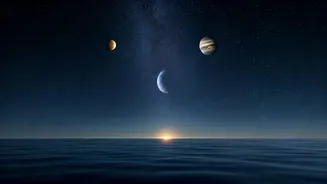
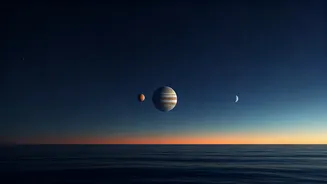
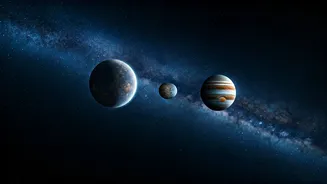
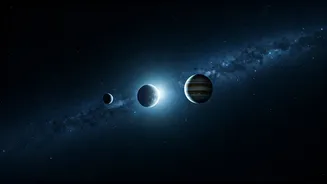
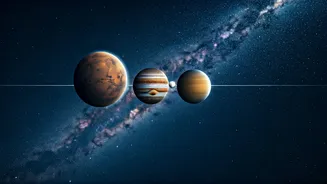
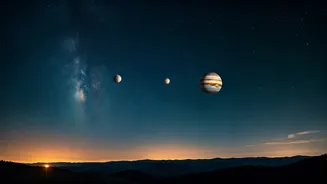
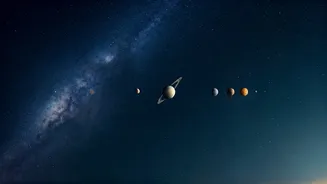
This event, often called a conjunction or planetary alignment, isn't a cosmic collision but a beautiful trick of perspective. From our vantage point on Earth, the planets Mercury, Venus, and Jupiter appear to be close to one another in a small patch of the sky.
In reality, they remain millions of kilometres apart, each following its own vast orbit around the Sun. Think of it like seeing two distant streetlights line up perfectly as you walk down a road—they aren't actually touching, but from your specific position, they appear to be. These alignments are special because each planet moves at a different speed. For their paths to visually cross like this is a relatively uncommon and always breathtaking sight.
Meet the Celestial Trio
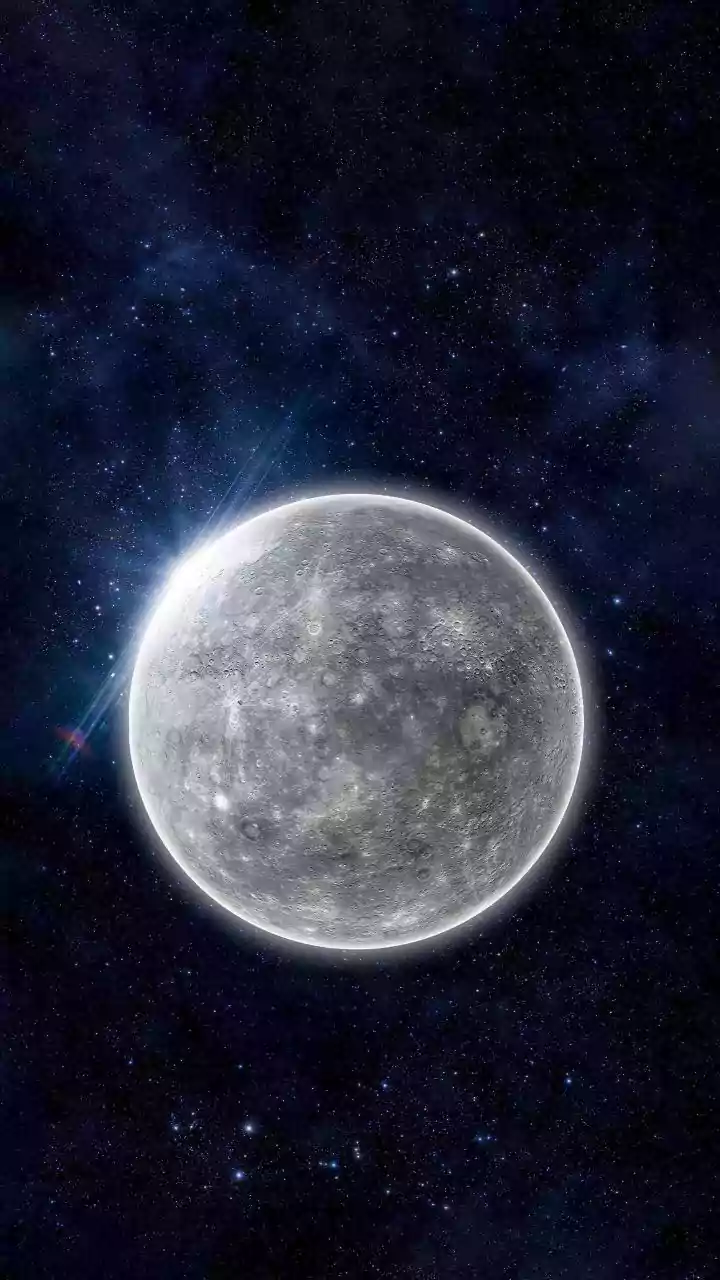
Getting to know the stars of the show makes spotting them even more rewarding. First, there's Venus. Often called the 'Evening Star' or 'Morning Star', it's the brightest object in the night sky after the Moon. Its thick, cloudy atmosphere reflects sunlight brilliantly, making it impossible to miss. Next is Jupiter, the king of the planets. It's the second brightest of the trio and shines with a steady, majestic, silvery light. Unlike twinkling stars, Jupiter’s glow is constant. Finally, we have Mercury. This is the trickiest one to spot. As the closest planet to the Sun, it never strays far from its glare, appearing only for a short window just after sunset or before sunrise, low on the horizon. Spotting elusive Mercury is a true badge of honour for any amateur stargazer.
Your Guide: When and Where to Look
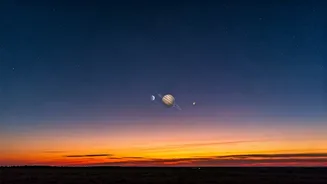
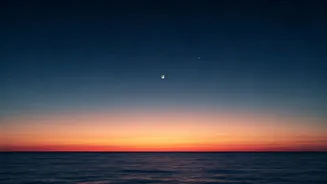
Timing and direction are everything. For most of these planetary gatherings, the best viewing window is a short one: either in the hour just after sunset in the western sky, or the hour just before sunrise in the eastern sky. To begin, find a spot with an unobstructed view of the horizon. Venus will be the first to pop out, appearing as a dazzlingly bright 'star'. Once you've located it, you can use it as a reference point. Jupiter will be the other bright, steady point of light nearby. Mercury, if visible, will be much fainter and closer to the horizon, appearing like a small, star-like dot in the fading twilight. Because its appearance is so brief, you have to be looking at the right time. Check online for a star chart for our exact dates to confirm the best local viewing times for your city.
No Telescope? No Problem.
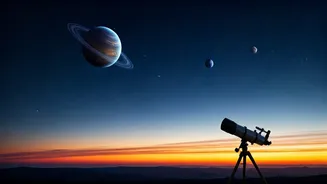
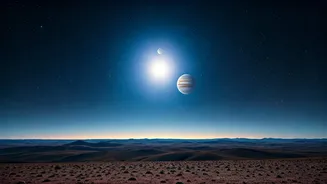
One of the best things about watching bright planets like Venus and Jupiter is that you don't need any special equipment. This celestial spectacle is a naked-eye event. In fact, a telescope’s narrow field of view can make it harder to appreciate the grandeur of the entire alignment at once. A simple pair of binoculars, however, can enhance the experience. Through binoculars, you might be able to see Jupiter as a distinct disc rather than a point of light. You might even catch a glimpse of its four largest moons—Io, Europa, Ganymede, and Callisto—appearing as tiny pinpricks of light huddled close to the giant planet. But even without them, your eyes are more than enough to enjoy the show.
Tips for the Best Viewing Experience
To maximise your chances of a great view, try to get away from the glare of city lights. Light pollution washes out fainter objects like Mercury. A park, a rooftop, or a location on the outskirts of town will offer a darker canvas. Give your eyes time to adapt. It takes about 15-20 minutes for your pupils to fully dilate and adjust to the darkness, allowing you to see much more detail in the night sky. Lastly, consider using a stargazing app on your phone, like Stellarium or SkyView. You can simply point your phone at the sky, and the app will identify the planets, stars, and constellations for you, taking all the guesswork out of your celestial treasure hunt.