








A Direct Link to the West
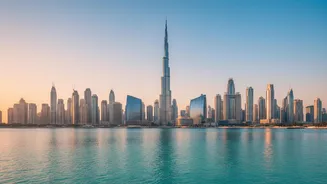
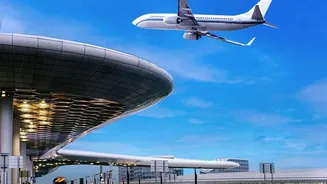
Starting in August 2026, Air India Express will connect Guwahati directly with the United Arab Emirates for the first time. The airline is launching non-stop services to Dubai commencing August 4, followed by a route to Abu Dhabi starting August 7. This
marks a significant milestone, as travellers from Northeast India have historically had to rely on connecting flights via major hubs like Delhi or Kolkata to reach the Gulf. The Guwahati-Dubai service will operate weekly on Tuesdays, with the Abu Dhabi flight running every Friday. This expansion means Guwahati's airport will be directly connected to four countries: the UAE, Singapore, Thailand, and Bhutan. The move comes as part of a broader push to position Guwahati as a major travel and transit hub, bridging Southeast Asia with West Asia.
Why Frequency is the Real Game-Changer
While the new routes are historic, the headline's focus on "frequency" points to a deeper economic principle. A single weekly flight is a start, but a consistent, multi-day schedule is what unlocks true potential. For business travellers, a weekly flight is limiting. If a meeting is on a Wednesday, a Tuesday-only flight doesn't work. For cargo, especially perishable goods like fresh produce from Assam, a once-a-week service is a logistical bottleneck. High frequency, however, creates reliability. It allows businesses to plan with certainty, tourists to travel with flexibility, and logistics companies to build efficient supply chains. Studies on regional aviation consistently show that flight frequency, alongside capacity, has a significant positive influence on passenger traffic and economic growth. It transforms air travel from a rare luxury into a dependable utility, building the confidence local economies need to thrive.
The Economic Ripple Effect
The establishment of direct and frequent air links is a proven catalyst for economic growth. For the Northeast, these new flights to the UAE open up a massive market. Local businesses can now export high-value agricultural products, handloom textiles, and other regional specialities directly to the Gulf, a region with strong demand for premium goods. Previously, complex and time-consuming journeys through other airports made exporting perishable items nearly impossible. This direct access is expected to strengthen Assam's export ecosystem, particularly for tea, floriculture, and other agricultural produce. Beyond trade, the connectivity will likely spur investment. International companies looking to invest in the Northeast will see a region that is now easier to access, making it a more attractive base for operations. The development also creates jobs in hospitality, logistics, ground handling, and airport services.
A Boost for Tourism and People-to-People Ties
Direct connectivity is a powerful magnet for tourism. The new flights are expected to provide a major boost to Assam's tourism sector by making the state and the wider Northeast more accessible to travellers from the UAE and beyond. Before these direct routes, the journey was long and inconvenient, acting as a deterrent. Now, the natural beauty of places like Kaziranga National Park is just one flight away for a new international audience. The connection also serves the large Indian diaspora in the Gulf, providing a convenient and time-saving way to travel home. This ease of travel fosters stronger cultural and personal ties. Furthermore, it enhances access to specialised healthcare and education, allowing residents of the Northeast to more easily reach major global hubs. This two-way flow of people—for business, leisure, and family—is what truly integrates a region with the global community.
Building a True Aviation Hub
This expansion is a crucial step in fulfilling the long-held ambition of making Guwahati a genuine international aviation hub. For years, the "international" status of the airport felt limited, with flights to only a few nearby countries. The addition of Dubai and Abu Dhabi, two of the world's biggest transit hubs, changes the equation. It connects the Northeast not just to the UAE, but to a vast network of onward flights to Europe, Africa, and North America. This development, coupled with the recent inauguration of a new terminal building that dramatically increases passenger capacity, signals a new era for the airport. Assam's Chief Minister, Himanta Biswa Sarma, has noted that the state is also working on direct connectivity to Vietnam, further cementing Guwahati's strategic position as a gateway connecting East and West.