

The Foundation of Flavour: Khoya
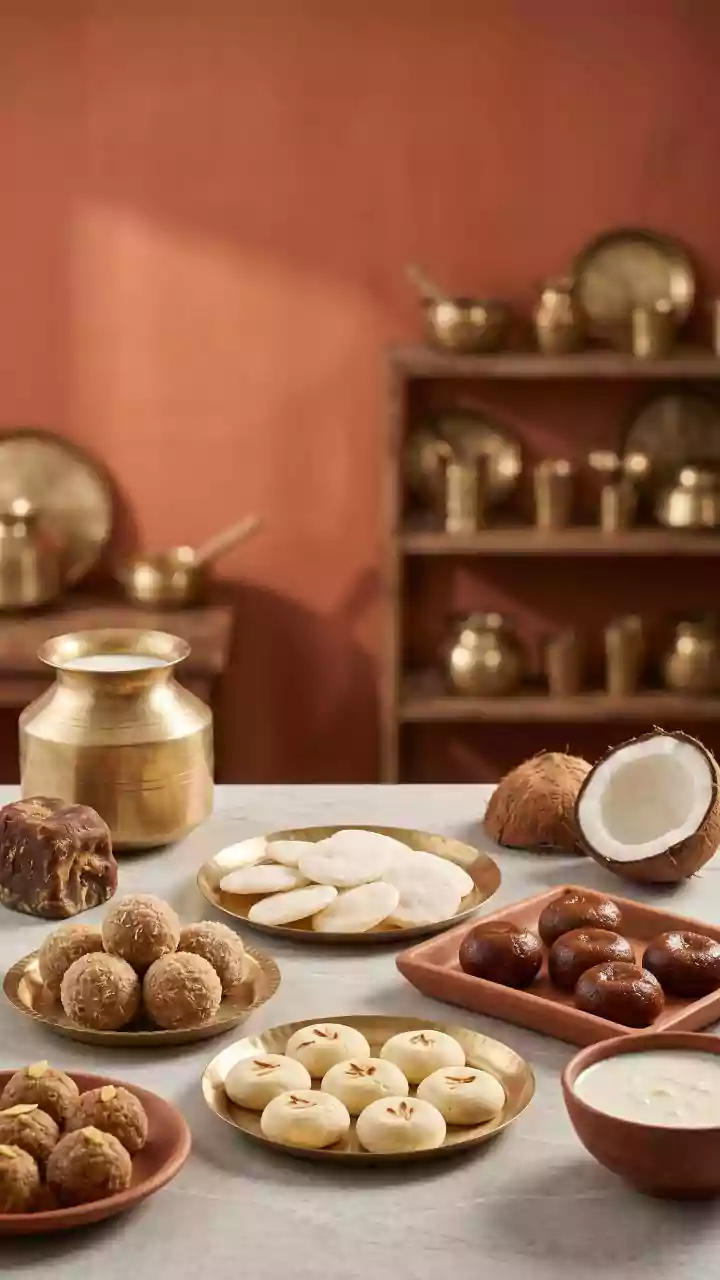
At the heart of most Indian milk sweets is khoya, also known as mawa. This dense, crumbly base is created by patiently simmering milk in a large, open pan for hours, allowing the moisture to evaporate until only the concentrated milk solids remain. This process
is both an art and a science, forming the essential building block for a vast array of sweets, including barfi, gulab jamun, and of course, peda. The quality of the milk and the skill in preparing the khoya are fundamental to the final product's texture and taste, creating a rich canvas upon which regional flavours are painted.
A Sweet Map of India
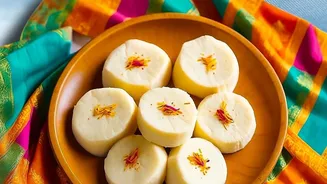
While khoya is a common thread, every region has its own proud interpretation. West Bengal is famous for its delicate sweets made from fresh chhena (curdled milk), like sandesh and rasgulla. In Karnataka, the Dharwad Peda stands out with its dark, caramelised colour and chewy texture, a legacy that traces back to a migrant family from Uttar Pradesh. Varanasi offers its own Lal Peda, or 'red peda', which gets its signature reddish-brown hue and toasted flavour from a longer cooking process that caramelises the milk solids. These variations aren't just about different recipes; they reflect local dairy traditions, tastes, and histories.
Mathura: The Peda Heartland
When it comes to peda, all roads lead to Mathura in Uttar Pradesh. The city’s name is so intertwined with the sweet that 'Mathura ka Peda' has become a famous saying, a benchmark against which all other pedas are measured. But this reputation is not just a matter of taste; it’s deeply woven into the city’s identity as the birthplace of Lord Krishna. The region, known as Braj, has a strong pastoral heritage, and stories of Krishna are filled with references to milk and butter. This cultural and religious connection created the perfect environment for a milk-based sweet to become an iconic offering.
An Offering Fit for a God
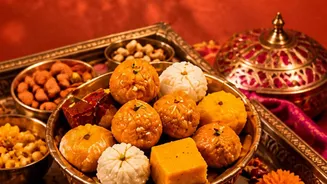
In Mathura, the peda is more than a dessert; it is a form of prasad—a religious offering. It is an essential part of celebrating Janmashtami, Krishna's birthday, and is offered in temples throughout the city. Devotees visiting the sacred sites of Mathura and nearby Vrindavan often purchase boxes of peda to take home, transforming the sweet from a local specialty into a blessed souvenir. This practice has cemented the peda's status, not just as a food item, but as an edible symbol of devotion and a taste of the city's spiritual heritage.
The Anatomy of a Mathura Peda
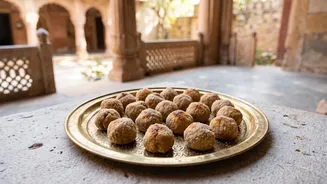
So, what makes the Mathura Peda distinct? The secret lies in the preparation. Unlike paler, softer versions, the khoya for Mathura Peda is roasted slowly until it develops a beautiful golden-brown colour. This patient roasting gives it a signature caramelised flavour and a distinct, slightly grainy texture. The mixture is then combined with a special type of powdered sugar called 'tagar' or 'bura', which contributes to its unique melt-in-the-mouth quality, and finished with a hint of cardamom. This specific method results in a sweet that is not just delicious but also has a longer shelf life, making it perfect for pilgrims to carry on their journeys.