
The Sun's Turbulent Surface
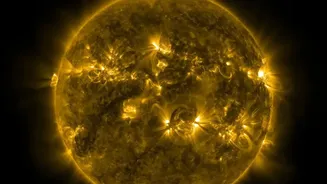
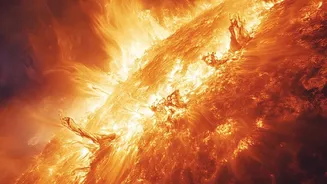
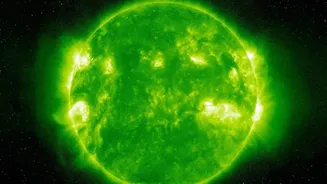
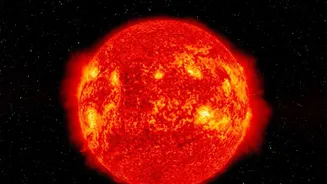
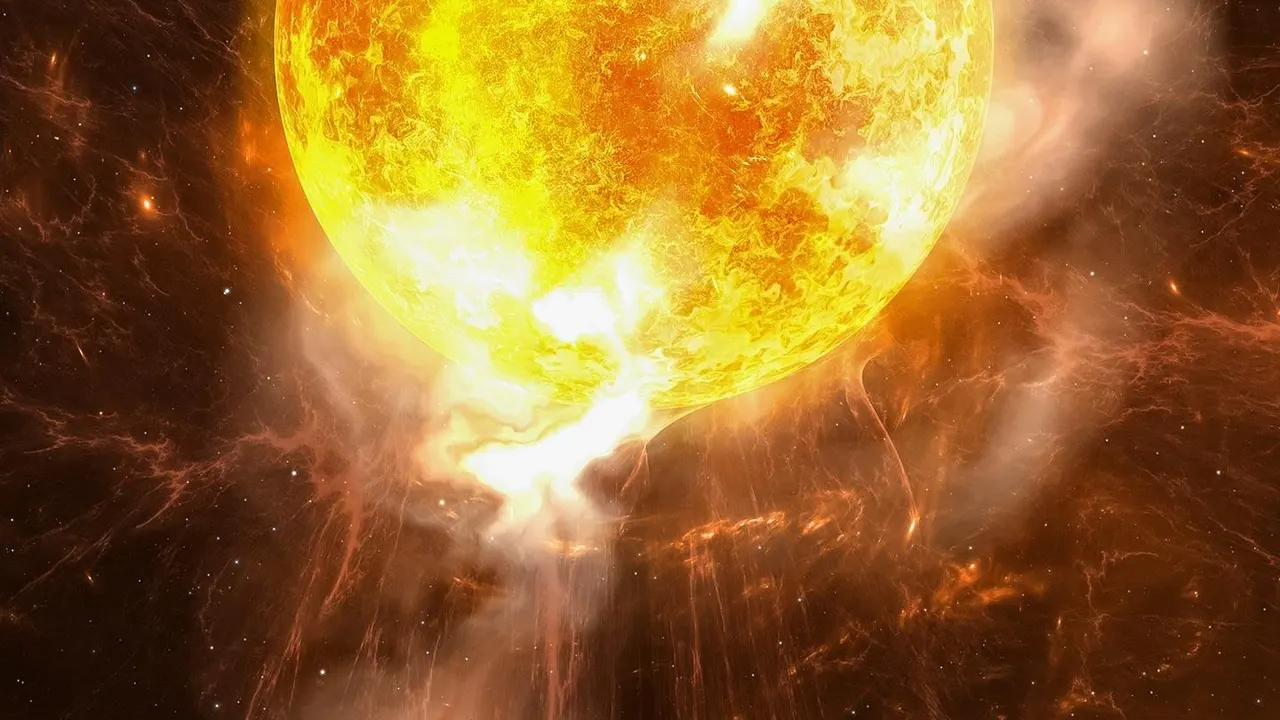
The visible surface of the Sun, known as the photosphere, is a chaotic environment. It is not a solid surface but a sea of electrically charged gas, or plasma, constantly bubbling and churning due to powerful convection currents and magnetic fields. This
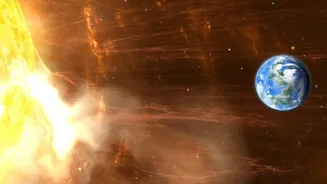
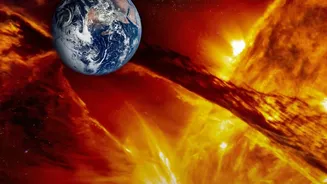
activity creates patterns called granules, which are vast cells of rising hot plasma that can be over 1,000 kilometres across. For decades, scientists have studied these processes to understand everything from the Sun's 11-year activity cycle to violent eruptions like solar flares and coronal mass ejections (CMEs). These events are not just cosmic light shows; they generate space weather that can directly impact us on Earth, disrupting satellites, communication systems, and even power grids. Therefore, understanding the fundamental physics of the Sun's plasma is crucial for improving our predictions and protecting our technology.
A Breakthrough Observation
In a study published in the journal Nature on August 5, 2026, scientists announced a groundbreaking discovery. Using the Daniel K. Inouye Solar Telescope in Hawaii, the world's largest, they captured the highest-resolution images ever taken of the Sun's photosphere. These images revealed tiny, swirling plasma vortices at the edges of the granules, structures that had never been seen before. These whirlpool-like motions have been identified as a classic phenomenon from fluid dynamics known as a Kelvin-Helmholtz instability (KHI). This occurs when two fluids, or in this case plasmas, flow past each other at different speeds, creating a shear that curls into vortices, much like wind blowing over water creates waves. While KHIs are seen in clouds and oceans on Earth, and even in the atmospheres of planets like Jupiter, this is the first time they have been directly confirmed on the Sun's surface.
What Makes These Waves Different?
The discovery is remarkable not just for its novelty, but for its scale. The newly observed vortices are incredibly small by solar standards, with some measuring as little as 20 kilometres across. Observing such fine detail is an immense technical achievement, akin to spotting a small coin from over 100 kilometres away. According to researchers involved in the study, this new perspective reveals how minute processes can have a significant impact on the nature of our star. Unlike larger, slower waves that have been studied for years, these tiny, rapid instabilities provide a look at the magnetic field twisting and moving in real-time. This is critical because the twisting of magnetic field lines is believed to be the primary way the Sun builds up and stores energy, which can then be released suddenly in explosive events.
Unlocking Solar Mysteries
These newly seen plasma waves offer a powerful new tool for understanding some of the Sun's most enduring mysteries. For one, they could help explain the 'coronal heating problem'—why the Sun’s outer atmosphere, the corona, is hundreds of times hotter than its surface. The energy transported and dissipated by these widespread instabilities might be a key missing piece of that puzzle. Furthermore, the swirling motions are thought to create and build magnetic energy, potentially acting as the trigger for larger-scale explosions like solar flares. By studying how and where these vortices form and evolve, scientists hope to gain a better understanding of the initial moments before a major solar eruption. This could lead to more accurate models for predicting space weather and give us more warning time to protect vulnerable infrastructure on and around Earth.