







Beyond Clogged Drains
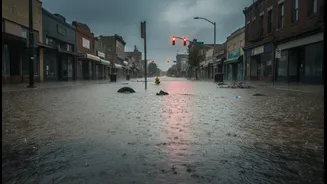
The usual suspects blamed for urban flooding are clogged drains and exceptional rainfall. While these are factors, they are symptoms of a much deeper issue: our cities are not designed to handle water. Decades of rapid, often unplanned urbanisation have
led to a 'grey infrastructure' approach. We have systematically paved over natural ground with concrete and asphalt. These impervious surfaces prevent rainwater from seeping into the ground, forcing it to become surface runoff. With natural floodplains, wetlands, and lakes often encroached upon for construction, this excess water has nowhere to go, overwhelming drainage systems that are frequently outdated and poorly maintained. Cities like Bengaluru and Mumbai have lost a significant percentage of their natural water bodies and green cover, drastically reducing their ability to absorb rainwater naturally.
Designing With Water, Not Against It
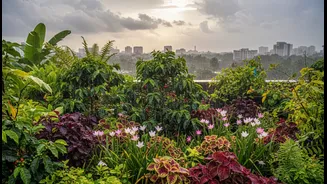
A new perspective is emerging in urban planning that treats rainwater not as a nuisance to be expelled, but as a resource to be managed. This involves shifting from 'grey' infrastructure (pipes and drains) to 'blue-green' infrastructure. This approach strategically uses and preserves natural and semi-natural systems to manage stormwater. 'Blue' refers to water elements like ponds and wetlands, while 'green' refers to parks, green roofs, and vegetated spaces. The goal is to mimic a natural landscape's ability to absorb, store, and slowly release water, reducing the burden on conventional drainage networks and recharging precious groundwater.
The 'Sponge City' Solution
A powerful application of this philosophy is the 'Sponge City' concept. As the name suggests, it aims to turn a city into a giant sponge. This is achieved through a toolkit of nature-based solutions. Imagine streets paved with permeable materials that let water pass through, buildings topped with green roofs that absorb rainfall, and roadside gardens (bioswales) that collect and filter runoff. Parks and public squares can be designed as temporary retention ponds, holding large volumes of water during a downpour and releasing it slowly afterwards. This approach not only tackles flooding but also helps combat water scarcity by replenishing aquifers, a dual benefit crucial for Indian cities that often face both floods and droughts.
Lessons from India's Past
This forward-thinking approach also has deep roots in India's own history. Before the age of concrete, Indian civilizations mastered the art of water management. The intricate stepwells (baolis) of Rajasthan and Gujarat, the 'Eris' (tanks) of Tamil Nadu, and the well-planned drainage of Indus Valley cities like Mohenjo-Daro were all sophisticated systems designed to live in harmony with water cycles. They were community-centric structures that harvested rain, recharged groundwater, and managed seasonal flows. Reviving this traditional wisdom and integrating it with modern 'sponge city' techniques offers a powerful, culturally relevant path forward for our urban areas.