

The Perennial Pothole Problem
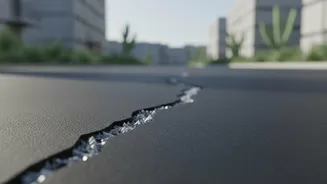
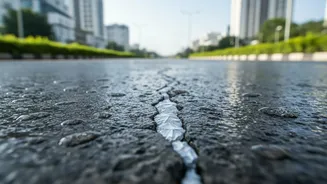
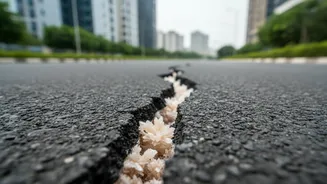
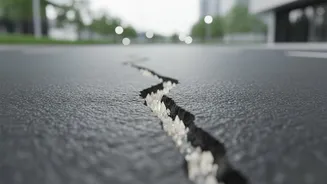
Every year, as the rains lash down, Indian roads begin to crumble. What starts as a small crack quickly deteriorates into a bone-jarring pothole, creating a nightmare for drivers, causing traffic snarls, and leading to vehicle damage and accidents. In 2022
alone, nearly 1,856 lives were lost in accidents caused by potholes across the country. The cycle of damage and repair is a costly and recurring headache for municipal corporations, which often rely on temporary fixes that barely last the season. The constant need for maintenance drains public funds and disrupts traffic. This has led researchers and government bodies to explore more durable and futuristic solutions, moving beyond traditional asphalt and concrete.
Introducing ‘Living’ Concrete
Imagine a road that can heal its own wounds. That is the promise of bacterial concrete, a smart material that contains dormant, limestone-producing bacteria. When this special concrete is mixed, microscopic capsules containing bacteria and their food source, typically calcium lactate, are added. These bacteria, often from the resilient Bacillus family like Bacillus subtilis or Bacillus pasteurii, can lie dormant within the hardened concrete for years, waiting for the right moment to act. The concept is simple: instead of sending out a repair crew after a crack appears, the road itself is equipped with a microscopic construction crew ready to get to work automatically.
How Bacteria Play Doctor for Roads
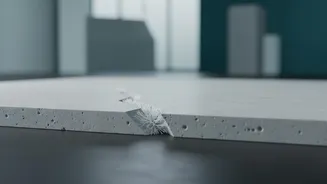
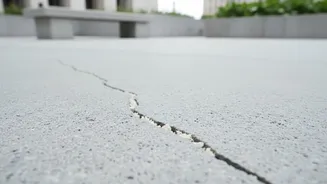
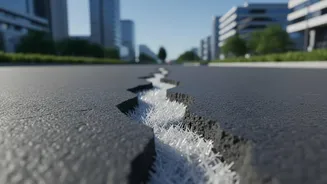
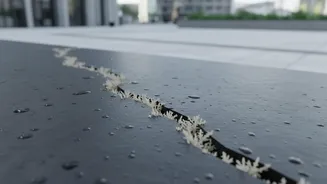
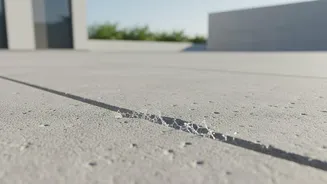
The self-repair mechanism is triggered by the very thing that often causes the damage: water. When a crack forms in the concrete, rainwater seeps in. This moisture awakens the dormant bacteria from their slumber. The bacteria then begin to consume their packed lunch of calcium lactate, and through a metabolic process, they produce calcium carbonate—the primary component of limestone. This newly formed limestone crystallizes and fills the crack, effectively sealing it from within. The process not only plugs the gap, preventing water from causing further damage and corroding steel reinforcements, but it also restores the structural integrity of the concrete. Studies have shown this method can heal cracks up to 0.8mm wide, significantly extending the lifespan of the infrastructure.
From Lab to Street: Indian Trials
While the technology sounds like science fiction, it is actively being researched and tested in India. Prestigious institutions like the Indian Institutes of Technology (IITs) are at the forefront, adapting these solutions for Indian conditions. Research indicates that using certain bacteria can increase the compressive strength of concrete by over 18% in 28 days. The National Highways Authority of India (NHAI) has also been exploring innovative self-healing materials for road construction to prolong durability and cut maintenance costs. While widespread adoption is not yet a reality, pilot projects and feasibility studies are underway. Cities like Pune and Bengaluru are testing various smart infrastructure technologies, with some pilot projects incorporating self-healing materials in critical infrastructure. These trials are crucial for evaluating how the technology performs under local traffic loads and extreme weather conditions.
The Road Ahead: Hurdles and Hope
Despite its immense potential, bacterial concrete faces several challenges before it can become a standard for Indian roads. The primary hurdle is cost. The specialized bacteria and their nutrient capsules make this concrete more expensive than conventional mixes, which is a significant factor for large-scale infrastructure projects. Researchers are actively working on finding cheaper nutrient sources to make the technology more economical. Furthermore, the long-term effectiveness and durability in diverse Indian climates—from heavy monsoons to scorching summers—still need extensive validation through field trials. The growth of the bacteria might not be suitable for every environment, and currently, there are no standardised design codes for its use in construction. However, the promise of reducing long-term maintenance costs, improving road safety, and creating more sustainable infrastructure provides a powerful incentive to overcome these obstacles.