





Closing the 'Cloud Loophole'
The US Commerce Department's Bureau of Industry and Security (BIS) recently unveiled an interim final rule aimed at a major gap in its export controls. For years, while companies in restricted countries like China were barred from directly purchasing
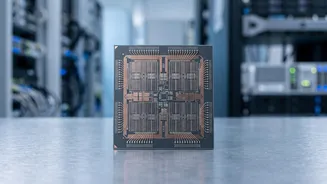
high-end American AI chips, a simple workaround existed: renting computing power from data centers in third-party countries. This 'cloud loophole' allowed entities to access the power of cutting-edge US semiconductors without ever physically possessing them. The new rule, effective upon its publication around November 19, 2026, is designed specifically to close this gap, marking a logical extension of existing physical export restrictions. The stated goal is to prevent sensitive American technology from being used in ways that could threaten US national security.
How the New 'Access Controls' Work
Contrary to what the term might suggest, these 'access controls' are not a physical kill switch built into the hardware. Instead, the control is a regulatory one focused on due diligence and licensing. The rule requires that any data center operator, regardless of its location worldwide, must obtain a US export license if it intends to provide significant remote computing services to a company headquartered in a restricted nation, such as China, Russia, or Iran. Data center operators must now conduct enhanced diligence on their customers to verify their ultimate ownership. The regulation also adds new direct licensing requirements for exporting advanced chips to countries identified as having a 'higher-than-normal risk of diversion', including Singapore, Malaysia, Indonesia, Thailand, and Brazil.
The Geopolitical Chess Match
This policy escalation is the latest move in the ongoing strategic competition between the US and China over technological supremacy. The core concern for Washington is that adversaries could use clouds of powerful US-designed chips to train the next generation of AI models for military, surveillance, or cyber warfare purposes. The timing of the rule is notable, following a period of increased scrutiny on the AI industry. The Commerce Department stated that the rule was written at the direction of the Department of Treasury and the National Security Council, signaling a unified, high-level government focus on the issue. The objective is clear: to ensure that access to American supercomputing capabilities, whether physical or remote, is aligned with US national security and foreign policy interests.
Impact on the Global Tech Industry
The ripple effects of this rule are expected to be substantial. For US chip designers like Nvidia, it adds another layer of complexity to their global sales strategy. However, the biggest impact will be felt by the worldwide network of data center and cloud-computing providers. These companies are now on the front lines of enforcing US export policy, tasked with vetting their global client base to remain in compliance. The rule creates a significant new administrative and legal burden, forcing a re-evaluation of who they can serve. An exemption exists for services used exclusively for commercial recommendation engines, like those on e-commerce sites, which are not seen as a national security threat. However, any service that could be used to generate new content or train advanced models falls under the restrictions.
A Different Idea: The 'AI Kill Switch'
The concept of an 'access control' feature also overlaps with a separate but related legislative effort known as the 'AI Kill Switch Act'. Proposed in Congress in mid-2026 by Representatives Ted Lieu and Nathaniel Moran, this bill is different from the BIS remote access rule. The Kill Switch Act would mandate that developers of the most powerful AI models—the software itself—must build in a technical capability to throttle, suspend, or completely shut down their systems. It would grant the Department of Homeland Security the authority to order such a shutdown if an AI were to go rogue or pose a catastrophic risk. This proposal focuses on controlling the AI model's behavior, whereas the new BIS rule focuses on controlling access to the hardware that powers it.