





Whispers from Antiquity
The story of yoga begins not in a gym, but in the sacred texts of ancient India. The earliest mentions can be found in the Rig Veda, a collection of hymns dating back over 3,000 years. These initial references describe yoga not as physical postures, but as a discipline
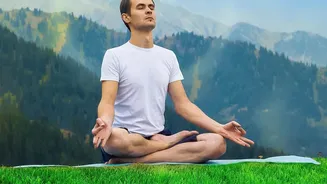
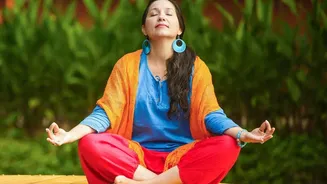
to 'yoke' or unite the self with the divine. Archaeological findings from the Indus Valley Civilization, dating back to 2700 BCE, show figures in meditative poses, suggesting that the core tenets of yoga—meditation, self-discipline, and inner awareness—were practiced millennia ago as a path to spiritual growth. During this Vedic period, the focus was entirely on transcending worldly distractions to achieve enlightenment.
A System for the Mind
For centuries, yogic practices were passed down orally from teacher to student. A pivotal moment came around 400 CE with the sage Patanjali's 'Yoga Sutras'. This collection of 196 short verses, or sutras, systemized the philosophy of yoga, creating a comprehensive guide to quiet the mind and achieve liberation from suffering. Patanjali outlined the 'Ashta Anga', or the eight limbs of yoga. These are ethical principles (Yamas), personal observances (Niyamas), posture (Asana), breath control (Pranayama), sense withdrawal (Pratyahara), concentration (Dharana), meditation (Dhyana), and finally, enlightenment (Samadhi). In this classical view, physical postures (asanas) were just one small part, primarily intended to prepare the body for long periods of silent meditation.
The Rise of Physical Practice
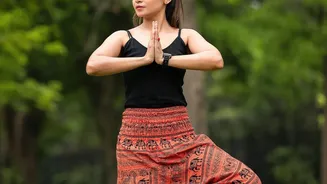
The yoga many recognize today, with its strong emphasis on physical postures, gained prominence much later. Between the 9th and 15th centuries, a new school of thought called Hatha Yoga emerged. Influenced by Tantric traditions that saw the body as a vehicle for enlightenment rather than a distraction, Hatha Yoga introduced a more sophisticated system of asanas and breathing techniques. Texts like the 'Hatha Yoga Pradipika' detailed various postures designed to purify the body, increase vitality, and ultimately prepare the mind for deeper meditation. This marked a significant shift, acknowledging the profound connection between physical wellness and spiritual progress.
Yoga Travels to the West
Yoga's journey from an Indian spiritual discipline to a global phenomenon began in the late 19th century. Swami Vivekananda is widely credited with introducing yoga philosophy to the Western world during his address at the 1893 Parliament of Religions in Chicago. He presented yoga not as a series of exercises, but as a 'science of the mind'—a universal, non-dogmatic path to spiritual realization. Following Vivekananda’s tour, other Indian gurus travelled to Europe and America, establishing spiritual centres and translating key texts. They framed yoga as a way to achieve a personal experience of Indian spirituality, an idea that resonated deeply with Western audiences.
The Modern Yoga Boom
The 20th century saw the birth of modern postural yoga, thanks to pioneers like B.K.S. Iyengar. A student of the legendary Krishnamacharya, Iyengar developed a method that emphasized precise physical alignment and the use of props like blocks and straps to make asanas accessible to everyone, regardless of age or ability. Iyengar, along with others like K. Pattabhi Jois, helped popularize a more dynamic, physically demanding style of yoga. Iyengar's 1966 book, 'Light on Yoga', became a global bible for practitioners, standardizing teaching and demystifying the poses. By focusing on the body as the path to the spirit and making the practice culturally accessible, these masters laid the foundation for the fitness-focused yoga boom of the 1990s and beyond.