
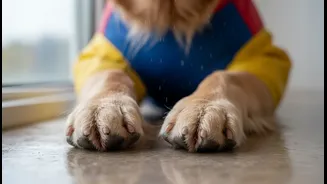



The Problem with Puddles and Damp Paws
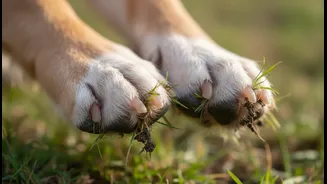
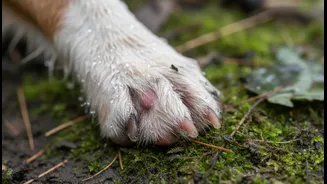
A dog's paws are resilient, but they aren't waterproof. During the rainy season, every walk exposes them to mud, contaminated puddle water, and prolonged dampness. This constant moisture is the primary culprit. It compromises the natural protective barrier
of the skin on the paw pads and in the delicate spaces between their toes. These areas, when left wet, become warm, humid micro-environments—the perfect breeding ground for fungi and bacteria that are naturally present on the skin to multiply out of control. The seemingly harmless water your dog walks through can also contain a host of irritants and microbes that kickstart the trouble.
From Fungal Irritation to Itchy Obsession
The first stage of trouble is often a primary fungal infection, most commonly an overgrowth of yeast called Malassezia. This fungus thrives in the warm, moist crevices between your dog's toes. You may not notice it at first, but your dog certainly feels it. The infection causes intense itching and irritation. This leads to the tell-tale sign: obsessive licking, chewing, and biting at the paws. Many owners mistake this for a simple habit, but it’s often your dog's desperate attempt to soothe the discomfort. This licking introduces more moisture from saliva, worsening the fungal environment and leading to reddish-brown fur staining.
How Secondary Bacterial Infections Take Hold
This is where the situation escalates. The constant licking and chewing, combined with the initial inflammation, creates micro-abrasions and breaks in the skin. These tiny wounds become open doors for opportunistic bacteria, like Staphylococcus, to invade the deeper layers of the paw tissue. This is known as a secondary bacterial infection, or deep pyoderma. What started as a mild, itchy yeast issue can now become a painful, pus-filled infection. These infections are much more severe, causing significant pain, swelling, and sometimes even lameness.
Red Flags: Signs of a Deep Paw Infection
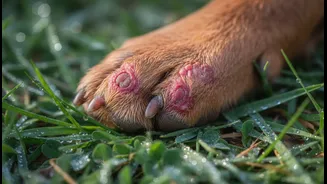
It's crucial to recognise the signs before the infection becomes severe. While initial itching is a key indicator, look out for more advanced symptoms. These include angry redness and swelling of the entire paw or between the toes, a foul or musty odor often described as smelling like 'corn chips', and visible discharge, which can be clear, bloody, or pus-like. You might also see painful sores, nodules, or blisters, especially in the webbing between the toes. A dog suffering from a deep infection will often limp, favour the sore paw, or become reluctant to walk altogether due to the pain.
Your Five-Minute Prevention Routine
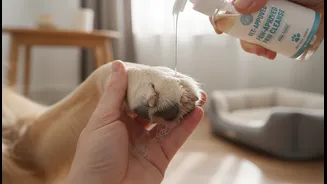
The good news is that preventing these nasty infections is straightforward and only takes a few minutes after every single rain walk. First, gently wash your dog's paws with clean, lukewarm water to remove mud and irritants. Next, and most importantly, you must dry them thoroughly. Use a soft, absorbent towel and pay special attention to getting all the moisture from between the toes and paw pads. For long-haired breeds, keeping the fur between their paw pads trimmed short can significantly help reduce moisture retention. Consider using a vet-approved antiseptic or paw-cleaning wipe for extra protection.