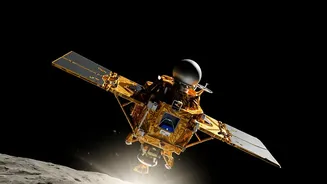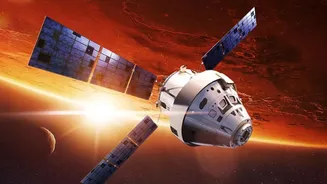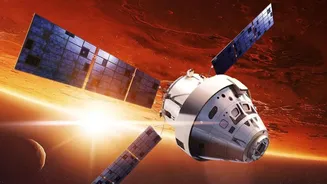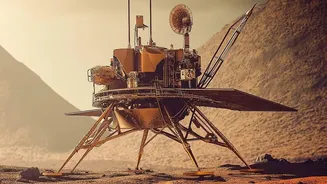


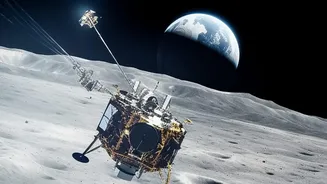

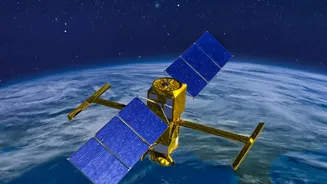
Japan's space agency, JAXA, has embarked on one of the most ambitious robotic missions ever conceived: to land on a moon of Mars, scoop up a piece of it, and bring it back to Earth. The Martian Moons eXploration, or MMX, mission targets Phobos.
A Cosmic Whodunit
The central
goal of the MMX mission is to solve a long-standing mystery about Mars's two tiny moons, Phobos and Deimos. Scientists are divided on their origins, with two primary theories competing for dominance. The first is the 'capture hypothesis', which suggests that Phobos and Deimos are former asteroids that strayed too close to Mars and were ensnared by its gravity. Their dark, cratered surfaces resemble carbonaceous asteroids, lending weight to this idea. The second is the 'giant impact hypothesis'. This theory proposes that a massive object collided with Mars billions of years ago, and the moons formed from the resulting debris that was blasted into orbit, much like how Earth's Moon is thought to have been created. The nearly circular, equatorial orbits of the moons support this idea, as capturing asteroids into such stable paths is difficult to model. By analyzing a physical sample from Phobos, scientists will be able to determine its composition and finally solve this cosmic whodunit.
The Five-Year Journey
The MMX mission is a multi-stage, five-year epic that began with its launch from Japan's Tanegashima Space Center in October 2026. The spacecraft will take about a year to travel to the Red Planet, entering Martian orbit in 2027. Once there, it will begin a three-year observation phase, studying both Phobos and its smaller sibling, Deimos. A key part of the mission involves deploying a small rover named Idefix, a joint contribution from the French (CNES) and German (DLR) space agencies. This 25kg rover will land on Phobos first to scout the surface, testing its physical properties and helping controllers select the best site for the main spacecraft to collect its precious cargo.
The Ultimate Souvenir
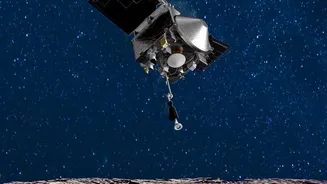
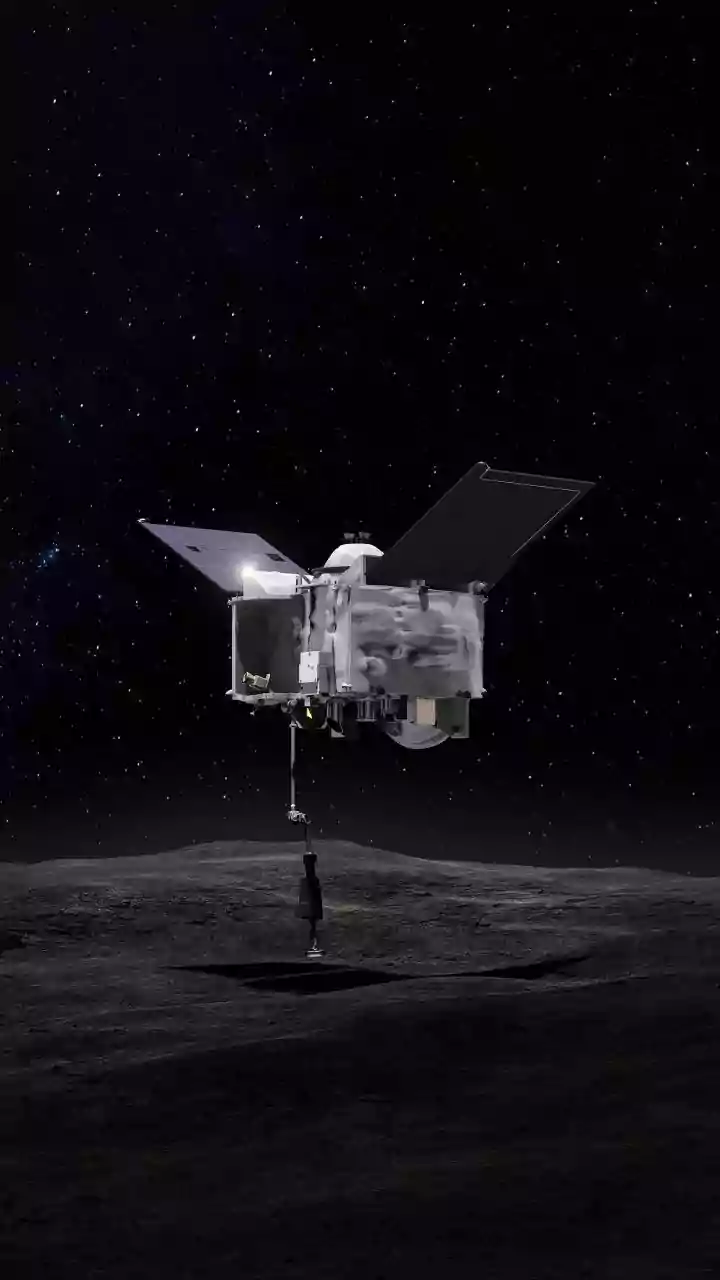
After extensive observation and scouting by the Idefix rover, the main MMX spacecraft will perform a careful descent to the surface of Phobos in 2029. The plan is to land at least once, possibly twice, to collect a minimum of 10 grams of regolith—the loose rock and dust on the surface. To do this, it will use a pneumatic sampling system, a sort of advanced vacuum designed to work in the moon's feeble gravity. The collection itself will be incredibly quick, lasting just a few seconds. Once the sample is securely stowed in its return capsule, the spacecraft will prepare for the long journey home. After departing the Martian system in 2030, it will travel for a year, with the capsule scheduled to land in the Australian desert in 2031.
Navigating Fear Itself
Landing on Phobos—whose name comes from the Greek word for 'fear'—is a monumental technical challenge. The moon is a small, potato-shaped object only about 27 kilometres across at its widest point. Its gravity is less than one-thousandth of Earth's, meaning a conventional landing is impossible. The MMX spacecraft will have to perform something more akin to a delicate docking manoeuvre, as even a small bump could cause it to bounce back into space. The extremely low gravity also means that surface dust, kicked up by thrusters or the landing itself, could pose a significant hazard to the spacecraft's systems. Every previous mission specifically targeting Phobos has failed, highlighting the immense difficulty JAXA and its international partners, including NASA and ESA, face in this daring endeavour.