


Mohammed Siraj: The Driver's Dream
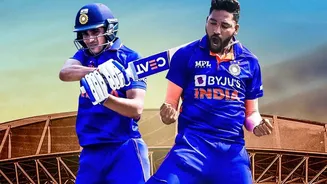
Mohammed Siraj's journey to becoming a feared fast bowler for India is a tale of pure grit, powered by his father's unwavering belief. His father, Mohammed Ghaus, was an auto-rickshaw driver in Hyderabad for 30 years. He faced immense financial hardship
but poured every ounce of his limited earnings into his son's dream. Siraj grew up in a small, rented home and didn't even go to a formal coaching academy in his early days. His father was his biggest supporter, and one of Siraj's first promises after getting a major contract was that his father would never have to drive an auto again. Tragically, his father passed away in 2021 while Siraj was on tour in Australia. Now, Siraj maintains a touching ritual: he visits his father's grave to seek blessings before every tour and returns there straight from the airport upon his arrival home.
Shubman Gill: A Farm for a Cricket Pitch
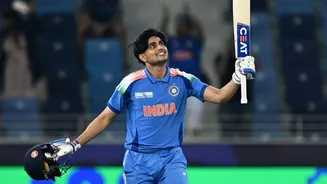
Shubman Gill’s elegant strokeplay was first honed not in a fancy academy, but on a makeshift pitch on his family's farm in Punjab. His father, Lakhwinder Singh, was a farmer who had dreamt of being a cricketer himself. Seeing his son's passion—Shubman would sleep with his bat and ball as a child—Lakhwinder went to extraordinary lengths. He converted part of his farmland into a cricket ground, complete with a turf pitch, so his son could practice endlessly. He would bowl hundreds of balls to Shubman daily and even offered rewards to farm labourers if they could get his son out, ensuring the practice was always competitive. Recognizing the need for better opportunities, the family eventually relocated to Mohali, a decision that proved pivotal for Gill's professional career.
The Pandya Brothers: Surviving on Instant Noodles
Before they became the dynamic, game-changing duo for India, Hardik and Krunal Pandya's life was a daily struggle. Their father, Himanshu Pandya, shut down his small car finance business in Surat and moved the family to Vadodara to give his sons access to better cricket training at Kiran More's academy. However, the family soon faced a severe financial crisis, which worsened after their father suffered multiple heart attacks. For years, the brothers survived on a diet of Maggi noodles for breakfast and dinner because they could afford little else. They would travel to play in local village tournaments to earn a few hundred rupees and had to borrow cricket kits from the Baroda Cricket Association for a year, even while arriving at matches in a second-hand car for which they struggled to pay the EMI.
The Pathan Brothers: From a Mosque to the World Stage
The story of Irfan and Yusuf Pathan is one of rising from extreme poverty to becoming national heroes. The brothers grew up in an impoverished family inside a mosque in Vadodara, where their father, Mehmood Khan, served as the muezzin (the one who calls for prayer). Their parents had initially hoped they would become Islamic scholars, but their passion for cricket was undeniable. The family lived in a single room within the mosque's compound, and their father, despite his meager income, supported their grueling six-hour daily training sessions in the blazing heat. He faced ridicule from community members who looked down on him, but he believed his service to the mosque was what brought his sons their success. The family only moved out after Irfan's international debut caused hundreds of fans to crowd the mosque daily.
Yuvraj Singh: Forged by a Cricketing Father
Yuvraj Singh's powerful hitting ability was not a matter of chance but the result of an intense and demanding upbringing under his father, Yograj Singh, a former cricketer himself. Yograj was determined to see his son achieve the cricketing glory that an injury had denied him. When a young Yuvraj showed more interest in skating and tennis, winning medals in those sports, his father took the extreme step of throwing his skates away to force him to focus solely on cricket. Yuvraj has since spoken about the difficult relationship, noting that his father was always more of a strict coach than a parent, creating a disciplined but high-pressure environment. This relentless training, while emotionally taxing, forged Yuvraj into one of the most resilient and impactful white-ball cricketers of his generation.