




The Power of a Simple Squat
Let's be honest: the word 'effortlessly' in the context of exercise often feels like a lie. And while the wall sit will definitely make your quadriceps burn, the 'effortless' part refers to its simplicity and accessibility. There's no complicated choreography
to learn, no expensive gym membership required, and no heavy equipment to set up. All you need is a sturdy wall and your own body weight. This makes it one of the most efficient and convenient exercises for building lower body strength. It’s an isometric exercise, meaning you hold a static position. Your muscles are under tension for an extended period without moving, which is a fantastic way to build muscular endurance and stability.
Your Guide to the Perfect Wall Sit
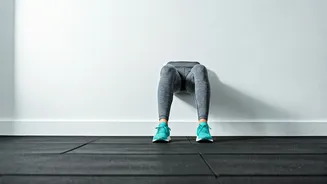
Form is everything when it comes to getting results and preventing injury. An incorrect wall sit is ineffective at best and harmful at worst. Follow these steps to ensure you’re doing it right: 1. **Find Your Wall:** Stand with your back against a smooth, solid wall. 2. **Position Your Feet:** Your feet should be shoulder-width apart and about two feet away from the wall. 3. **Slide Down:** Slowly slide your back down the wall until your thighs are parallel to the floor, as if you are sitting in an invisible chair. 4. **Check Your Knees:** Your knees should be directly above your ankles, forming a 90-degree angle. Do not let your knees extend past your toes, as this puts unnecessary strain on the knee joints. 5. **Maintain Posture:** Keep your back flat against the wall and your head up. Engage your abdominal muscles to support your lower back. Distribute your weight through your heels, not your toes. 6. **Hold and Breathe:** Hold this position. Breathe steadily and try to relax your upper body. Your quads will start to burn—that’s a good sign!
Why Your Quads Will Thank You
The primary target of the wall sit is the quadriceps, the large group of muscles at the front of your thigh. Strengthening them is crucial for everything from walking up stairs and playing cricket to preventing knee injuries. But the benefits don't stop there. Wall sits also engage your glutes and hamstrings, providing a well-rounded, albeit static, workout for your lower body. Because you have to keep your back straight and core tight, it also works your abdominal muscles. Best of all, it's a low-impact exercise. Unlike running or jumping, it places minimal stress on your knees, ankles, and hips, making it a great option for people with joint sensitivities or those recovering from certain injuries.
Common Mistakes to Avoid
To get the most out of your wall sits, watch out for these common form errors: * **Sliding Too Low:** Don't let your hips drop below your knees. This changes the angle and can strain your joints. * **Not Going Low Enough:** If your thighs aren't parallel to the floor, you're not fully engaging the muscles. If you can't reach parallel yet, go as low as you can with good form and work your way down over time. * **Letting Knees Cave Inward:** Actively press your knees outward slightly to keep them aligned with your feet. This protects your knee ligaments. * **Leaning Forward:** Keep your entire back, from shoulders to lower back, pressed firmly against the wall. Don't use your hands to brace on your thighs; let your legs do the work.
Ready for a Challenge?
Once you can comfortably hold a basic wall sit for 60 seconds or more, it’s time to level up. Try these variations to keep your muscles guessing: * **Add Weight:** Hold a dumbbell, kettlebell, or even a heavy book on your lap to increase the resistance. * **Single-Leg Wall Sit:** While in the wall sit position, carefully extend one leg straight out in front of you. Hold for 10-15 seconds, then switch legs. This dramatically increases the load on the supporting leg and challenges your balance. * **Incorporate Arm Movements:** Hold light dumbbells and perform bicep curls or overhead presses while maintaining your wall sit. This turns it into a full-body challenge.